Men's Archery Hunting Clothing Guide
Men's archery hunting clothing is built for the bow: quiet fabrics, a close fit that keeps cloth clear of the bowstring, and camouflage or blaze orange chosen by season and law.
Shop Men's Archery Hunting Clothing Now
Shop Men's Archery Hunting Clothing on Amazon Shop Men's Archery Hunting Clothing on eBayThe Amazon and eBay links on this page are affiliate links. If you make a purchase through them, Apparel Search may earn a commission.
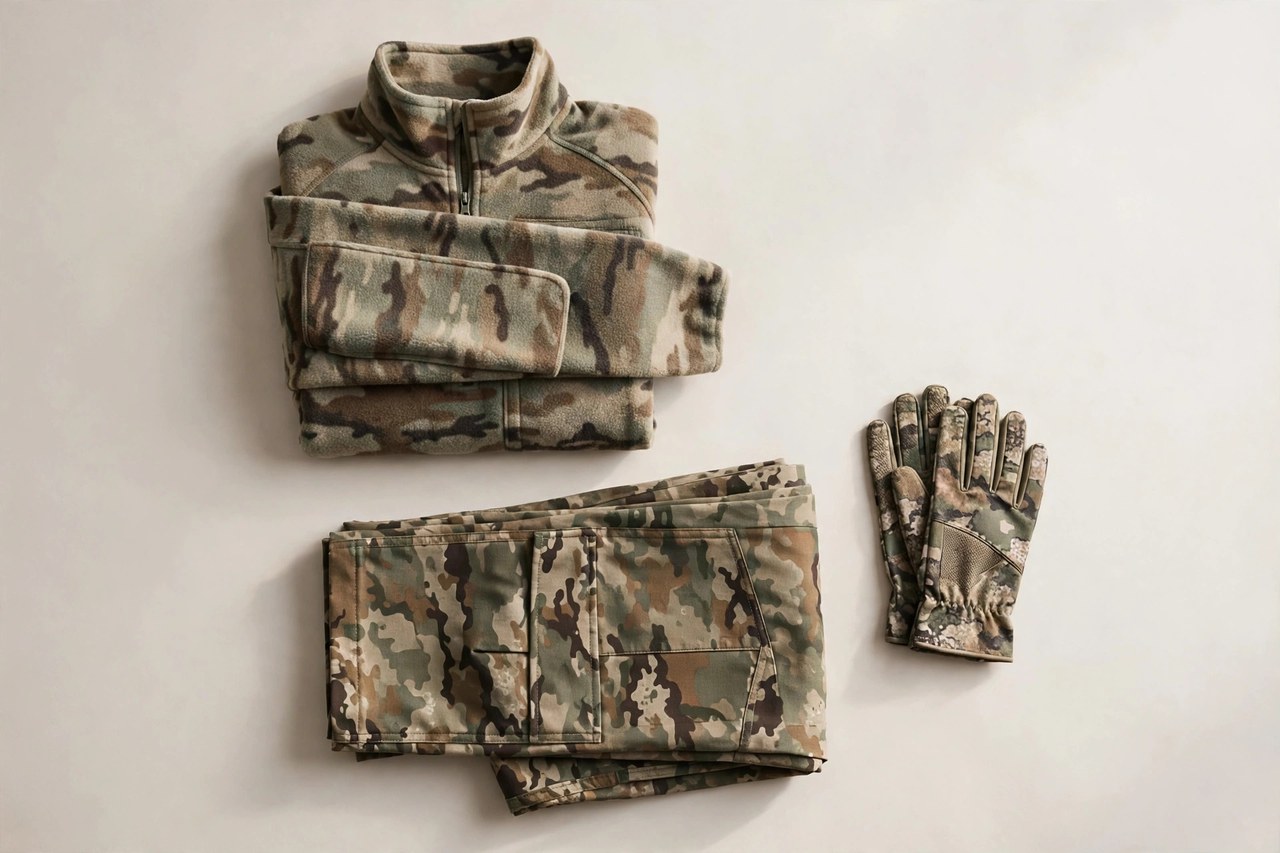
Archery is the sport, practice or skill of using a bow to propel arrows; the word comes from the Latin arcus. Historically, archery has been used for hunting and combat — and bowhunting still imposes clothing requirements no other hunting quite matches. A bowhunter must get closer than a rifle hunter, draw a bow in the animal's sight, and do both in silence. This guide covers what archery hunting clothing must do: stay quiet, stay clear of the bowstring, break up the human outline, and keep a still hunter warm. It links onward to the wider hunting clothing guides in this directory, where the archery specialism sits inside the general hunting wardrobe.
Every feature below exists because of the draw: the moment of maximum movement, at minimum range, in front of an animal listening for exactly that.
Quiet, and Clear of the String
Silence is the first specification. Bowhunting clothing uses brushed, soft-surfaced fabrics — fleece, brushed twill, wool — that do not swish, zip or crinkle when a sleeve brushes brush or a jacket turns on a stand. Hard shells and stiff synthetics that serve a rifle hunter well are liabilities at twenty yards. Test clothing the way the deer will hear it: rub the fabric against itself in the shop.
Fit is the second. Loose sleeves, dangling drawstrings, chest straps and flapping fabric near the chest and bow arm can catch a bowstring at release and ruin a shot, or worse. Archery clothing is cut close on the bow arm and chest, with flat closures, tucked or short bow-arm sleeves, and nothing hanging in the string's path. Practice in your hunting clothing, not a tee, so the clearance you checked is the clearance you have.
Camouflage and Blaze Orange
Camouflage for bowhunting is about breaking the outline at close range: patterns matched to the season and terrain — open woodland, early green, late-season bark and snow — and applied to face and hands as well as the body, since an uncovered face shines at bow range. Three-dimensional leafy suits and face masks exist for exactly this reason.
Blaze orange requirements vary by jurisdiction and season, and many archery seasons run when orange is not required for bowhunters, while overlapping gun seasons change the rule. The law where you hunt, in the season you hunt, governs — check it every year, because the camouflage-versus-orange decision is a legal one before it is a tactical one, and some hunters wear orange to and from the stand regardless.
Layering for the Stand and the Stalk
Bowhunting splits into two thermal problems. The stalking hunter moves and generates heat; the stand hunter sits motionless for hours and loses it. Both solve it with the same layers: a wicking base that moves sweat, an insulating mid-layer in fleece or wool, and the quiet camouflage outer. Stand hunters add insulation they carry in and put on after cooling from the walk — dressing at the vehicle means sweating into the layers that are supposed to keep you warm.
Scent control threads through all of it: clothing washed in scent-free detergent, stored away from household smells, and handled as hunting equipment rather than laundry. Boots, gloves and boots' quiet soles matter as much as the jacket. Dress for the stillest hour, in the quietest fabrics you own, with nothing in the string's way — that is the whole doctrine of archery clothing.
Common Questions
Why must archery hunting clothing be quiet?
Because bowhunting happens at close range - the hunter must draw a bow within sight and hearing of the animal. Brushed, soft fabrics like fleece, brushed twill and wool move silently against brush and against themselves, while hard shells and stiff synthetics swish and crinkle loudly enough at twenty yards to end the hunt.
Why does fit matter so much for bowhunting clothing?
A bowstring at release can catch anything loose in its path - sleeves, drawstrings, chest straps, flapping fabric - ruining the shot. Archery clothing is cut close on the bow arm and chest with flat closures and nothing dangling near the string. Practice in your full hunting clothing so the clearance you rely on is the clearance you actually have.
Do bowhunters have to wear blaze orange?
It depends on the jurisdiction and the season. Many archery seasons do not require blaze orange for bowhunters, but overlapping gun seasons can change the requirement. Check the current rules where and when you hunt every year - the camouflage versus orange choice is a legal question before it is a tactical one.
More in Men's Clothes Guide A
Archery, From the Latin Arcus
Archery is the sport, practice or skill of using a bow to propel arrows, and the word comes from the Latin arcus. Historically, archery has been used for hunting and combat. The wider hunting wardrobe around the topic — men’s hunting clothing and apparel, upland hunting clothes, camouflage and camo hunting clothes, hunting boots and hunting gloves, and blaze orange hunting clothing — all linked below.
Looking for Men's Clothing Stores?
This guide explains men's archery hunting clothing and its special requirements. To browse where to buy, visit our men's clothing store directory, where you can find retailers that carry hunting apparel.