Men's Upland Hunting Clothing Guide
Men's upland hunting clothing is the field kit for walking up game birds - pheasant, quail, grouse - through brush and briars: thorn-resistant trousers and chaps, a game vest with a rear game bag, blaze orange for safety, and layers built for miles of walking in changeable autumn weather. This guide covers the garments as products: the brush-proof fabrics, the vest's carrying system, and fit for all-day walking.
Shop Men's Upland Hunting Clothing Now
Shop Men's Upland Hunting Clothing on Amazon Shop Men's Upland Hunting Clothing on eBayThe Amazon and eBay links on this page are affiliate links. If you make a purchase through them, Apparel Search may earn a commission.
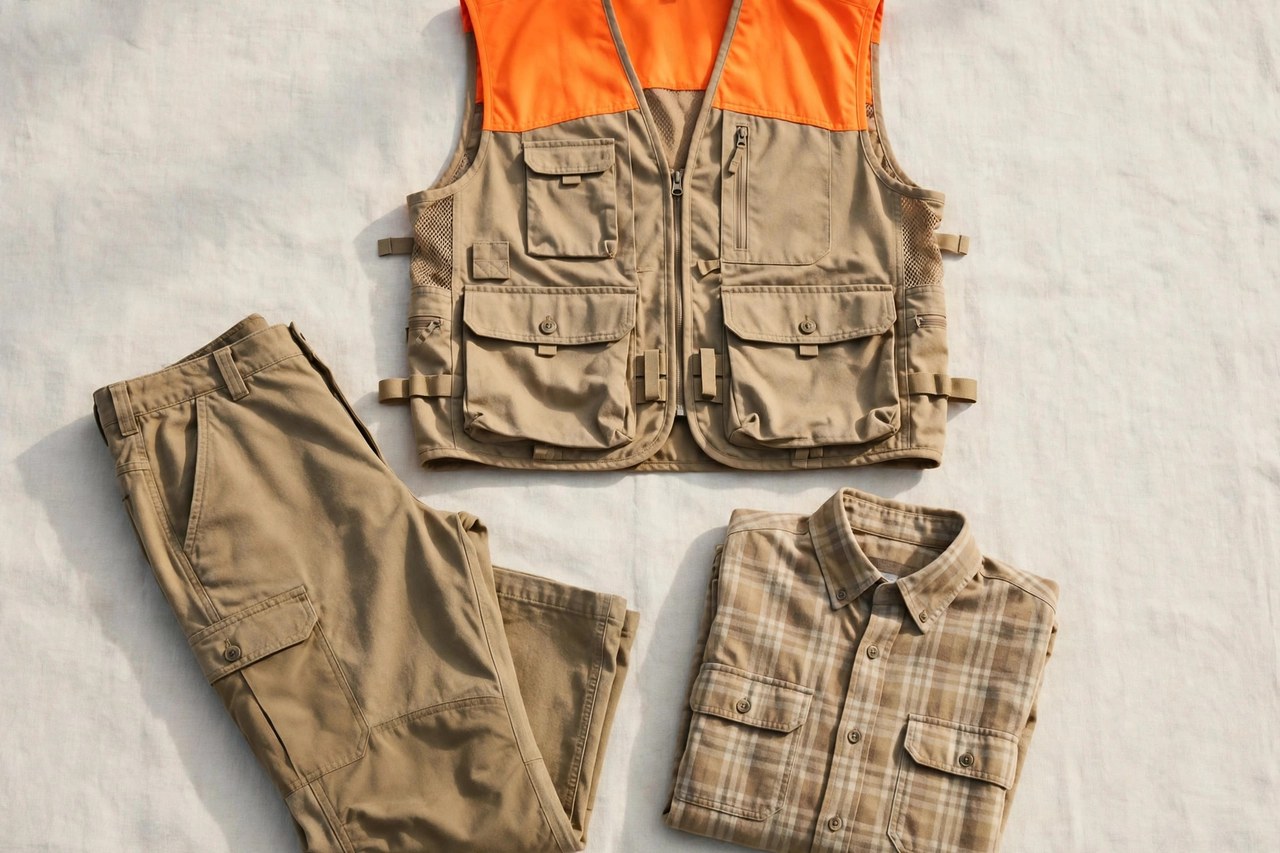
Men's upland hunting clothing is the field kit for walking up game birds - pheasant, quail, grouse - through brush and briars: thorn-resistant trousers and chaps, a game vest with a rear game bag, blaze orange for safety, and layers built for miles of walking in changeable autumn weather. This guide covers the garments as products: the brush-proof fabrics, the vest's carrying system, and fit for all-day walking. This guide is built around the questions buyers actually ask: which style, which size, which fabric, and what will it look like after a year of real use - answered in order, with the trade-offs stated plainly.
Styles and Construction
The signature problem of upland clothing is abrasion from below: briars, thorns and stiff brush shred ordinary trousers at the front of the leg. Upland pants answer with facing panels of heavy nylon or waxed canvas over the thigh and shin, a gusseted crotch for stepping over fences and logs, and a cut that fits over field boots. The upland vest is the system's hub: a front-loading or rear game bag with a blood-proof lining, shell loops and pockets sized for boxes of shells, water bottle pockets, and - legally required in many states and wise everywhere - a minimum area of blaze orange on the torso. Shirts and jackets layer beneath and over it in brush-weight cotton canvas or modern synthetic equivalents that dry faster when the morning dew soaks through.
Outerwear value hides below the surface: taped versus merely stitched seams, a zipper whose slider runs true under one hand, cuffs and hems that adjust to seal weather out, and a lining slippery enough to glide over the layers beneath. Shoulder build decides the hang over knitwear or a jacket, and pocket engineering decides whether hands and kit ride where your body expects them. Specify for the worst honest day, not the brochure day.
Fit and Sizing
Fit upland clothing for walking: trousers should allow a high step without the waistband pulling down, worn with the boot tops you hunt in, because hem and facing geometry assume field boots. The vest fits over the bulkiest layer of the day - size it over a jacket, not over a shirt - with the game bag riding at the small of the back where a limit of birds carries balanced. Nothing in the kit should flap or catch: loose straps and dangling cords find every branch in a hedgerow.
Fit outerwear over the bulkiest layer it will honestly cover, and test the working range: arms forward as if driving, arms overhead, sitting with every closure fastened. The coat's shoulders should echo yours rather than extend past them, closures should meet without strain, and the hem must reach the coverage the garment exists to give. A coat fitted over a T-shirt alone belongs to a climate you may not live in.
Wearing and Care
Brush gear earns mud, blood and thorn damage, so care is inspection: wash field garments by their fabric labels (waxed facings are rewaxed, not washed hot; synthetics shed burrs better after a wash), check facing seams and game-bag linings each season, and restitch a torn panel before the next hunt, not during it. Store the vest empty and dry - a game bag stored damp ruins itself and everything near it. Blaze orange fades with sun and washing; when it no longer reads orange at distance, replace the garment: that color is safety equipment.
Hang outerwear on broad hangers that carry the shoulders, rest it between wears, and resist washing it often - spot-clean first, and wash by the maker's method with the detergent the fabric demands when a full clean is due. Refresh water-repellent finishes when rain stops beading, never store a coat dirty or compressed, and send leather and tailored pieces to professionals rather than experimenting at home.
Common Questions
Why do upland pants have facing panels on the front?
Because upland hunting walks through brush rather than around it, and the front of the leg takes constant thorn and briar abrasion that would shred ordinary trouser cloth in a season. Heavy nylon or canvas facings sacrifice themselves instead of the garment. Chaps - separate facing legs worn over regular trousers or jeans - are the alternative for occasional hunters.
How much blaze orange do I need?
Follow your state's regulation first - many require a specified amount on the upper body during upland seasons, and some require a hat as well. As a practical standard, an orange vest or an orange-paneled jacket plus an orange cap makes a hunter visible from every angle, which is the point: upland hunting is walked in company, often with dogs, in cover where a man disappears at twenty yards.
What boots and socks pair with upland clothing?
Waterproof leather or leather-cordura field boots with a supportive shank for miles of uneven ground, worn with merino or synthetic hunting socks that manage a full day's moisture. The trousers' hems and chap lengths are cut assuming this footwear; the whole system - boot, sock, facing, vest - is designed as a walking kit, and changing one piece usually means re-checking the fit of the rest.
More in Men's Clothes Guide U
Background and History
Upland hunting is an American term for a form of bird hunting in which the hunter pursues upland birds including quail, pheasant, grouse, woodcock, prairie chicken, chukar, grey partridge, and others. Upland birds tend to be found on the ground in heavy cover, so hunters generally employ the use of gun dogs to locate and retrieve game. In America (though not in the UK), some states, such as Alabama and Arkansas, require upland hunters to wear blaze orange clothing for safety. They often wear vests to carry game, though there is a recent trend toward more functional technical daypacks specifically designed for the demands of more rigorous upland hunting in remote areas. Modern hunting clothing makes use of fabrics that provide a disruptive camouflage pattern. Camouflage is the use of any combination of materials, coloration, or illumination for concealment, either by making people, animals or objects hard to see. Movement catches the eye of prey animals on the lookout for predators, and of predators hunting for prey.[95] Most methods of
Looking for Men's Clothing Stores?
This guide explains men's upland hunting clothing. To browse where to buy, visit our men's clothing store directory, where you can find retailers that carry them.