Men's French Cuff Dress Shirts Guide
A men's French cuff dress shirt is a dress shirt whose cuffs are double cuffs: the cuff is made twice as long as a standard button cuff and worn folded back on itself, then fastened not with a button but with a cufflink passed through both pairs of holes. That folded cuff is the whole definition and the whole effect - a deeper, crisper frame for the wrist and the one shirt detail that carries jewelry. French cuffs were long considered more formal than button cuffs and remain the preferred choice for black tie and semi-formal dress, with a modern resurgence in ordinary business wear besides.
Shop Men's French Cuff Dress Shirts Now
Shop Men's French Cuff Dress Shirts on Amazon Shop Men's French Cuff Dress Shirts on eBayThe Amazon and eBay links on this page are affiliate links. If you make a purchase through them, Apparel Search may earn a commission.
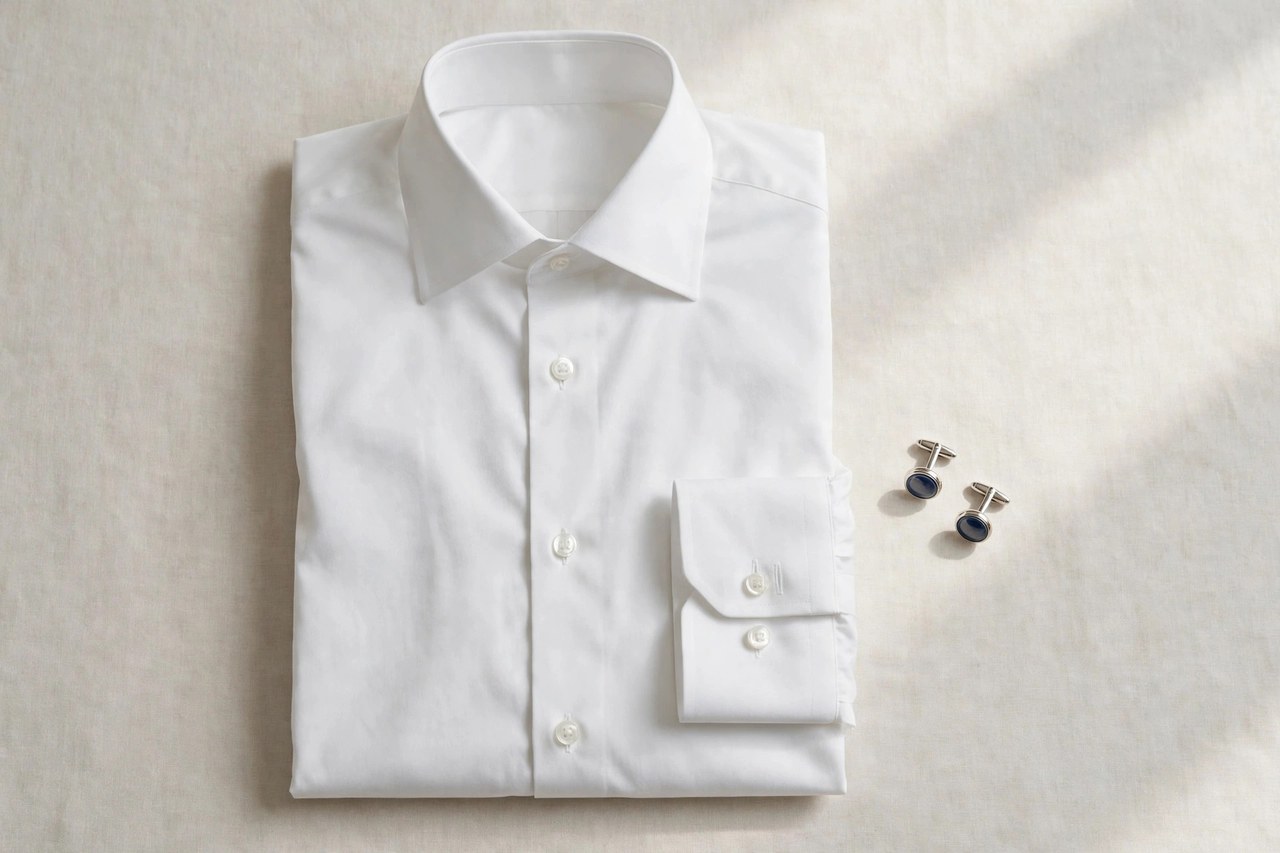
A men's French cuff dress shirt is a dress shirt whose cuffs are double cuffs: the cuff is made twice as long as a standard button cuff and worn folded back on itself, then fastened not with a button but with a cufflink passed through both pairs of holes. That folded cuff is the whole definition and the whole effect - a deeper, crisper frame for the wrist and the one shirt detail that carries jewelry. French cuffs were long considered more formal than button cuffs and remain the preferred choice for black tie and semi-formal dress, with a modern resurgence in ordinary business wear besides. This guide is built around the questions buyers actually ask: which style, which size, which fabric, and what will it look like after a year of real use - answered in order, with the trade-offs stated plainly.
Styles and Construction
The system has two halves. The shirt half: a dress shirt body - the collar, cloth and fit follow the dress shirt rules on this guide's dress shirts page - with the longer double cuff cut to fold to the same finished length as a button cuff. The fastening half is the cufflink: a decorative front, a post or swivel bar, and a backing, in metals from steel and silver to gold, enamel and stone. Silk knots are the soft, inexpensive classic. Because the cuff carries no button of its own, the shirt cannot be worn unlinked - a French cuff shirt commits you to owning at least one pair of links, which is precisely the wardrobe point of the style.
A top earns its keep in finishing: seams that hang straight and stay even at eight to twelve stitches per inch, collars and plackets that lie flat after washing, buttons sewn with thread shanks so they sit in their holes without pulling. Hold the cloth to the light - a tight, even weave or knit outwears a loose one at the same labeled weight, and pattern pieces cut on grain keep the garment from twisting around your body by the third wash.
Fit and Sizing
Fit lives at the wrist: the folded cuff should close so the cufflink sits snugly without the cuff gaping or binding, and the sleeve length must be exact, because the deeper French cuff is designed to show a deliberate half-inch beyond the jacket sleeve - more looks slovenly, less wastes the style. The cuff's holes must align when folded; a twisted fold that strains the link is a wrong sleeve length or a badly made cuff. Collar choice follows the occasion: spread and cutaway collars suit the formality, and for black tie the shirt takes the marcella or pleated front of the formalwear code.
Fit tops shoulders and chest first, because tailors cannot cheaply move either: the shoulder seam ends at the shoulder bone, the chest closes without pulling, and both arms raise without the hem escaping the waistband. Tucked lengths must stay tucked sitting; untucked lengths should end mid-fly. Sleeves are the cheap alteration, shoulders the permanent one - reject a wrong shoulder for any reason, forgive a long sleeve for many.
Wearing and Care
Care treats cuff and link separately. Launder the shirt by its cloth - white cotton dress shirts wash warm and press crisp, with the cuffs pressed flat and folded, never creased hard at the fold line before wear. Remove cufflinks before washing, always: they batter the drum, the shirt and themselves. Store links in a divided box or pouch so faces do not scratch each other, polish metal with its proper cloth, and keep a pair of silk knots as the travel spare - they weigh nothing, survive luggage, and rescue the shirt when a link is lost the morning of the event.
Launder tops by the label with three defaults: cool or warm water to protect color and trims, dark and printed pieces inside out, and low or line drying, which is the largest single lever on a shirt's lifespan. Fasten buttons and zips before washing to protect the whole load, treat stains before the dryer can set them, and store knits folded so their shoulders keep the shape they were knitted with.
Common Questions
Do French cuffs require cufflinks?
Yes - there is no button to fall back on. The double cuff folds back and fastens only through its aligned holes, so a cufflink (or a silk knot, which threads through the same holes) is structurally required, not an optional decoration. That is why a first French cuff shirt should be bought with a first pair of links - plain silver-tone or silk knots cover every occasion the shirt will meet.
Are French cuff shirts too formal for the office?
They were once reserved for lounge suits and more formal dress, but the modern office has absorbed them, particularly in Europe and in client-facing business. The calibration is in the links: modest metal or silk knots read as polished business dress; large, jeweled or novelty links push the same shirt toward evening formality. With a suit and a sober link, a French cuff shirt is well within contemporary business wear - with a sports jacket and no tie it now passes too, though tradition would have raised an eyebrow.
How much cuff should show beyond a jacket sleeve?
About a quarter to a half inch of shirt cuff - the classic 'sliver of linen' - and the French cuff, being deeper and carrying the link, is designed to be the thing that shows. If nothing shows, the shirt sleeve is short or the jacket sleeve long; if an inch shows, the proportions invert and the shirt wears the jacket. Because the folded cuff cannot be adjusted, sleeve length is the one measurement to get exactly right when buying the shirt.
More in Men's Clothes Guide F
The Double Cuff, Defined
A cuff is an extra layer of fabric at the lower edge of a garment’s sleeve, covering the arm at the wrist, whose function is to protect the cloth from fraying and, when frayed, to allow the cuff to be readily repaired or replaced without changing the garment — made by turning back the material, or as a separate band sewn on or worn separately, attached by buttons or studs. French, or double, cuffs are twice as long and worn folded back on themselves. Their standing: once considered more formal than button cuffs, they are now seeing a resurgence in the business environment, particularly in Europe; traditionally they were worn only with a lounge suit or more formal clothing and not a sports jacket, a rule now not followed by most, with some wearing them without tie or jacket — while they remain the preferred choice for semi-formal, black tie events. See also the cufflinks guide, dress shirts, formalwear and shirt styles.
Looking for Men's Clothing Stores?
This guide explains men's french cuff dress shirts. To browse where to buy, visit our men's clothing store directory, where you can find retailers that carry them.