Men's Formalwear Guide
Men's formalwear is clothing governed by the formal end of the Western dress codes: the codified combinations worn to formal social events - weddings, formal dinners, dances, race days and ceremonies. Its defining trait is that the rules come first: where casual dress is personal expression, formal dress is a shared language, graded by time of day and strictness from morning dress through black tie to white tie. Worn correctly it makes every man in the room look deliberate; worn approximately it announces itself at a glance, which is why this guide treats the codes as specifications rather than suggestions.
Shop Men's Formalwear Now
Shop Men's Formalwear on Amazon Shop Men's Formalwear on eBayThe Amazon and eBay links on this page are affiliate links. If you make a purchase through them, Apparel Search may earn a commission.
Men's formalwear is clothing governed by the formal end of the Western dress codes: the codified combinations worn to formal social events - weddings, formal dinners, dances, race days and ceremonies. Its defining trait is that the rules come first: where casual dress is personal expression, formal dress is a shared language, graded by time of day and strictness from morning dress through black tie to white tie. Worn correctly it makes every man in the room look deliberate; worn approximately it announces itself at a glance, which is why this guide treats the codes as specifications rather than suggestions. This guide explains what to look for, how the sizing actually works, which fabrics and constructions earn their price, and how to care for the garment so it keeps doing its job season after season.
Styles and Construction
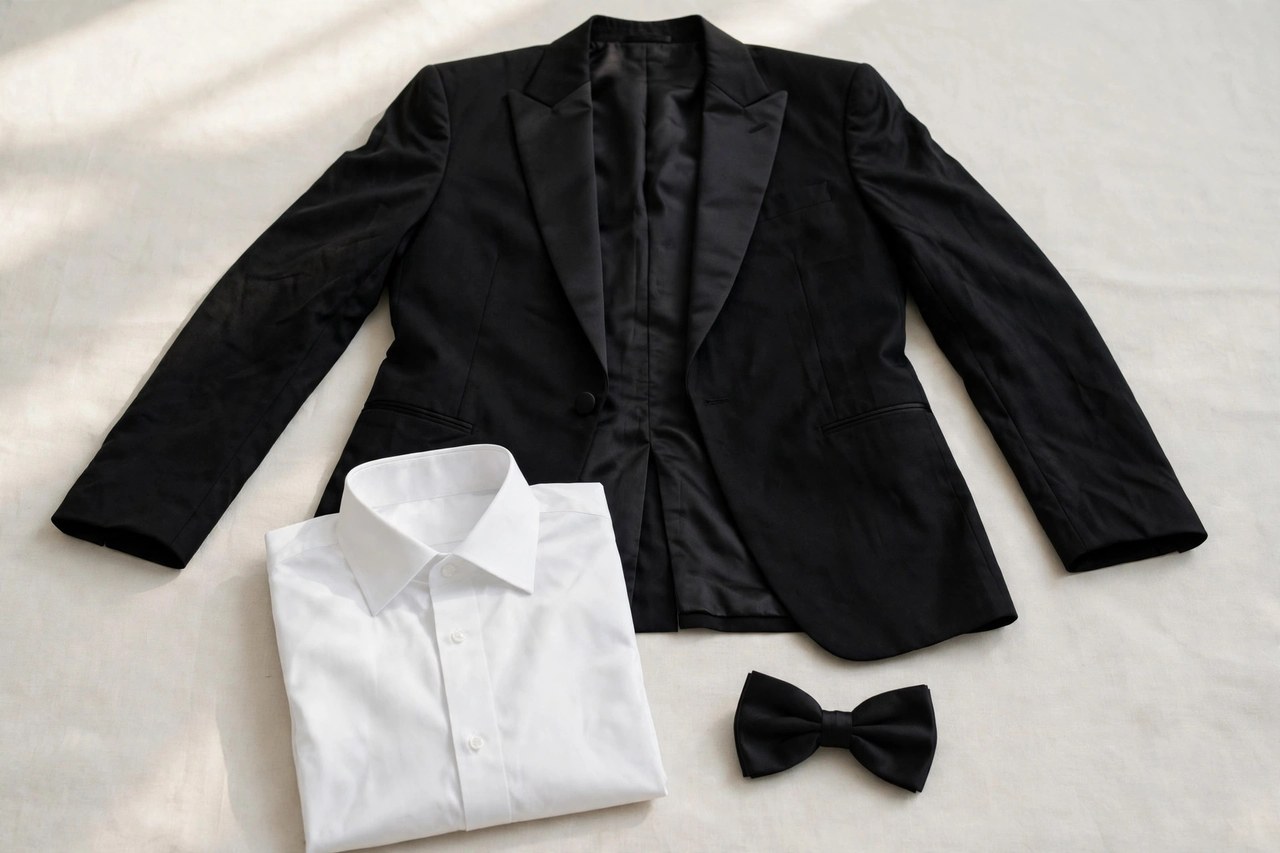
The ladder, top down: white tie - tailcoat, white waistcoat, wing collar and white bow tie - survives at the most formal evening ceremonies. Black tie is the working summit for most men: a black or midnight tuxedo with satin or grosgrain facings, a white dress shirt with a turndown or wing collar, a black bow tie, a cummerbund or low waistcoat, and black patent or polished dress shoes. Morning dress - tailcoat, striped trousers, waistcoat - is the daytime equivalent for weddings and race meetings. Below them sit the dark lounge suit for semi-formal evenings and the ordinary suit, each borrowing correctness from the rung above. Fabrics carry their own code: barathea and fine worsteds, silk facings, marcella and pleated shirt fronts.
The durable buying order is job, specification, budget - in that sequence. Decide what the garment must do, translate that into fiber, weight, construction and size numbers, and only then shop price. Read labels as specifications, inspect the garment inside out where finishing is unposed, and prefer the maker who publishes measurements to the one who publishes adjectives. A garment that matches your measurements, climate and laundry will be worn; one that misses any of the three becomes expensive storage.
Fit and Sizing
Formal fit is tailoring fit, with less forgiveness: the jacket's shoulder ends at yours, its button closes without pulling, the trouser - worn with braces or a fitted waistband, never a belt with a waistcoat or cummerbund - breaks once over the shoe, and the shirt shows a measured sliver of cuff. Black tie trousers carry the satin braid down the outseam and no cuffs. Renting is rational for a once-a-decade white tie obligation; buying becomes rational when black tie recurs yearly, because a man's own tuxedo, altered to him, outperforms a rental in every photograph. Size the purchase to the body you have, not the one planned.
Measure yourself once a year and keep the numbers - chest, waist, inseam, foot, head - because bodies drift gradually while size habits never do. Shop from measurements, try garments under real conditions (over layers, in your own shoes, late in the day for footwear), and be honest about alterations: lengths and small waist changes tailor beautifully; shoulders, rises and patterns are the garment you bought forever.
Wearing and Care
Formalwear care is preservation: rest the suit a full day between wearings on a broad hanger, brush it after use, and dry-clean sparingly - each cleaning costs the wool a little life, so spot-clean and press between full cleans. Store in a breathable garment bag, never sealed plastic, with cedar against moths. Shirts are laundered and pressed crisp; bow ties of silk are untied after wear and rolled for storage. Patent shoes wipe clean and live in bags or boxes away from other leathers, which they scratch and are scratched by. Formal clothes spend most of their lives waiting - store them so the waiting does them no harm.
Five minutes when a garment comes off - shake it out, hang or fold it correctly, note the stain and the loose button - prevents most of the damage later blamed on quality. Keep a small kit where the clothes live: brush, lint roller, conditioner suited to your leathers, black, navy and grey thread. Clothing rarely dies at once; it fades by small neglects, and small attentions reverse the process at the same pace.
Daytime formality has its own complete guides: full morning dress and its one-step-down sibling, the stroller suit.
Evening formality begins with the dinner suit and the black tie system.
Common Questions
What is the difference between black tie and white tie?
They are two different, fixed uniforms. White tie - the most formal evening code - requires a black tailcoat, white waistcoat, wing-collar shirt with a white bow tie, and black patent shoes. Black tie replaces the tailcoat with a tuxedo jacket (no tails), the white waistcoat with a black cummerbund or low black waistcoat, and wears a black bow tie. If an invitation says black tie, white tie is overdressed; the codes are not a scale of effort but two named specifications.
Is it better to buy or rent a tuxedo?
Frequency decides. Rent for a single obligation or a fast-changing body - a wedding party's matching rental is also the practical way to uniform groomsmen. Buy when black tie events recur roughly yearly or more: the purchase price of a mid-range tuxedo equals a few rentals, and a bought tuxedo is altered to your body, in your closet the night before, in a fabric and fit no rental fleet matches. Buy classic - one button, peak or shawl lapel - and it will not date.
Can you wear a regular suit to a black tie event?
Not honestly: a lounge suit, however dark and well fitted, is a different code, and at a black tie event it reads as underdressed in the way a tuxedo would read as overdressed at a business dinner. The minimum credible step is the tuxedo's own elements - dinner jacket, bow tie, dress shirt, formal trousers. If the invitation says 'black tie optional', a dark suit with a long black tie is the sanctioned alternative the wording exists to allow.
More in Men's Clothes Guide F
Dress Codes as a System
Western dress codes govern what garments are worn together and in what setting, with combinations such as “smart casual” or “morning dress” classified by levels of formality and times of day, and the more formal codes — black tie above all — highly codified with essentially fixed definitions. Formal wear (Canada, US) and formal dress wear (UK) are the general terms for clothing suitable for formal social events such as a wedding, formal garden party or dinner, cotillion, dance or race; the Western style of formal evening dress, characterized by black and white garments, has spread through many countries as the standard formal social dress wherever no formal national costume takes its place. Formal and semi-formal are unambiguous in a traditional setting, even though changing fashions can blur them — which is why each code is treated here as a specification. Related topics run from tuxedo and suit stores to the tuxedo definition, black tie, suits, dress shirts and cufflinks. Two everyday occasions put the formal system to work away from the wedding circuit — a retirement party, where the guest of honour wears a career finale rather than a uniform, and a night at the theatre or opera, where black tie still makes its home.
Looking for Men's Clothing Stores?
This guide explains men's formalwear. To browse where to buy, visit our men's clothing store directory, where you can find retailers that carry them.