Men's Clogs Guide
Men's clogs are backless or low-backed shoes with a substantial, often contoured sole - traditionally carved from a single block of wood, today more often molded in polyurethane, cork or EVA under a leather or synthetic upper. The clog is workwear older than the factory: European farm and mill footwear for centuries, then hospital, kitchen and garden footwear, valued because it slips on in a second, stands all day, and keeps the foot above wet ground.
Shop Men's Clogs Now
Shop Men's Clogs on Amazon Shop Men's Clogs on eBayThe Amazon and eBay links on this page are affiliate links. If you make a purchase through them, Apparel Search may earn a commission.
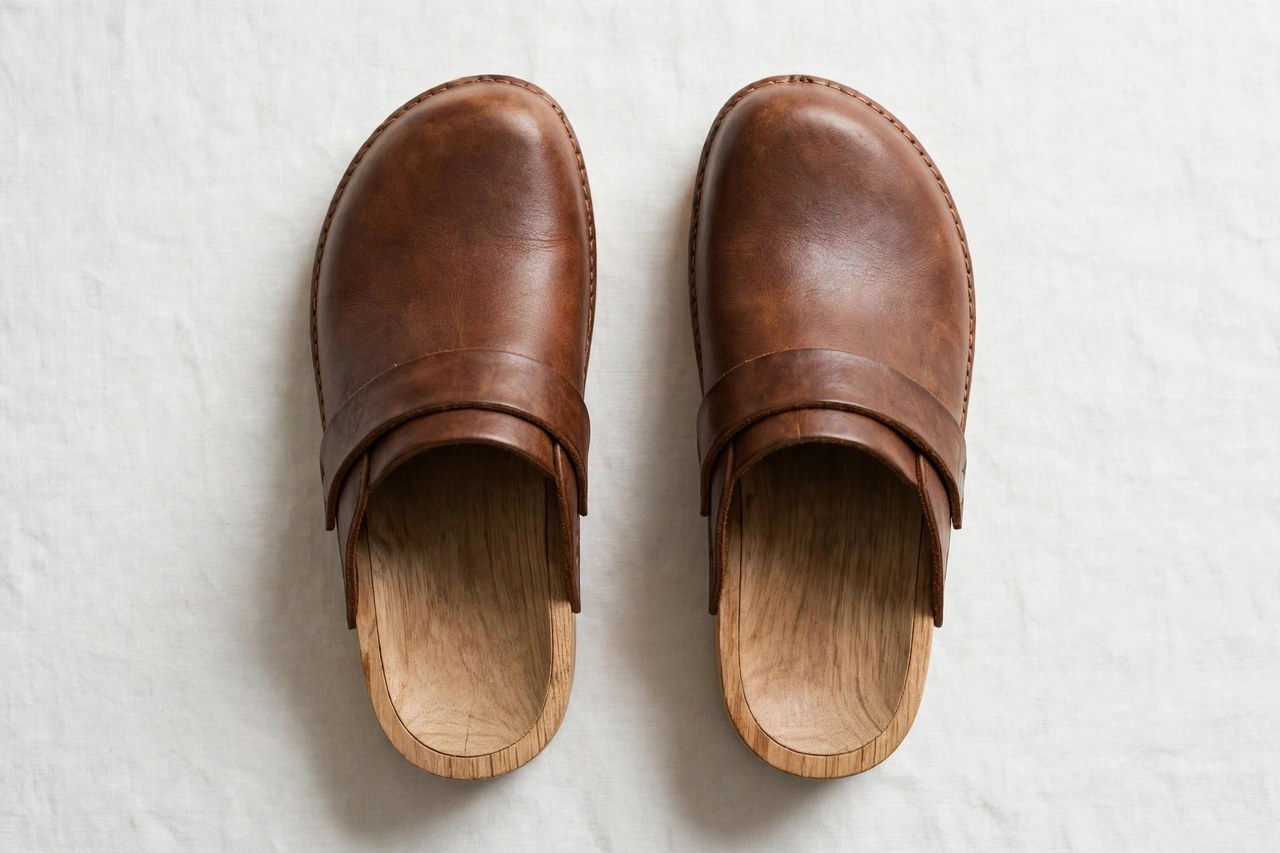
Men's clogs are backless or low-backed shoes with a substantial, often contoured sole - traditionally carved from a single block of wood, today more often molded in polyurethane, cork or EVA under a leather or synthetic upper. The clog is workwear older than the factory: European farm and mill footwear for centuries, then hospital, kitchen and garden footwear, valued because it slips on in a second, stands all day, and keeps the foot above wet ground. This guide covers the styles worth knowing, the fit points that decide comfort, the fabrics and construction that separate a good buy from a regret, and the simple care that makes the garment last.
Styles and Construction
Modern clogs divide by trade and material. Professional clogs for kitchens and hospitals use closed leather uppers, oil- and slip-resistant soles and a roomy toe box over a rocker-bottom sole that rolls the step forward. Garden and casual clogs are molded polymer - light, waterproof, hoseable. Traditional wooden-soled clogs survive as heritage and orthopedic niches, with cork-bedded versions trading the wood's rigidity for molded comfort. The rocker sole is the shared idea: it reduces the foot's own bending work, which is why clog wearers stand longer with less fatigue.
Judge footwear by attachment and compound: cemented soles are light and affordable, stitched or welted constructions cost more and can be repaired, and the outsole rubber decides grip against longevity - soft compounds bite, hard compounds endure. Linings decide comfort over hours, removable insoles decide whether your own supports can come along, and honest weight decides whether the pair disappears on the foot or taxes every mile of the day.
Fit and Sizing
A clog fits loose by design - the heel lifts with each step and the foot is held by the upper's instep grip, not by a heel counter. There should be a finger's width behind the heel on the footbed, toes clear of the front, and the instep snug enough that the clog does not threaten to leave without you. Men unused to the design walk out of their first pairs; a week of shorter steps teaches the gait, and the professional models reward it with all-day standing comfort no trainer matches.
Fit footwear late in the day in the socks you will actually wear, with roughly a thumb's width beyond the longest toe, the heel held without lift, and the foot's widest point meeting the shoe's widest point. Sizes are unstandardized between makers - trust your measured length and width over the printed number, and require no break-in argument: a shoe that needs excuses in the shop delivers them on the road.
Wearing and Care
Wipe leather uppers, condition them lightly, and keep wooden soles away from soaking - wood swells and splits. Polymer clogs hose clean and dry in minutes, which is their garden argument. Replace clogs when the rocker profile wears flat at the ball: the sole's geometry is the product, and a flattened clog is just a heavy slipper with opinions.
Rotation is the first care rule: a day of rest between wears lets linings dry and cushioning rebound, and it doubles a rotation's life compared with daily wear of one pair. Clean after use, dry at room temperature away from radiators, hold shape with trees or paper, and condition leather on a schedule rather than when it looks thirsty. Reproof weather finishes when water stops beading, and resole stitched footwear before the wear reaches the welt.
Common Questions
Why do nurses and chefs wear clogs?
Because their work is standing still for hours on hard, wet floors: the clog's elevated, contoured sole spreads load and rolls the step, the closed upper sheds spills, the slip-on design changes fast, and loose polymer versions can be hosed or disinfected. Trainers cushion walking; clogs are engineered for standing, which is a different job.
Are clogs bad for your feet?
For most wearers, no - the supportive footbed and roomy toe box are kind to many feet, and rocker soles are prescribed for some forefoot problems. The cautions are stability (the height and loose heel demand care on stairs and ladders) and fit: a clog that twists your stride is the wrong last for you. Anyone with a diagnosed foot condition should take their clinician's advice over a shoe page's.
Do clogs stretch?
Leather uppers relax and mold to the instep over the first weeks, which usually improves the hold; polymer and EVA clogs barely change. Buy leather clogs snug across the instep with the length margin intact, because the length will never grow while the grip improves.
More in Men's Clothes Guide C
Looking for Men's Clothing Stores?
This guide explains men's clogs. To browse where to buy, visit our men's clothing store directory, where you can find retailers that carry them.