Men's Casual Shoes Guide
Men's casual shoes are footwear below the dress-shoe line: clean leather and canvas sneakers, suede loafers and drivers, desert boots, casual derbies and the whole tribe of shoes built for everyday life rather than ceremony or sport. They are the most-worn shoes a man owns, and the category where one good pair - chosen for versatility - quietly upgrades every casual outfit it touches.
Shop Men's Casual Shoes Now
Shop Men's Casual Shoes on Amazon Shop Men's Casual Shoes on eBayThe Amazon and eBay links on this page are affiliate links. If you make a purchase through them, Apparel Search may earn a commission.
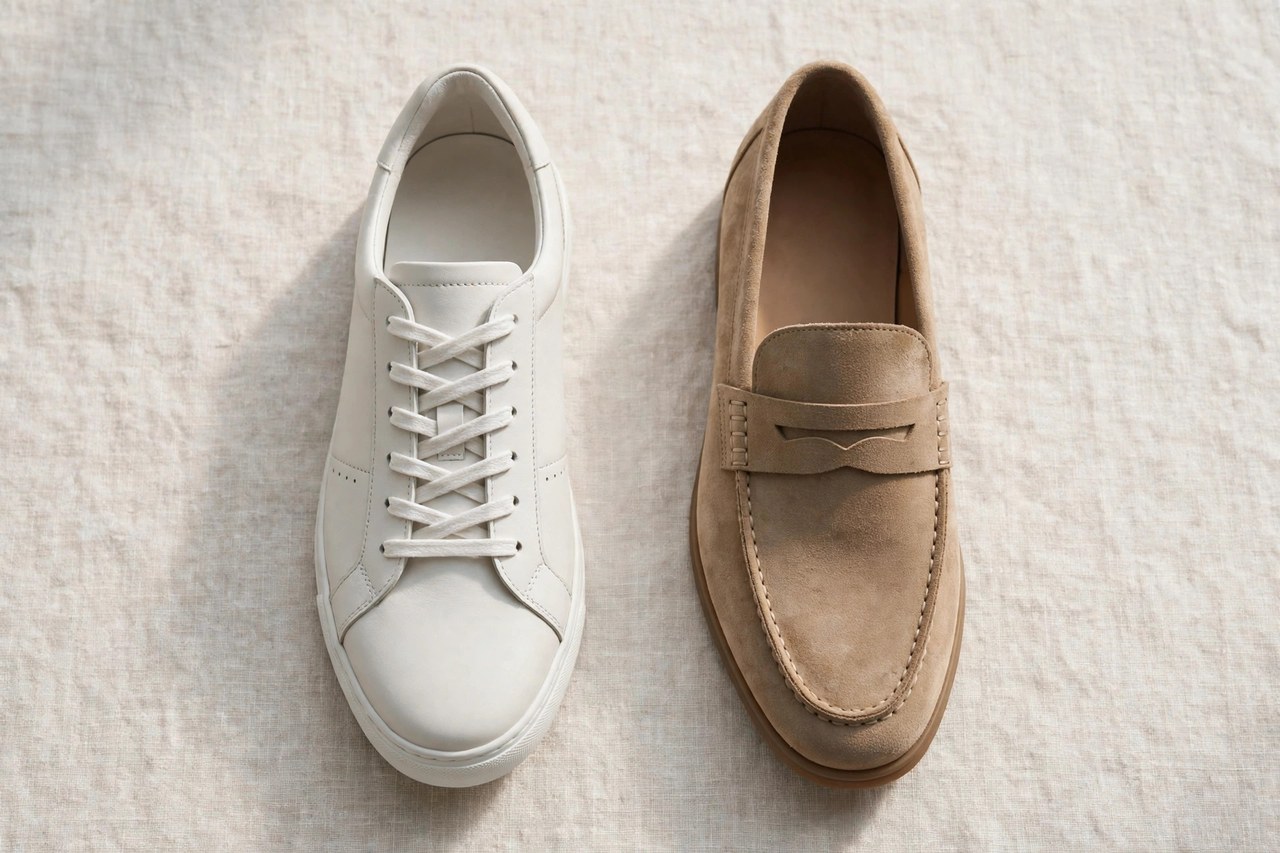
Men's casual shoes are footwear below the dress-shoe line: clean leather and canvas sneakers, suede loafers and drivers, desert boots, casual derbies and the whole tribe of shoes built for everyday life rather than ceremony or sport. They are the most-worn shoes a man owns, and the category where one good pair - chosen for versatility - quietly upgrades every casual outfit it touches. This guide covers the styles worth knowing, the fit points that decide comfort, the fabrics and construction that separate a good buy from a regret, and the simple care that makes the garment last.
Styles and Construction
The workhorse is the minimal leather sneaker: a plain white or neutral low-top on a cupsole, which pairs with everything from shorts to casual tailoring. Around it, suede is casual's favorite material - loafers, desert boots and chukkas in suede read softer than polished leather and age gracefully with a brush. Canvas shoes (their own guide in this letter) own high summer. Construction decides lifespan: stitched cupsoles and welted casual boots can be resoled, cemented fashion shoes cannot, and the price gap usually maps exactly to that difference.
Judge footwear by attachment and compound: cemented soles are light and affordable, stitched or welted constructions cost more and can be repaired, and the outsole rubber decides grip against longevity - soft compounds bite, hard compounds endure. Linings decide comfort over hours, removable insoles decide whether your own supports can come along, and honest weight decides whether the pair disappears on the foot or taxes every mile of the day.
Fit and Sizing
Fit casual shoes as your default shoes: end of day, usual socks (or none, for loafers), heel held, toes free. Suede and unlined leather relax across the width, so a snug-clean fit when new is correct; sneakers with padded collars fit as marked. If one pair must do everything, choose the fit that walks a mile comfortably - casual shoes fail by mileage, not by occasion.
Fit footwear late in the day in the socks you will actually wear, with roughly a thumb's width beyond the longest toe, the heel held without lift, and the foot's widest point meeting the shoe's widest point. Sizes are unstandardized between makers - trust your measured length and width over the printed number, and require no break-in argument: a shoe that needs excuses in the shop delivers them on the road.
Wearing and Care
Rotate at least two pairs so each rests a day; trees or paper hold shape, and suede wants a brush after wear and a protector spray before the first outing. Clean leather sneakers with a damp cloth and mild soap, keep white soles white with a melamine sponge, and never machine-wash leather. Resole the welted pairs before the wear reaches the upper's stitching.
Rotation is the first care rule: a day of rest between wears lets linings dry and cushioning rebound, and it doubles a rotation's life compared with daily wear of one pair. Clean after use, dry at room temperature away from radiators, hold shape with trees or paper, and condition leather on a schedule rather than when it looks thirsty. Reproof weather finishes when water stops beading, and resole stitched footwear before the wear reaches the welt.
Common Questions
What is the most versatile casual shoe?
The clean minimal leather sneaker in white or a soft neutral: it works with shorts, jeans, chinos and unstructured tailoring, in more seasons and more places than any other casual shoe. A suede loafer or desert boot is the second purchase - the pair that takes the same outfits one register warmer.
Can casual shoes be worn with a suit?
With casual tailoring, yes: an unstructured suit in cotton, linen or soft wool accepts a minimal sneaker or suede loafer, and that is now a standard modern look. With a formal business suit, no - the shoe contradicts the suit's message, and a derby or oxford remains the correct answer.
How long should casual shoes last?
With rotation and basic care, a quality leather or suede casual shoe serves three to five years of regular wear, and resoleable constructions far longer. Cemented fashion shoes typically give one to two seasons. Cost per wear almost always favors the better construction.
More in Men's Clothes Guide C
Looking for Men's Clothing Stores?
This guide explains men's casual shoes. To browse where to buy, visit our men's clothing store directory, where you can find retailers that carry them.