Men's Casual Apparel Guide
Men's casual apparel is the clothing of unceremonial life: everything a man wears that is not a suit, a uniform or sport kit - jeans and chinos, t-shirts and polos, casual shirts, sweaters, shorts, and the shoes that go with them. It is most of the modern wardrobe by volume and wear, and the least governed by rules, which is exactly why a system helps: casual is not the absence of dressing, it is dressing by choice rather than by code.
Shop Men's Casual Apparel Now
Shop Men's Casual Apparel on Amazon Shop Men's Casual Apparel on eBayThe Amazon and eBay links on this page are affiliate links. If you make a purchase through them, Apparel Search may earn a commission.
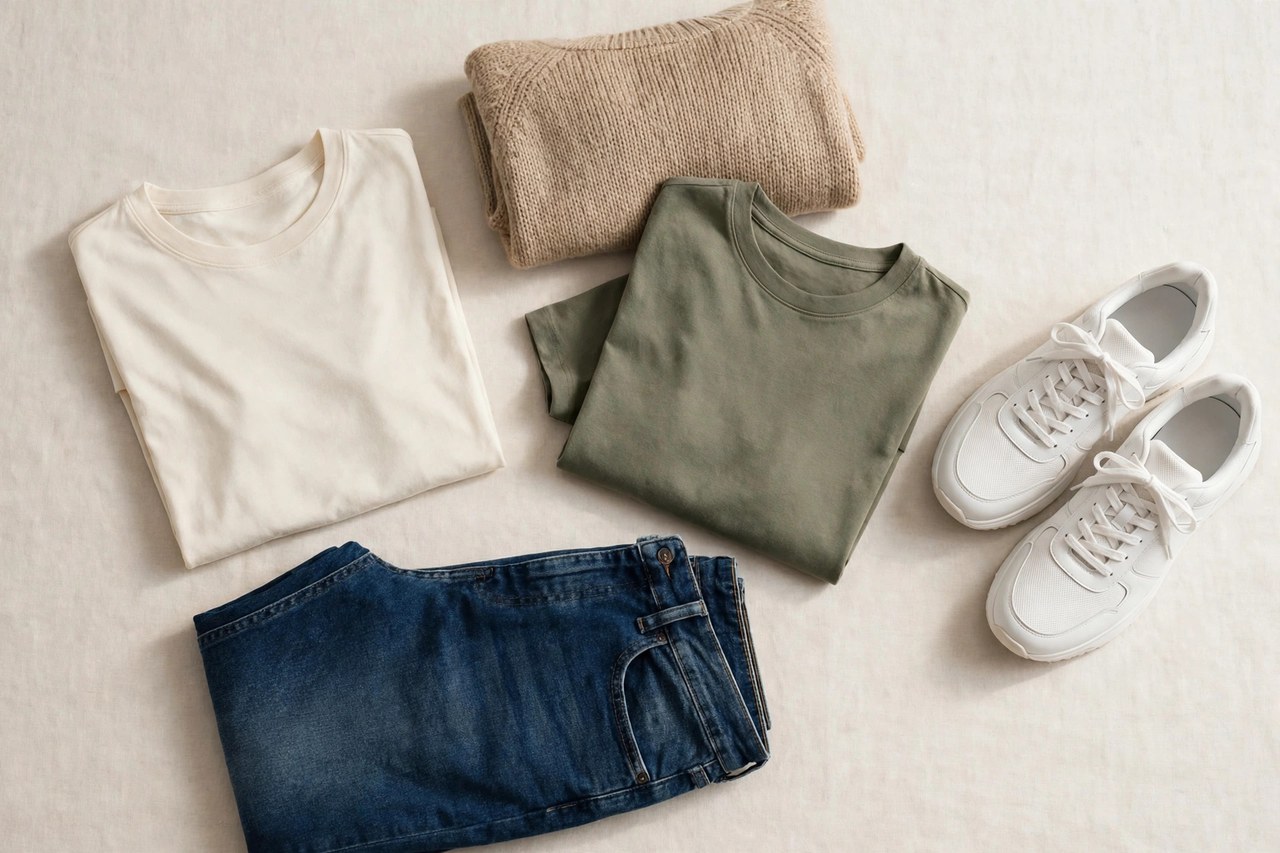
Men's casual apparel is the clothing of unceremonial life: everything a man wears that is not a suit, a uniform or sport kit - jeans and chinos, t-shirts and polos, casual shirts, sweaters, shorts, and the shoes that go with them. It is most of the modern wardrobe by volume and wear, and the least governed by rules, which is exactly why a system helps: casual is not the absence of dressing, it is dressing by choice rather than by code. This guide is built around the questions buyers actually ask: which style, which size, which fabric, and what will it look like after a year of real use - answered in order, with the trade-offs stated plainly.
Styles and Construction
Build casual as a capsule of interchangeable pieces: a small set of bottoms (jeans, chinos, one tailored trouser in a casual cloth), tops that all work with all of them, two layers (a knit and a light jacket), and shoes in two registers (sneaker and casual leather). The colors do the coordinating - navy, grey, olive, khaki, white and denim blue mix almost without thought. Within the system, the individual garments each have their guides in this letter: casual pants, casual shirts, casual shoes and casual sportswear, which began as sport's clothing and became casual's backbone.
The durable buying order is job, specification, budget - in that sequence. Decide what the garment must do, translate that into fiber, weight, construction and size numbers, and only then shop price. Read labels as specifications, inspect the garment inside out where finishing is unposed, and prefer the maker who publishes measurements to the one who publishes adjectives. A garment that matches your measurements, climate and laundry will be worn; one that misses any of the three becomes expensive storage.
Fit and Sizing
Casual fit is ease with intention: nothing tailored-tight, nothing sloppy-wide. Rise mid, leg tapered or straight, shirts long enough to tuck or cut to wear out but never halfway between, knits skimming the body. The most common casual error is size drift - last decade's size in this decade's body - cured by the annual measurement habit and by trying every new category over what it will actually be worn with.
Measure yourself once a year and keep the numbers - chest, waist, inseam, foot, head - because bodies drift gradually while size habits never do. Shop from measurements, try garments under real conditions (over layers, in your own shoes, late in the day for footwear), and be honest about alterations: lengths and small waist changes tailor beautifully; shoulders, rises and patterns are the garment you bought forever.
Wearing and Care
Casual clothes die by laundering more than by wearing: wash less often, wash cool, keep dark pieces with dark, and fold knits. Rotate shoes, air everything between wears, and the capsule arithmetic works - a wardrobe worn in rotation outlasts a bigger one worn in sequence. Mend the small failures (buttons, hems) the week they happen and casual pieces routinely serve five to ten years.
Five minutes when a garment comes off - shake it out, hang or fold it correctly, note the stain and the loose button - prevents most of the damage later blamed on quality. Keep a small kit where the clothes live: brush, lint roller, conditioner suited to your leathers, black, navy and grey thread. Clothing rarely dies at once; it fades by small neglects, and small attentions reverse the process at the same pace.
Common Questions
What counts as casual apparel for men?
Jeans, chinos and casual trousers; t-shirts, polos and untucked shirts; sweaters and sweatshirts; shorts; casual jackets; and sneakers and casual shoes. The line is intent: if the garment was designed for ceremony, sport or a trade uniform, it is not casual - everything designed for everyday life is.
How many casual outfits does a man need?
A working capsule of roughly a dozen well-chosen pieces - three bottoms, six tops, two layers, two pairs of shoes - yields weeks of combinations and covers most lives. Quantity beyond that buys variety, not coverage. The capsule test is interchangeability: a new piece that works with everything you own is worth three that need their own supporting cast.
What is smart casual, then?
Smart casual is casual apparel tightened one notch toward formality: the tailored trouser instead of jeans, the knitted polo or oxford instead of the tee, the clean leather shoe instead of the trainer, a layer with structure. This guide's casual system contains it - it is the top register of the same wardrobe, not a separate one.
More in Men's Clothes Guide C
Looking for Men's Clothing Stores?
This guide explains men's casual apparel. To browse where to buy, visit our men's clothing store directory, where you can find retailers that carry them.