Men's Jeans Guide
Men's jeans are trousers made from denim or dungaree cloth - most famously the blue jeans invented by Jacob W. Davis in partnership with Levi Strauss & Co. in 1871. Originally designed for cowboys and miners who needed pants that would not tear at the pockets or seams, jeans became popular in the 1950s among teenagers, especially members of the greaser subculture, rolled through the 1960s Hippie years and the 1970s and 1980s youth subcultures of punk rock and heavy metal, and remain - in the historic brands Levi's, Lee and Wrangler and hundreds of successors - the default trouser of the modern wardrobe.
Shop Men's Jeans Now
Shop Men's Jeans on Amazon Shop Men's Jeans on eBayThe Amazon and eBay links on this page are affiliate links. If you make a purchase through them, Apparel Search may earn a commission.
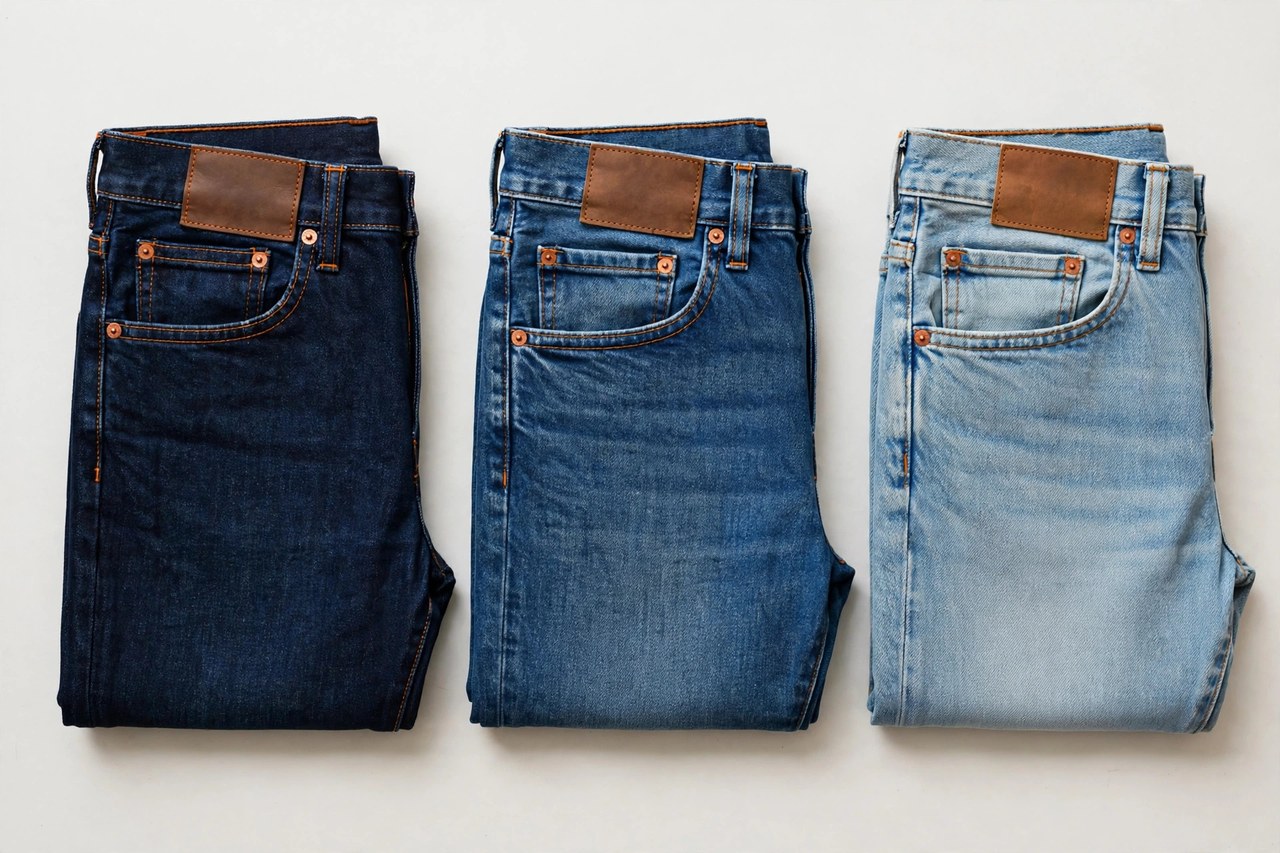
Men's jeans are trousers made from denim or dungaree cloth - most famously the blue jeans invented by Jacob W. Davis in partnership with Levi Strauss & Co. in 1871. Originally designed for cowboys and miners who needed pants that would not tear at the pockets or seams, jeans became popular in the 1950s among teenagers, especially members of the greaser subculture, rolled through the 1960s Hippie years and the 1970s and 1980s youth subcultures of punk rock and heavy metal, and remain - in the historic brands Levi's, Lee and Wrangler and hundreds of successors - the default trouser of the modern wardrobe. This guide is built around the questions buyers actually ask: which style, which size, which fabric, and what will it look like after a year of real use - answered in order, with the trade-offs stated plainly.
Denim: Fabric, Weights, Washes and Construction
Everything starts with the fabric. Denim is a sturdy cotton warp-faced textile in which the weft passes under two or more warp threads; in the most common form, indigo denim, the warp thread is dyed while the weft thread is left white. Because of the warp-faced twill weave, one side of the textile is dominated by the blue warp threads and the other side by the white weft - which is why blue jeans are white on the inside. Weight sorts the cloth: lightweight denim under 12 ounces flexes and breathes for summer, the classic 12 to 14 ounce range balances structure and comfort, and heavyweight denim above that molds to the wearer slowly and rewards patience. Construction carries the 1871 inheritance: copper rivets at pocket corners and other stress points, bar-tack stitching where rivets would be uncomfortable, a chain-stitched hem that puckers into the prized roping effect, and - on selvedge denim woven on shuttle looms - a self-finished edge with its colored ID thread, visible when you cuff. Washes and finishes then set the starting point of the jeans' life: raw or rigid denim arrives unwashed and fades entirely to your habits, while stonewashed, enzyme-washed and pre-distressed jeans arrive with factory aging built in - the 'distressed' look, visibly aged and worn but still intact and functional, whose pre-sale factory distressing has become a standard commercial feature.
For any leg garment the rise is the first specification, because it decides sitting comfort before fabric gets a vote: measure from front waistband through to back and compare it with a pair that already works. Then audit the stress points - bar-tacked belt loops and pocket corners, double-stitched inseams, hems finished evenly - and the pocketing, which should be deep, smooth and strong enough to carry what the garment's pockets invite you to carry.
Fits, Rises and Sizing
Fit is a system of three numbers and one shape. The waist and inseam are printed on the label, but the rise - the distance from the front waistband through to the back - decides sitting comfort before anything else, and it runs from low rises that sit on the hips to high rises that meet the natural waist. Around those numbers the fits arrange themselves: skinny and cigarette bottoms that follow the leg closely, slim and tapered legs that narrow from a clean thigh to a small ankle opening, the timeless straight leg, boot cut and flare shapes that widen over footwear, and relaxed and anti-fit cuts that trade structure for ease. Measure a pair you already love - waist where it actually sits, inseam to your preferred break, thigh and seat - and shop from those numbers rather than from the size you have always bought. Denim relaxes roughly half an inch in the waist with wear and raw inseams shrink in the first wash, so the right new fit is firm at the waist, correct at the rise, and honest about the shrinkage still to come.
Measure where the waistband will actually sit, plus inseam to your preferred break, and thigh and seat for closer cuts. Then sit, squat and climb a step in the fitting room - a leg garment that only works standing still does not work. Waistbands relax roughly half an inch in wear and inseams shrink most in early washes, so buy the fit you want after those changes rather than the fit in the mirror.
Care and the Art of the Fade
Jeans care is really fade management, because the indigo dyeing process - in which the core of the warp threads remains white - is what creates denim's signature fading: every crease, fold and rub lifts blue surface dye and reveals the white core beneath, mapping your wallet, your phone, your knees and your stride onto the cloth. Wash jeans inside out, cool, and only as often as they genuinely need it; frequent hot washing strips dye evenly and shortens the fabric's life, while patient washing keeps the contrast that makes fades worth having. Raw denim traditionalists delay the first wash for months to set sharp creases first - a legitimate strategy, not a rule. Dry low or on the line, never store jeans dirty, and walk the stress points each season - hem edges, pocket corners, seat and inner thigh - mending the small fray while it is still small. Treat your jeans as the record they are: sturdy fabric, honest construction and a fade pattern nobody else on earth can duplicate.
Wash leg garments inside out and cool; heat is the agent that fades dye, tires elastic and shortens inseams. Dry low or on the line, hang or fold promptly, and crease deliberately or not at all. Walk the stress points each season - hem edges, pocket corners, seat and inner thigh - and mend the small fray while it is still small: leg garments fail gradually, then suddenly, and the two-minute October repair prevents the November replacement.
Common Questions
Why are blue jeans white on the inside?
Because of how denim is woven and dyed. Denim is a warp-faced twill: the weft passes under two or more warp threads, so one side of the cloth is dominated by the warp and the other by the weft. In indigo denim the warp threads are dyed blue while the weft threads are left white, so the outside of the fabric shows the blue warp and the inside shows the white weft. That is also why jeans fade the way they do - the indigo sits on the surface of the warp threads while their core stays white, so wear reveals the white beneath.
What is selvedge denim, and is it worth paying more for?
Selvedge denim is woven on older shuttle looms that produce a narrower cloth with a self-finished edge - the selvedge - which cannot unravel and often carries a colored ID thread; you can see it on the outseam when you cuff your jeans. It tends to come in heavier, less uniform fabric with more surface character, and it costs more because the looms are slower and the cloth narrower. Whether it is worth it depends on what you value: selvedge buys fabric character, traditional construction details like chain-stitched hems, and fading with strong contrast. It does not automatically buy a better fit - judge the rise, thigh and taper first, then enjoy the edge.
How often should you wash jeans?
As rarely as hygiene honestly allows, and always inside out and cool when you do. Every wash lifts indigo from the warp threads; hot, frequent washing fades jeans evenly and tires the cotton, while spaced washing preserves the high-contrast, personal fading that makes a pair yours. Spot-clean spills, air the jeans between wears, and wash when they are actually dirty or have stretched out of shape - a cool wash also resets the waist by about the half inch denim relaxes in wear. Raw denim can go months before its first wash to set creases; washed and finished jeans ask only for gentleness, not delay.
More in Men's Clothes Guide J
Jeans, From Mines to Main Street
Jeans are trousers, typically made from denim or dungaree cloth; the term often refers to a particular style of pants, called “blue jeans,” which were invented by Jacob W. Davis in partnership with Levi Strauss & Co. in 1871. Originally designed for cowboys and miners, jeans became popular in the 1950s among teenagers, especially members of the greaser subculture. Jeans were a common fashion item in the 1960s Hippie subculture and they continued to be popular in the 1970s and 1980s youth subcultures of punk rock and heavy metal. Historic brands include Levi’s, Lee, and Wrangler. The classic fits include skinny, tapered, slim, straight, boot cut, cigarette bottom, narrow bottom, bell bottom, low waist, anti-fit, and flare. “Distressed” jeans — visibly aged and worn but still intact and functional — have made pre-sale factory distressing a common feature in commercially sold jeans. The cloth itself: denim is a sturdy cotton warp-faced textile in which the weft passes under two or more warp threads; in indigo denim the warp thread is dyed while the weft thread is left white, so as a result of the warp-faced twill weaving one side of the textile is dominated by the blue warp threads and the other side by the white weft threads — which causes blue jeans to be white on the inside — and the indigo dyeing process, in which the core of the warp threads remains white, creates denim’s signature fading characteristics.
Looking for Men's Clothing Stores?
This guide explains men's jeans. To browse where to buy, visit our men's clothing store directory, where you can find retailers that carry them.
Don't forget to visit The Jeans & Denim Guide.