Men's Denim Pants Guide
Men's denim pants are trousers cut from denim - in practice, jeans: the five-pocket, riveted, heavy-cotton trouser that began as patented workwear in 1873 and became the most widely worn garment on earth. This page treats denim pants as the whole system - fits, rises, washes, weights and denim types - because 'a pair of jeans' is not one product but a matrix of decisions, and the difference between the pair you live in and the pair in the drawer is almost always two of those decisions made wrong.
Shop Men's Denim Pants Now
Shop Men's Denim Pants on Amazon Shop Men's Denim Pants on eBayThe Amazon and eBay links on this page are affiliate links. If you make a purchase through them, Apparel Search may earn a commission.
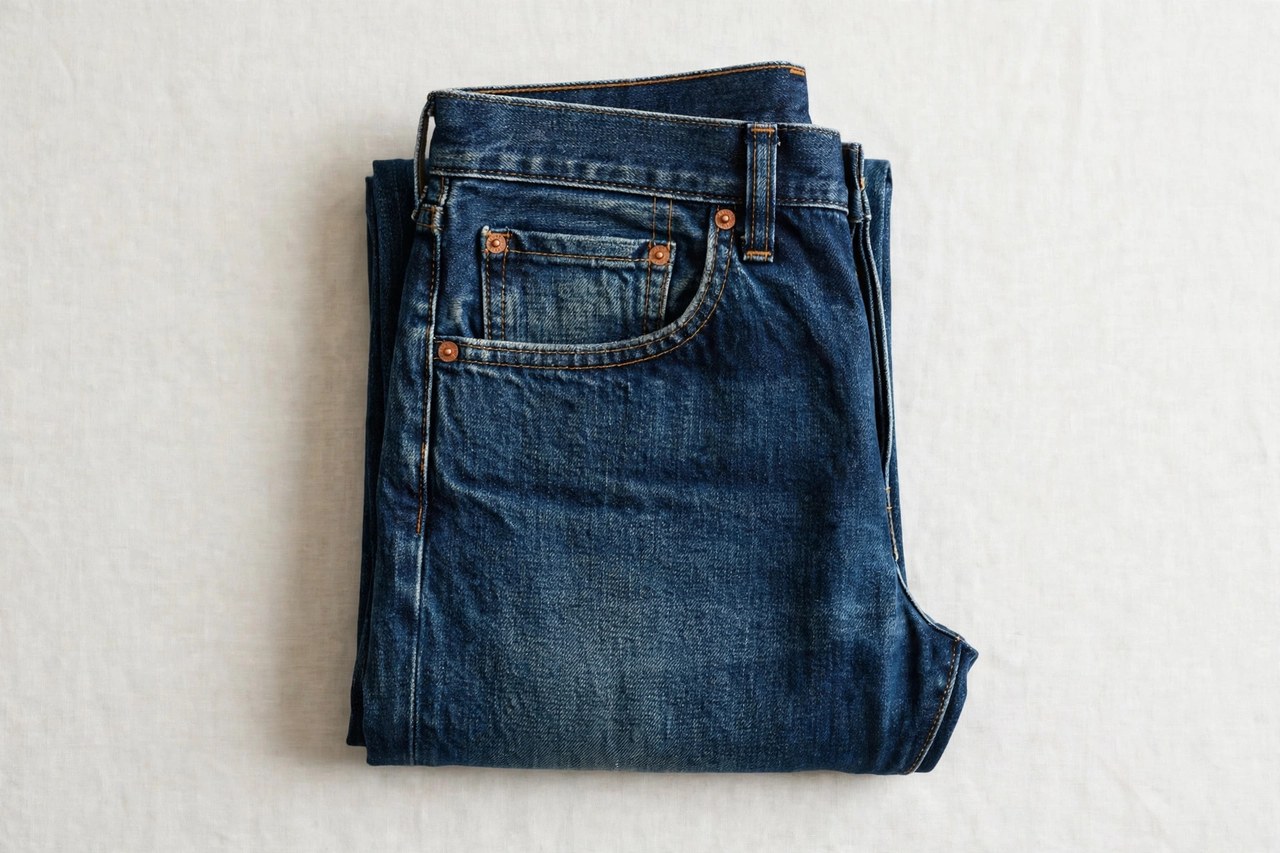
Men's denim pants are trousers cut from denim - in practice, jeans: the five-pocket, riveted, heavy-cotton trouser that began as patented workwear in 1873 and became the most widely worn garment on earth. This page treats denim pants as the whole system - fits, rises, washes, weights and denim types - because 'a pair of jeans' is not one product but a matrix of decisions, and the difference between the pair you live in and the pair in the drawer is almost always two of those decisions made wrong. This guide covers the styles worth knowing, the fit points that decide comfort, the fabrics and construction that separate a good buy from a regret, and the simple care that makes the garment last.
Styles and Construction
The fit ladder runs skinny, slim, straight, relaxed and loose, but rise is the fit's foundation: low rises sit on the hip, mid rises at the natural waist's approach, high rises at the waist itself - and rise decides comfort sitting more than leg width does. Denim types divide by dye and weave: raw (unwashed, fades to your life), rinse (one wash, stays dark), washed and distressed (pre-faded), black, and ecru. Selvedge denim, woven on shuttle looms with self-finished edges, is denser and fades with prized vertical character; stretch denim trades a little longevity for all-day ease.
For any leg garment the rise is the first specification, because it decides sitting comfort before fabric gets a vote: measure from front waistband through to back and compare it with a pair that already works. Then audit the stress points - bar-tacked belt loops and pocket corners, double-stitched inseams, hems finished evenly - and the pocketing, which should be deep, smooth and strong enough to carry what the garment's pockets invite you to carry.
Fit and Sizing
Measure a pair you love - waist where it actually sits, rise, thigh, knee, hem and inseam - and shop from those numbers, because labeled sizes vary by an inch or more between brands. Raw denim shrinks, especially in length: unsanforized cloth can lose two inches of inseam in the first wash. Waistbands relax roughly an inch with wear, so a new pair should button with firm effort, not comfort. Try jeans sitting and climbing stairs; a rise that works only standing is a rise that fails at desks and in cars.
Measure where the waistband will actually sit, plus inseam to your preferred break, and thigh and seat for closer cuts. Then sit, squat and climb a step in the fitting room - a leg garment that only works standing still does not work. Waistbands relax roughly half an inch in wear and inseams shrink most in early washes, so buy the fit you want after those changes rather than the fit in the mirror.
Wearing and Care
Washing is fading: every wash spends indigo, so wash jeans as rarely as hygiene allows, cold and inside out, and line-dry - the dryer is the fastest fade and shrink machine you own. Raw denim rewards the patient with fades mapped to your phone, wallet and gait. Repair the crotch at the first thinning, not the first hole - darning a worn area is cheap, patching a blown one is visible. Rotate two pairs and each will outlast a single pair worn daily by more than double.
Wash leg garments inside out and cool; heat is the agent that fades dye, tires elastic and shortens inseams. Dry low or on the line, hang or fold promptly, and crease deliberately or not at all. Walk the stress points each season - hem edges, pocket corners, seat and inner thigh - and mend the small fray while it is still small: leg garments fail gradually, then suddenly, and the two-minute October repair prevents the November replacement.
Common Questions
What denim weight is best for everyday jeans?
Twelve to thirteen ounces is the all-season answer for most men: substantial enough to hold shape and fade well, light enough for warm rooms. Below 11 ounces reads summery and wears faster; 14 ounces and up is the enthusiast's territory - stiffer, longer-lived, and a genuine break-in project. Weight interacts with stretch: a 12-ounce stretch denim feels lighter than its number, a rigid 12-ounce feels heavier.
How should raw denim be washed for the first time?
Wait as long as you reasonably can - months, not weeks - so wear patterns set into the cloth before water moves the dye. Then a cold soak or gentle machine wash, inside out, with a dark-garment detergent and no tumble drying. Expect indigo in the water and some length loss if the cloth is unsanforized. After the first wash, the jeans are yours in a way washed denim never is: the creases are set where your body put them.
What is selvedge denim, and is it worth it?
Selvedge is denim woven on vintage shuttle looms, narrow and slow, with a self-finished edge (visible as the colored line inside the outseam when you cuff). The cloth is typically denser, with more texture and vertical fade character. It is worth it if you wear jeans hard, cuff them, and enjoy fades as a hobby; it is not worth it for a man who wants soft, consistent, office-quiet denim - modern projectile-loom denim serves him better for less.
More in Men's Clothes Guide D
Looking for Men's Clothing Stores?
This guide explains men's denim pants. To browse where to buy, visit our men's clothing store directory, where you can find retailers that carry them.