Men's Denim Shorts Guide
Men's denim shorts - jean shorts, and yes, jorts - are the five-pocket jean cut off at the thigh: the same riveted construction, shortened for summer. Long mocked and quietly worn everywhere, they have settled into what the evidence always said they were: the most durable warm-weather short a man can own, in the fabric that shrugs off the season's abrasion. This page treats them seriously - inseams, washes, the cutoff question, and how to wear denim shorts as a choice rather than a surrender.
Shop Men's Denim Shorts Now
Shop Men's Denim Shorts on Amazon Shop Men's Denim Shorts on eBayThe Amazon and eBay links on this page are affiliate links. If you make a purchase through them, Apparel Search may earn a commission.
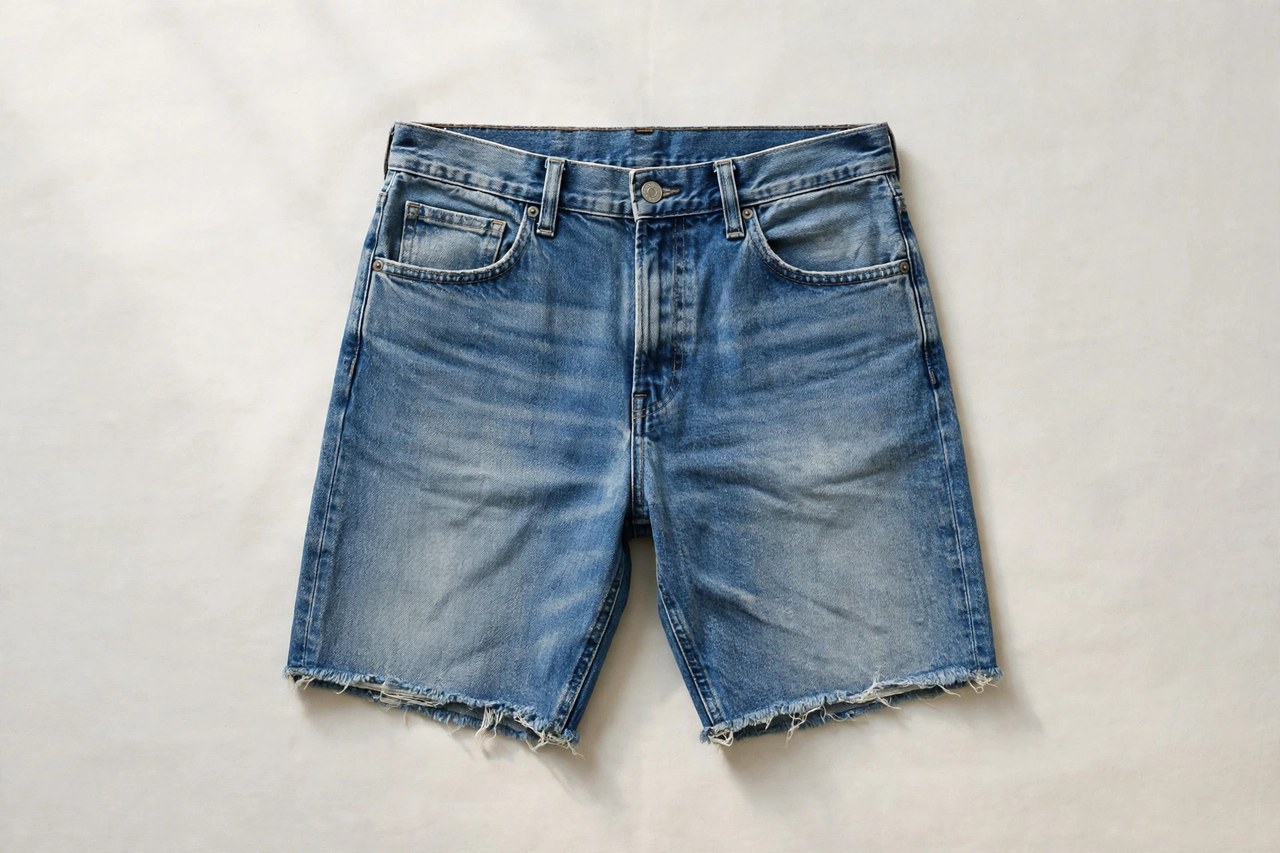
Men's denim shorts - jean shorts, and yes, jorts - are the five-pocket jean cut off at the thigh: the same riveted construction, shortened for summer. Long mocked and quietly worn everywhere, they have settled into what the evidence always said they were: the most durable warm-weather short a man can own, in the fabric that shrugs off the season's abrasion. This page treats them seriously - inseams, washes, the cutoff question, and how to wear denim shorts as a choice rather than a surrender. This guide is built around the questions buyers actually ask: which style, which size, which fabric, and what will it look like after a year of real use - answered in order, with the trade-offs stated plainly.
Styles and Construction
Inseam is the whole silhouette: 5 inches reads athletic and modern, 7 inches is the contemporary standard ending above the knee, 9 inches reaches the knee and reads classic, and anything longer is a different, older era speaking. Construction mirrors jeans - raw and rigid for structure, stretch for movement, washes from dark (dressiest) to destroyed. The cutoff is its own category: factory cutoffs come hemmed or pre-frayed and measured; home cutoffs are made from jeans whose knees have gone, cut longer than the target (denim frays up an inch in the wash) and left to fringe honestly.
For any leg garment the rise is the first specification, because it decides sitting comfort before fabric gets a vote: measure from front waistband through to back and compare it with a pair that already works. Then audit the stress points - bar-tacked belt loops and pocket corners, double-stitched inseams, hems finished evenly - and the pocketing, which should be deep, smooth and strong enough to carry what the garment's pockets invite you to carry.
Fit and Sizing
Fit denim shorts like jeans at the waist and rise - the top block is identical - and judge them by the leg opening: it should skim the thigh, not grip it, because denim's stiffness turns a tight leg into a tourniquet when you sit. Dark, clean, 7-inch denim shorts with a tucked shirt and loafers pass in more places than rumpled cargo shorts ever will; destroyed washes and long inseams are beach-and-yard clothes and should not be asked to be more. When converting jeans, cut both legs from one measurement, not by eye.
Measure where the waistband will actually sit, plus inseam to your preferred break, and thigh and seat for closer cuts. Then sit, squat and climb a step in the fitting room - a leg garment that only works standing still does not work. Waistbands relax roughly half an inch in wear and inseams shrink most in early washes, so buy the fit you want after those changes rather than the fit in the mirror.
Wearing and Care
Care is jean care with summer frequency: they will be washed more than jeans, so choose the wash with that in mind - dark pairs fade toward medium by season's end, which many men plan for (buy dark, enjoy the fade, retire to light). Wash cold and inside out, dry on the line to keep the fray from eating the inseam, and snip runaway threads rather than pulling them. Check the crotch and seat each season; shorts live harder per wearing than any garment in the drawer.
Wash leg garments inside out and cool; heat is the agent that fades dye, tires elastic and shortens inseams. Dry low or on the line, hang or fold promptly, and crease deliberately or not at all. Walk the stress points each season - hem edges, pocket corners, seat and inner thigh - and mend the small fray while it is still small: leg garments fail gradually, then suddenly, and the two-minute October repair prevents the November replacement.
Common Questions
What inseam length is right for denim shorts?
For most men, 7 inches: it ends above the knee, proportions well with both slim and relaxed builds, and reads current without chasing fashion. Five inches suits athletic builds and hot climates and reads deliberate; 9 inches reaches the knee and feels classic but can shorten the leg visually. The fitting rule: the hem should sit above the kneecap, and the leg opening should let you pinch an inch of cloth at the thigh.
How do you make cutoff shorts from old jeans?
Pick jeans whose top block still fits and whose damage is below the knee. Put them on, mark the target length in chalk standing straight, then add an inch for fray and shrinkage and cut one leg, measure it, and mirror it exactly on the other. Wash them twice before judging the final length - the fringe climbs. A single row of stitching an inch above the cut stops the fray at a chosen line if you want the fringe controlled.
Are denim shorts acceptable beyond the beach and yard?
In the right specification, yes: dark wash, no distressing, 7-inch inseam, clean hem, worn with a tucked or neat untucked shirt, a belt and loafers or clean sneakers. That outfit is standard summer smart-casual across most of the warm world. What fails in town is the combination of length past the knee, heavy destruction and a faded wash - the three signals of yard clothes worn by inertia rather than choice.
More in Men's Clothes Guide D
More to Explore on Apparel Search
Looking for Men's Clothing Stores?
This guide explains men's denim shorts. To browse where to buy, visit our men's clothing store directory, where you can find retailers that carry them.