Men's Denim Shirts Guide
A men's denim shirt is a button-front shirt cut from denim or its lighter cousin chambray - the working shirt of the West, with a yoked back, flap pockets and, in its classic western form, pearl snap buttons instead of sewn ones. Where the denim jacket is outerwear, the denim shirt is a layer with range: worn open over a t-shirt, buttoned as a shirt in its own right, or sandwiched under a jacket where its faded blue does the work of a whole color palette.
Shop Men's Denim Shirts Now
Shop Men's Denim Shirts on Amazon Shop Men's Denim Shirts on eBayThe Amazon and eBay links on this page are affiliate links. If you make a purchase through them, Apparel Search may earn a commission.
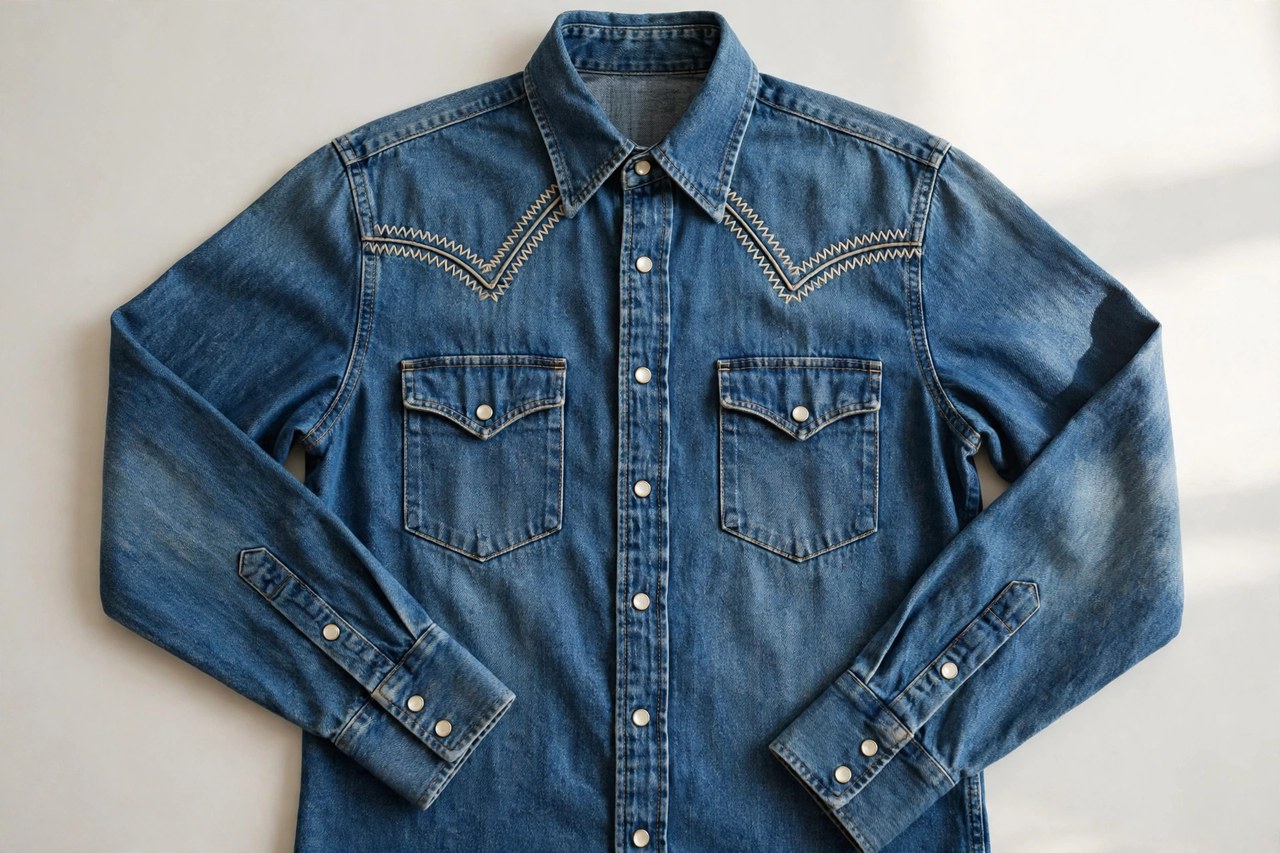
A men's denim shirt is a button-front shirt cut from denim or its lighter cousin chambray - the working shirt of the West, with a yoked back, flap pockets and, in its classic western form, pearl snap buttons instead of sewn ones. Where the denim jacket is outerwear, the denim shirt is a layer with range: worn open over a t-shirt, buttoned as a shirt in its own right, or sandwiched under a jacket where its faded blue does the work of a whole color palette. This guide is built around the questions buyers actually ask: which style, which size, which fabric, and what will it look like after a year of real use - answered in order, with the trade-offs stated plainly.
Styles and Construction
Know the cloth boundary first: true denim is a twill with a white weft, so its face is blue and its back paler; chambray is a plain weave that looks similar from a distance but is lighter, softer and more breathable - many 'summer denim shirts' are honestly chambray. Weights run 5 to 8 ounces for shirts. Western shirts carry pointed yokes, snap plackets and sawtooth pocket flaps; work shirts carry button fronts, triple-stitched seams and two chest pockets; tailored denim shirts slim the whole pattern down for wear under a blazer. Washes mirror jeans: raw-dark, mid-stone, bleached.
A top earns its keep in finishing: seams that hang straight and stay even at eight to twelve stitches per inch, collars and plackets that lie flat after washing, buttons sewn with thread shanks so they sit in their holes without pulling. Hold the cloth to the light - a tight, even weave or knit outwears a loose one at the same labeled weight, and pattern pieces cut on grain keep the garment from twisting around your body by the third wash.
Fit and Sizing
A denim shirt should fit like the shirt it replaces: collar closing without strain, shoulder seams on the bone, enough chest ease to button over a thermal in winter if it will serve double duty. Worn with jeans, it obeys the jacket rule with one exception - a chambray shirt's softness lets it sit closer in shade to denim trousers than a rigid jacket could. Mind the snap question: pearl snaps are the western signature and convenient, but a snap that fails is harder to replace than a button, so check each one's grip when buying.
Fit tops shoulders and chest first, because tailors cannot cheaply move either: the shoulder seam ends at the shoulder bone, the chest closes without pulling, and both arms raise without the hem escaping the waistband. Tucked lengths must stay tucked sitting; untucked lengths should end mid-fly. Sleeves are the cheap alteration, shoulders the permanent one - reject a wrong shoulder for any reason, forgive a long sleeve for many.
Wearing and Care
Wash denim shirts more freely than jeans - they sit against skin and absorb what jeans never meet - but still cold and inside out to hold the color, and hang them by the hem to dry with the placket buttoned so the front keeps its line. Iron on the reverse to protect snaps and fading. A denim shirt's collar and cuffs fade first and fail first; when the collar edge frays, the shirt retires to open-over-tee duty, where a frayed collar is character rather than damage.
Launder tops by the label with three defaults: cool or warm water to protect color and trims, dark and printed pieces inside out, and low or line drying, which is the largest single lever on a shirt's lifespan. Fasten buttons and zips before washing to protect the whole load, treat stains before the dryer can set them, and store knits folded so their shoulders keep the shape they were knitted with.
Common Questions
Is a chambray shirt the same as a denim shirt?
No, though shops blur them. Denim is a diagonal twill - colored warp, white weft - with a distinct face and pale back; chambray is a plain weave of the same yarns, uniform in color, lighter and airier. Chambray wins for summer and for layering under jackets without bulk; true denim wins for durability, structure and the classic western look. Check the inside of the cloth: twill lines mean denim, flat even weave means chambray.
Can you wear a denim shirt with a tie or blazer?
Yes - a dark, slim, button-front denim shirt under a soft blazer is a long-standing smart-casual move, and a knit tie suits its texture better than silk. Keep the shirt dark and unfaded, the collar neat (button-down collars behave best), and skip the western snaps and sawtooth pockets for this use: the tailoring reads the shirt as a shirt, and the denim reads as personality.
Why do western shirts use snaps instead of buttons?
Snaps are ranch engineering: a rider caught on a branch or a fence could pull free when a snap popped, where a sewn button would hold and tear the shirt or worse. They also fasten one-handed and never need re-sewing. The pearl snap became the western shirt's visual signature from that practical start - function first, icon second, like most of workwear's enduring details.
More in Men's Clothes Guide D
Looking for Men's Clothing Stores?
This guide explains men's denim shirts. To browse where to buy, visit our men's clothing store directory, where you can find retailers that carry them.