Men's Casual Pants Guide
Men's casual pants are the trousers of everyday life between jeans and dress trousers: chinos above all, plus cords, casual five-pocket twills, linen and drawstring styles. The chino is the template - a cotton twill trouser, flat-front, in khaki and its descendants - because it dresses up with a tucked shirt and dresses down with a tee without changing its own nature. This page covers the category; corduroy and canvas and cargo each have their own guides in this letter.
Shop Men's Casual Pants Now
Shop Men's Casual Pants on Amazon Shop Men's Casual Pants on eBayThe Amazon and eBay links on this page are affiliate links. If you make a purchase through them, Apparel Search may earn a commission.
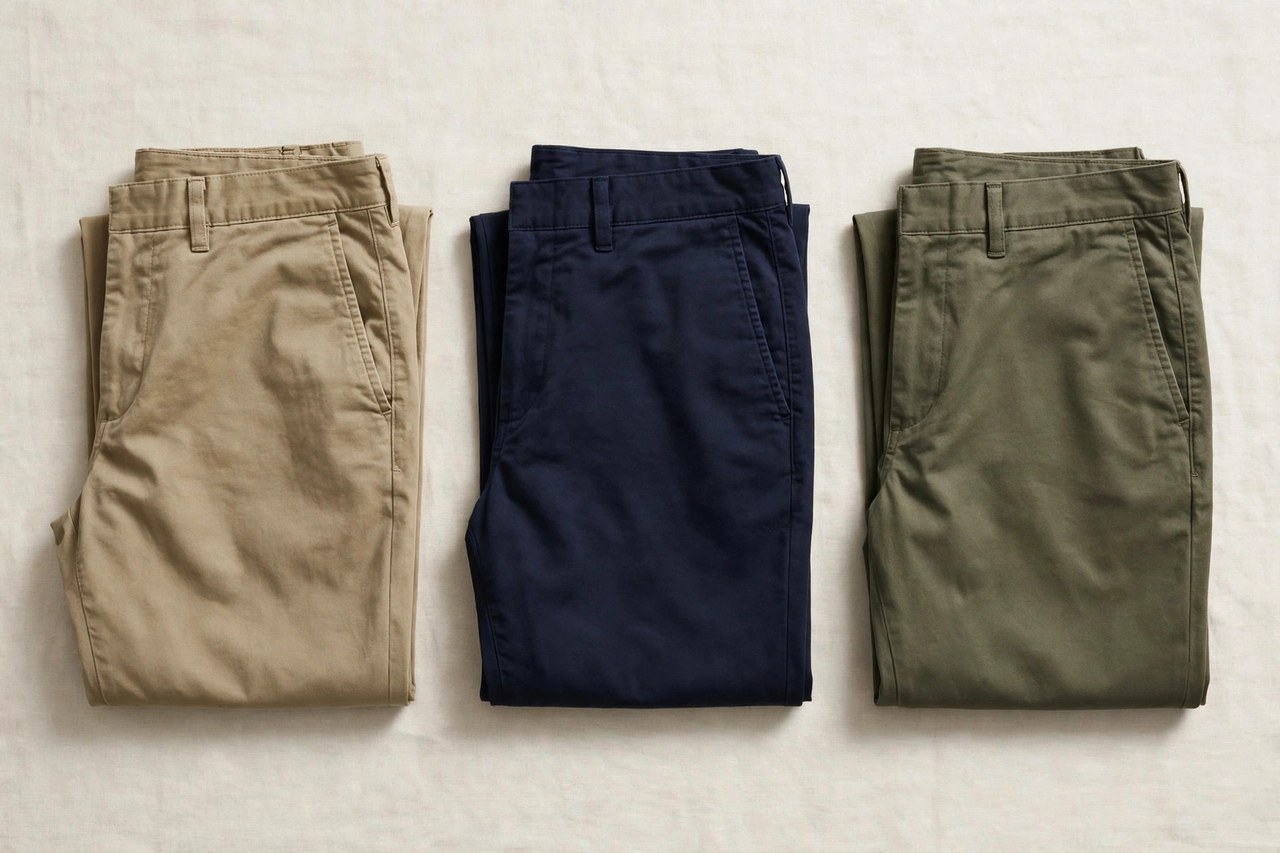
Men's casual pants are the trousers of everyday life between jeans and dress trousers: chinos above all, plus cords, casual five-pocket twills, linen and drawstring styles. The chino is the template - a cotton twill trouser, flat-front, in khaki and its descendants - because it dresses up with a tucked shirt and dresses down with a tee without changing its own nature. This page covers the category; corduroy and canvas and cargo each have their own guides in this letter. This guide covers the styles worth knowing, the fit points that decide comfort, the fabrics and construction that separate a good buy from a regret, and the simple care that makes the garment last.
Styles and Construction
Choose by cloth and cut. Twill chinos in a mid-weight cotton (with one or two percent elastane in modern versions) are the default; garment-dyed versions run softer and more casual; cords add texture and season; linen and linen blends own the summer. Cuts run slim, straight and relaxed, and the honest advice is to match cut to leg: slim cuts on slim legs, straight cuts as the universal, athletic cuts with thigh room for men who squat more than they sit. Details that matter: a proper button-and-fly closure over drawstring-only waists for anything leaving the house, and pocketing deep enough for a modern phone.
For any leg garment the rise is the first specification, because it decides sitting comfort before fabric gets a vote: measure from front waistband through to back and compare it with a pair that already works. Then audit the stress points - bar-tacked belt loops and pocket corners, double-stitched inseams, hems finished evenly - and the pocketing, which should be deep, smooth and strong enough to carry what the garment's pockets invite you to carry.
Fit and Sizing
Fit casual pants at the waist you actually have, with the rise that matches how you wear shirts: mid-rise for tucking, slightly lower for untucked casual. Inseam to a small break or no break over casual shoes - a clean hem is what separates casual pants from work pants at a glance. Sit and cross your legs in the fitting room; casual pants are sat in for whole days, and a waistband that digs by minute ten fails the category's only test.
Measure where the waistband will actually sit, plus inseam to your preferred break, and thigh and seat for closer cuts. Then sit, squat and climb a step in the fitting room - a leg garment that only works standing still does not work. Waistbands relax roughly half an inch in wear and inseams shrink most in early washes, so buy the fit you want after those changes rather than the fit in the mirror.
Wearing and Care
Chinos and twills wash easily - cool, inside out to slow the fade, low dry - and a light press or a hang from the wash restores the front. Treat the hem edges and pocket mouths as wear points and mend early. Garment-dyed colors fade toward softness, which suits the category; keep one darker, newer pair in reserve for the smart end of casual and rotate the faded veterans downward.
Wash leg garments inside out and cool; heat is the agent that fades dye, tires elastic and shortens inseams. Dry low or on the line, hang or fold promptly, and crease deliberately or not at all. Walk the stress points each season - hem edges, pocket corners, seat and inner thigh - and mend the small fray while it is still small: leg garments fail gradually, then suddenly, and the two-minute October repair prevents the November replacement.
Common Questions
What is the difference between chinos and khakis?
Khaki is a color; chino is the garment - a cotton twill trouser. All khaki chinos are chinos, but chinos come in navy, olive, stone, grey and a dozen other colors. The confusion is historical: the original military trousers were khaki-colored chinos, and American usage fused the words.
Can casual pants be worn to a smart-casual office?
Yes - they are the foundation of the dress code. Choose a dark, clean chino or casual trouser with a proper closure, no fading or distressing, hemmed to a tidy break, and pair it with a tucked shirt and leather shoes. The same pants in a washed color with sneakers stay weekend wear; context is set by company, not cloth alone.
How many pairs of casual pants does a man need?
Three covers a life: one khaki or stone, one navy or charcoal, one seasonal (cord, linen or olive). Rotate them and each pair rests between wears, which is the difference between trousers that hold their shape for years and trousers that bag at the knee by spring.
More in Men's Clothes Guide C
Looking for Men's Clothing Stores?
This guide explains men's casual pants. To browse where to buy, visit our men's clothing store directory, where you can find retailers that carry them.