Men's Corduroy Pants Guide
Men's corduroy pants are trousers cut from corduroy - a cotton fabric woven with raised parallel ridges called wales, formed by extra weft yarns that are cut and brushed into a soft pile. Corduroy is the warmth-and-texture trouser of the cool seasons: softer than denim, warmer than plain twill, and carrying a depth of color - rust, olive, burgundy, tan - that flat fabrics cannot match because the pile catches light along every rib.
Shop Men's Corduroy Pants Now
Shop Men's Corduroy Pants on Amazon Shop Men's Corduroy Pants on eBayThe Amazon and eBay links on this page are affiliate links. If you make a purchase through them, Apparel Search may earn a commission.
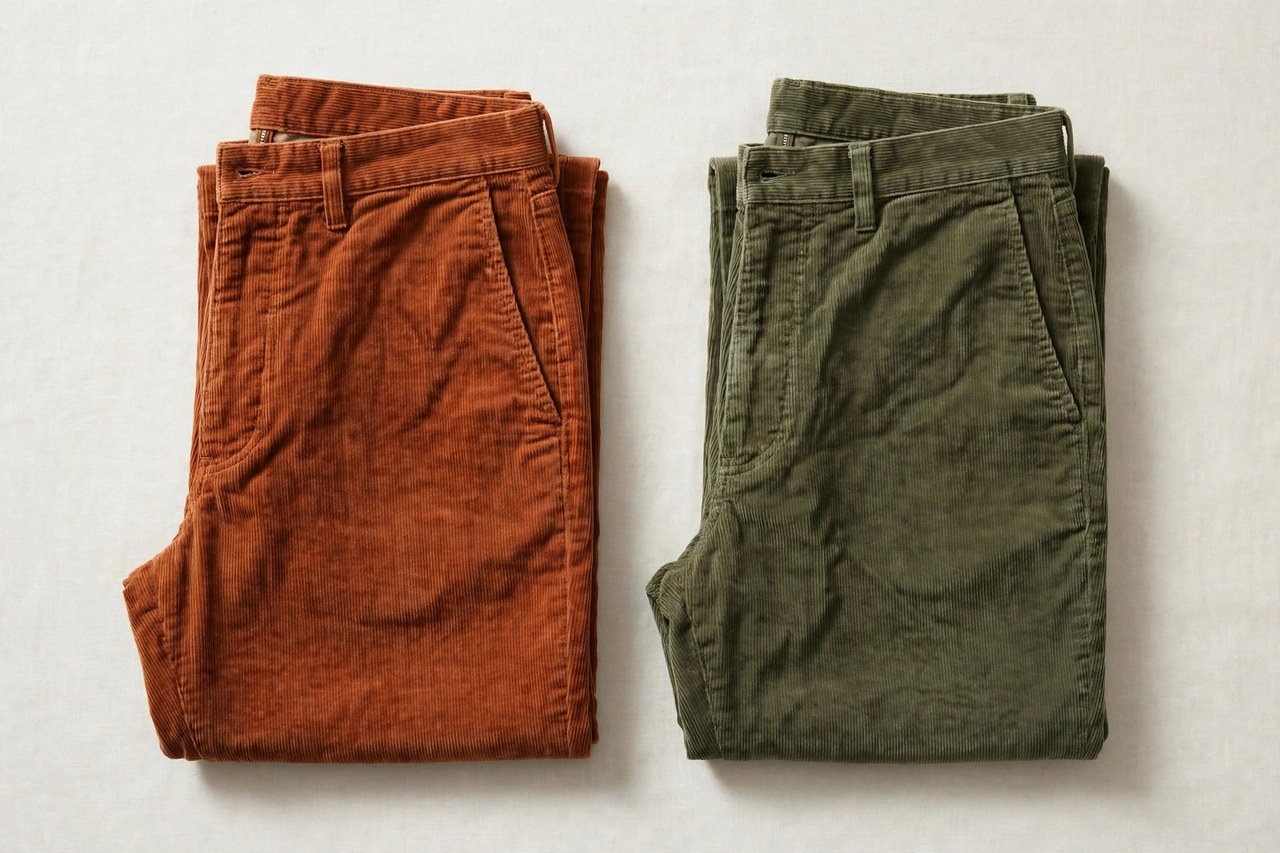
Men's corduroy pants are trousers cut from corduroy - a cotton fabric woven with raised parallel ridges called wales, formed by extra weft yarns that are cut and brushed into a soft pile. Corduroy is the warmth-and-texture trouser of the cool seasons: softer than denim, warmer than plain twill, and carrying a depth of color - rust, olive, burgundy, tan - that flat fabrics cannot match because the pile catches light along every rib. This guide covers the styles worth knowing, the fit points that decide comfort, the fabrics and construction that separate a good buy from a regret, and the simple care that makes the garment last.
Styles and Construction
Corduroy grades by wale count - the number of ridges per inch. Needlecord or pincord (14-16 wales) is fine and dressier; standard corduroy (10-13) is the versatile middle; wide wale (4-8) is bold, rustic and the warmest-looking. Lower counts read casual and country, higher counts can sit beside a blazer without apology. Modern cords often add a whisper of elastane, which suits the fabric - corduroy has no natural give and its pile wears at the seat and knees, where a little stretch relieves the strain. Five-pocket jean cuts and flat-front trouser cuts divide the casual from the smart end.
For any leg garment the rise is the first specification, because it decides sitting comfort before fabric gets a vote: measure from front waistband through to back and compare it with a pair that already works. Then audit the stress points - bar-tacked belt loops and pocket corners, double-stitched inseams, hems finished evenly - and the pocketing, which should be deep, smooth and strong enough to carry what the garment's pockets invite you to carry.
Fit and Sizing
Fit corduroy as you would chinos, with one caution: the pile adds visual and actual bulk, so slim and straight cuts flatter most men better than relaxed ones, and a clean no-break hem keeps the texture from pooling at the shoe. The waistband should be true - corduroy relaxes less than denim, and the fit you buy is close to the fit you keep. Sit in them before deciding: the seat's pile is the first wear site, and a seat straining on day one shines by season's end.
Measure where the waistband will actually sit, plus inseam to your preferred break, and thigh and seat for closer cuts. Then sit, squat and climb a step in the fitting room - a leg garment that only works standing still does not work. Waistbands relax roughly half an inch in wear and inseams shrink most in early washes, so buy the fit you want after those changes rather than the fit in the mirror.
Wearing and Care
Wash cords inside out, cool, with like colors - the cut pile sheds lint early and picks up everyone else's forever, so wash them with their own kind and empty the lint filter. Dry low and remove promptly; brush the pile in one direction with a clothes brush to restore its nap and depth. Store folded or hung by the waistband, never crushed under a pile, and the ridges keep their shadow-and-light life.
Wash leg garments inside out and cool; heat is the agent that fades dye, tires elastic and shortens inseams. Dry low or on the line, hang or fold promptly, and crease deliberately or not at all. Walk the stress points each season - hem edges, pocket corners, seat and inner thigh - and mend the small fray while it is still small: leg garments fail gradually, then suddenly, and the two-minute October repair prevents the November replacement.
Common Questions
What does 'wale' mean in corduroy?
The wale is one raised ridge of the fabric, and corduroy is sold by wales per inch: many fine ridges (needlecord, 14-16) make a smooth, dressier cloth; few wide ridges (wide wale, 4-8) make a bold, rustic one. The count is the fastest predictor of how formal and how warm a cord will look.
Are corduroy pants warm?
Warmer than plain cotton trousers of the same weight, because the pile traps a layer of still air against the leg - which is why corduroy is an autumn and winter fabric across northern wardrobes. It is not insulation on the level of flannel-lined or wool trousers, but as a single-layer cotton pant it is the warm end of the family.
Why do corduroy seats go shiny?
The pile crushes and wears where it is sat on and rubbed, flattening the ridges so light reflects evenly - the shine is worn pile, not dirt. Brushing and steaming lift some of it back; choosing a higher wale count and rotating pairs delays it. It is corduroy's known patina, like denim's fades, and most wearers accept it as character.
More in Men's Clothes Guide C
Looking for Men's Clothing Stores?
This guide explains men's corduroy pants. To browse where to buy, visit our men's clothing store directory, where you can find retailers that carry them.