Men's Canvas Pants Guide
Men's canvas pants are trousers cut from canvas - a plain-weave, heavy-duty cotton fabric (traditionally cotton duck) built for abrasion rather than elegance. Canvas began as sailcloth and tent cloth; in pants it became the working trouser of carpenters, farmers, painters and outdoorsmen, valued because it resists tearing, shrugs off sparks and brush, and softens with wear without wearing through.
Shop Men's Canvas Pants Now
Shop Men's Canvas Pants on Amazon Shop Men's Canvas Pants on eBayThe Amazon and eBay links on this page are affiliate links. If you make a purchase through them, Apparel Search may earn a commission.
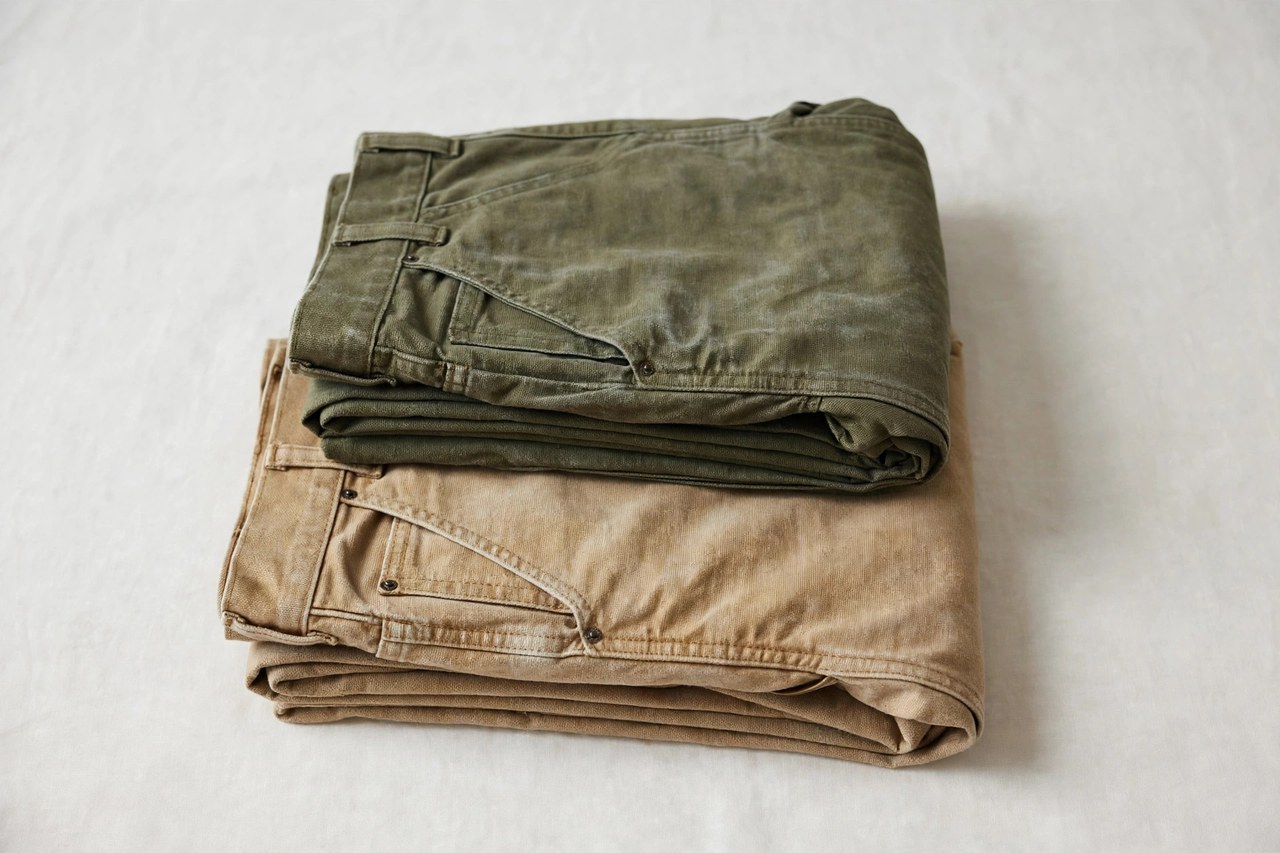
Men's canvas pants are trousers cut from canvas - a plain-weave, heavy-duty cotton fabric (traditionally cotton duck) built for abrasion rather than elegance. Canvas began as sailcloth and tent cloth; in pants it became the working trouser of carpenters, farmers, painters and outdoorsmen, valued because it resists tearing, shrugs off sparks and brush, and softens with wear without wearing through. This guide is built around the questions buyers actually ask: which style, which size, which fabric, and what will it look like after a year of real use - answered in order, with the trade-offs stated plainly.
Styles and Construction
Canvas grades by weight, historically numbered duck: heavier numbers are lighter cloth, with most work pants cut from mid-weight duck around ten to twelve ounces. Weaves are plain and tight; some makers add a ripstop grid or a touch of synthetic for tear strength, and double-front constructions add a second layer from thigh to shin where knees and brush do their damage. Details follow the work: reinforced pockets, wide belt loops, hammer loops and tool pockets on work cuts, cleaner five-pocket styling on casual cuts, and triple stitching at the seams that carry loads.
For any leg garment the rise is the first specification, because it decides sitting comfort before fabric gets a vote: measure from front waistband through to back and compare it with a pair that already works. Then audit the stress points - bar-tacked belt loops and pocket corners, double-stitched inseams, hems finished evenly - and the pocketing, which should be deep, smooth and strong enough to carry what the garment's pockets invite you to carry.
Fit and Sizing
Canvas fits differently from softer pants: new duck is board-stiff and relaxes measurably in the first weeks, so buy the waist true rather than tight and expect the cloth to mold to you. The knee and seat ease with wear while the waistband gives about half an inch. Choose the leg opening for your footwear - straight legs over work boots, slimmer cuts for shoes - and remember that heavy canvas in a hot climate is a commitment: summer weights exist and are worth choosing by season.
Measure where the waistband will actually sit, plus inseam to your preferred break, and thigh and seat for closer cuts. Then sit, squat and climb a step in the fitting room - a leg garment that only works standing still does not work. Waistbands relax roughly half an inch in wear and inseams shrink most in early washes, so buy the fit you want after those changes rather than the fit in the mirror.
Wearing and Care
Wash canvas pants cool and inside out; the fabric tolerates hard treatment but dyes - especially the classic browns and olives - fade progressively, which most wearers count as patina. Dry low or on the line to protect the inseam length, patch wear at the cuff and pocket mouths early, and never put canvas away damp: its density mildews enthusiastically.
Wash leg garments inside out and cool; heat is the agent that fades dye, tires elastic and shortens inseams. Dry low or on the line, hang or fold promptly, and crease deliberately or not at all. Walk the stress points each season - hem edges, pocket corners, seat and inner thigh - and mend the small fray while it is still small: leg garments fail gradually, then suddenly, and the two-minute October repair prevents the November replacement.
Canvas is also the cloth of double knee pants, and its sturdy utility cut lives on in fatigue pants.
Common Questions
What is cotton duck canvas?
Duck - from the Dutch 'doek', cloth - is a tightly woven plain-weave cotton canvas, heavier and smoother than ordinary canvas. It is graded by number: lower numbers are heavier cloth. Most work pants use mid-weight duck that balances abrasion resistance against the willingness to bend at the knee.
How long do canvas pants take to break in?
Expect three to six wears and a couple of washes before stiff new duck relaxes into your shape - the knees bag slightly into your bend, the waistband settles, and the hand softens. It is the same break-in logic as raw denim, and the fit you finally get is more personal than anything bought pre-softened.
Are canvas pants good for hot weather?
Heavy duck is not - it insulates and dries slowly. For summer work choose lighter-weight canvas (around eight ounces), a canvas with a more open hand, or canvas-blend pants with a synthetic component; the abrasion resistance drops somewhat, but wearability decides what actually gets worn.
More in Men's Clothes Guide C
Looking for Men's Clothing Stores?
This guide explains men's canvas pants. To browse where to buy, visit our men's clothing store directory, where you can find retailers that carry them.