Men's Cargo Pants Guide
Men's cargo pants are trousers with large bellows pockets on the outer thighs - pockets that expand to carry cargo, closed with flaps - added to the standard five pockets. Born as British and then American military battledress in the 1930s and 40s, when soldiers needed maps, dressings and rations carried on the leg, the cargo pant moved into civilian life as hiking wear, workwear and, in slimmer modern cuts, ordinary casual trousers.
Shop Men's Cargo Pants Now
Shop Men's Cargo Pants on Amazon Shop Men's Cargo Pants on eBayThe Amazon and eBay links on this page are affiliate links. If you make a purchase through them, Apparel Search may earn a commission.
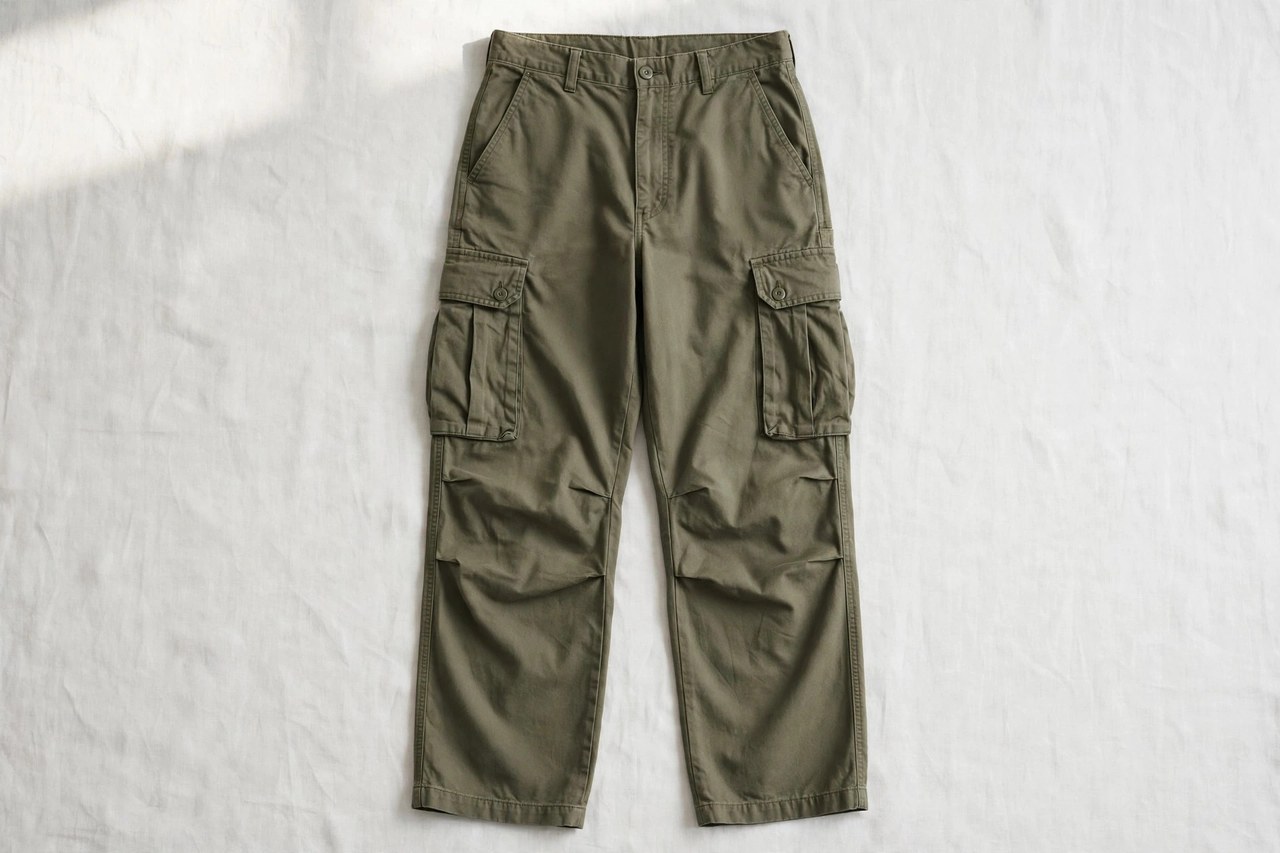
Men's cargo pants are trousers with large bellows pockets on the outer thighs - pockets that expand to carry cargo, closed with flaps - added to the standard five pockets. Born as British and then American military battledress in the 1930s and 40s, when soldiers needed maps, dressings and rations carried on the leg, the cargo pant moved into civilian life as hiking wear, workwear and, in slimmer modern cuts, ordinary casual trousers. This guide is built around the questions buyers actually ask: which style, which size, which fabric, and what will it look like after a year of real use - answered in order, with the trade-offs stated plainly.
Styles and Construction
The cargo pocket is the engineering: a bellows or gusseted construction that lies flat empty and expands loaded, a flap that keeps contents in at a run, and - on better pairs - an inner security pocket or elastic retention for a phone. Fabrics run from heavy cotton twill through ripstop nylon-cotton to stretch blends; military-issue weight twill is the durability benchmark. Cuts divide into the original relaxed cargo, tapered modern versions with smaller, flatter pockets, and convertible styles. Beware thigh pockets placed too low: a loaded pocket should ride above the knee's swing, not slap against it.
For any leg garment the rise is the first specification, because it decides sitting comfort before fabric gets a vote: measure from front waistband through to back and compare it with a pair that already works. Then audit the stress points - bar-tacked belt loops and pocket corners, double-stitched inseams, hems finished evenly - and the pocketing, which should be deep, smooth and strong enough to carry what the garment's pockets invite you to carry.
Fit and Sizing
Fit cargos by the working test: load the pockets as you honestly will - phone, wallet, keys, tool - and walk, sit and climb. The waist should hold the loaded weight without a belt doing heroic work; drawstring hems and articulated knees repay active use. Tapered cuts carry less bulk but also less cargo; choose by the job. Length should clear the boot or shoe without pooling, because cargo hems pick up ground dirt faster than any other trouser.
Measure where the waistband will actually sit, plus inseam to your preferred break, and thigh and seat for closer cuts. Then sit, squat and climb a step in the fitting room - a leg garment that only works standing still does not work. Waistbands relax roughly half an inch in wear and inseams shrink most in early washes, so buy the fit you want after those changes rather than the fit in the mirror.
Wearing and Care
Empty every pocket before washing - cargo pants are laundry's lost-property office - and fasten flaps so their buttons, snaps or hook-and-loop survive the cycle and do not sand the rest of the load. Wash inside out in cool water, dry low, and re-crease nothing: the cargo's ease is its point. Reinforce pocket-corner stitching early; that is where loaded bellows tear first.
Wash leg garments inside out and cool; heat is the agent that fades dye, tires elastic and shortens inseams. Dry low or on the line, hang or fold promptly, and crease deliberately or not at all. Walk the stress points each season - hem edges, pocket corners, seat and inner thigh - and mend the small fray while it is still small: leg garments fail gradually, then suddenly, and the two-minute October repair prevents the November replacement.
The cargo pant's closest relative is the fatigue pant - same military roots, with flat patch pockets instead of bellows cargo pockets.
Common Questions
Why do cargo pockets sit on the thigh?
Because the thigh is the leg's cargo deck: it is broad, it faces outward where a pocket does not interfere with sitting (back pockets) or with the hip crease (front pockets), and its swing is smaller than the shin or knee, so carried weight rides stably. Military designers standardized the placement in the 1940s and no better site has been found since.
Are cargo pants still in style?
They cycle: the baggy 1990s silhouette retreated, but tapered and slim cargos with flatter pockets have become a mainstream casual staple, worn like chinos with utility. The constant is function - men keep a use for the pockets even when fashion's emphasis swings between them and clean five-pocket cuts.
How much can cargo pockets actually carry?
Realistically a phone, wallet, keys, a small tool or notebook per side - a few pounds total before the trousers' drape and your gait suffer. They are not a rucksack substitute: heavy loads belong on the hips in a pack, because weight swinging at the thigh tires the legs and hammers the pocket stitching.
More in Men's Clothes Guide C
Looking for Men's Clothing Stores?
This guide explains men's cargo pants. To browse where to buy, visit our men's clothing store directory, where you can find retailers that carry them.