Cargo Pants
Fashion Terms — the Apparel Search fashion terminology directory
What are cargo pants? They have nothing to do with freight cargo. Cargo pants, or cargo trousers, are loosely cut pants originally designed for tough, outdoor activities, whose design is distinguished by one or more cargo pockets — the large patch pockets, usually with bellows and flap closures, carried on the thighs. This page defines cargo pants and explains the cargo pocket itself, with photographs of the pocket and of cargo pocket pants.
What are cargo pants? They have nothing to do with freight cargo.
Cargo pants or cargo trousers, are loosely cut pants originally designed for tough, outdoor activities, and whose design is distinguished by one or more cargo pockets. Cargo pants have become popular in many settings, since they are convenient for carrying items. To be honest, it is very nice to have extra pockets for carrying mobile electronics.
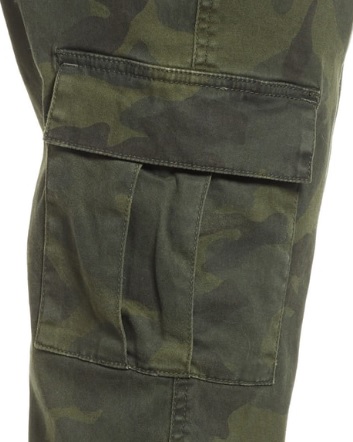
Cargo shorts are a shorts-length version of the pant.
This type of pant is sometimes called combat trousers (or combats) after their original military purpose.
A cargo pocket is a form of a patch pocket, often with accordion folds for increased capacity closed with a flap secured by snap, button, magnet, or Velcro common on battledress and hunting clothing. In some designs, cargo pockets may be hidden within the legs.
Cargo pants are often but not always made of hard wearing fabric with rugged stitches. Bar tacking stitches are often used. Often the cargo pant style uses quick-drying synthetic or cotton-synthetic blends, and often feature oversized belt loops to accommodate wide webbing belts.
The garments are characteristically designed to allow bending at the knee and hip, and are sewn with felled seams for strength and durability. Basically, they are made to be practical for multipurpose activities including camping, hunting, workwear, hiking etc. They are meant to be durable, functional, and comfortable.
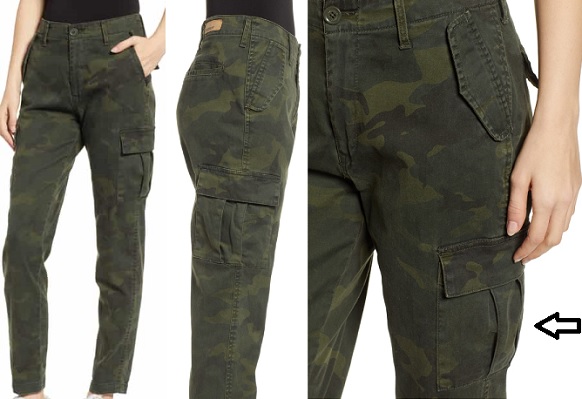
Cargo pants are often made with camo prints for hunting.
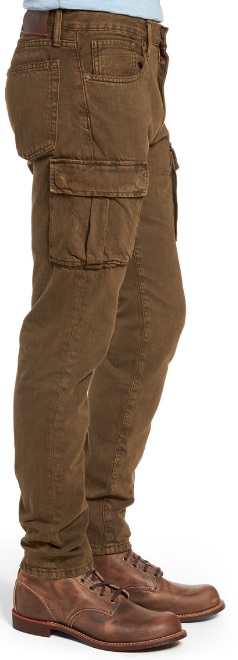
They are also made in solid colors for casual dress.
By the way, cargo pants have nothing in common with cargo freight (unless you are referring to a cargo pant shipment).
Thank you for using the Apparel Search website.
Wearing and Choosing Cargo Pants
The fashion history of cargo pants runs in cycles because the pocket is both useful and visually busy. Streetwear and utility trends bring the full, multi-pocket version back; quieter periods keep a slimmed cargo with flat, low-profile pockets that read as a design detail rather than equipment. Fit decides which side of that line a pair lands on: the classic loose cut carries loaded pockets without pulling, while tapered modern versions trade some carrying room for a cleaner outline. Fabric matters just as much — ripstop and sturdy cotton twill hold the pocket structure, while soft or thin fabrics let loaded pockets sag and distort the leg.
For buyers comparing pairs, the construction checks are the ones this page's photographs highlight: pocket flaps that actually close (buttons, snaps or hook-and-loop), bellows that expand rather than flat pockets that only pretend to carry, bar-tacked stress points at the pocket corners, and a waistband and belt loops strong enough for the extra weight. Worn for work, travel or hiking, those details are the difference between a styling exercise and a genuinely functional garment — the job cargo pants were originally designed, in military service, to do.
Common Questions
What makes pants cargo pants?
The cargo pockets: one or more oversized patch pockets, typically on the outer thighs, with expandable bellows sides and flap closures, made to carry gear. The loose, durable cut that goes with them came from military and outdoor use.
Where did cargo pants come from?
They descend from military battledress trousers — British and then American service dress in the Second World War put large leg pockets on soldiers' trousers for carrying field dressings and supplies — and moved into outdoor and then mainstream fashion.
What is a cargo pocket on other garments?
The same bellows patch pocket applied elsewhere — this page photographs the pocket itself and shows it on pants; the style also appears on shorts, jackets and vests wherever carrying capacity is the point.