Men's Cotton Pants Guide
Men's cotton pants are trousers woven from cotton in its many trouser cloths - twill, chino cloth, canvas, corduroy's plain cousins and cotton sateen. Cotton is the default trouser fiber of the world for good reasons: it breathes, washes, takes dye beautifully and costs honestly. This page is the cotton trouser overview; its dressed sibling, cotton trousers, and its specialist cousins (canvas, corduroy, cargo) have their own guides in this letter and family.
Shop Men's Cotton Pants Now
Shop Men's Cotton Pants on Amazon Shop Men's Cotton Pants on eBayThe Amazon and eBay links on this page are affiliate links. If you make a purchase through them, Apparel Search may earn a commission.
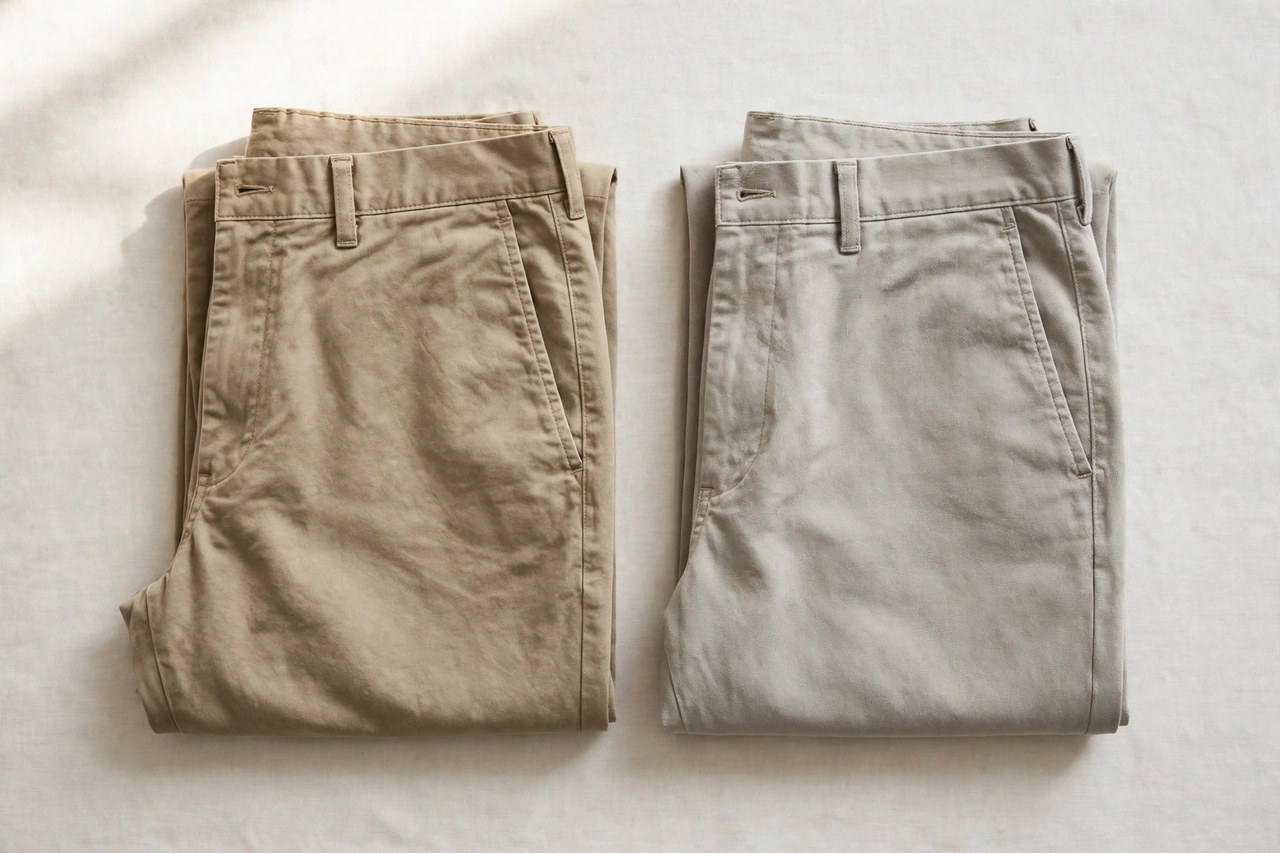
Men's cotton pants are trousers woven from cotton in its many trouser cloths - twill, chino cloth, canvas, corduroy's plain cousins and cotton sateen. Cotton is the default trouser fiber of the world for good reasons: it breathes, washes, takes dye beautifully and costs honestly. This page is the cotton trouser overview; its dressed sibling, cotton trousers, and its specialist cousins (canvas, corduroy, cargo) have their own guides in this letter and family. This guide covers the styles worth knowing, the fit points that decide comfort, the fabrics and construction that separate a good buy from a regret, and the simple care that makes the garment last.
Styles and Construction
Weave decides the pant. Twill (the diagonal weave of chinos) balances drape and durability and is the default. Plain-weave canvas is the armored branch (its own page). Cotton poplin is the light summer weave; sateen's slight sheen dresses a cotton pant toward the office; brushed cotton twill is winter's softness. Pure cotton wrinkles and relaxes at the knee; one to two percent elastane, now common, cures the worst of both without changing the fiber's character. Weight runs from summer's six ounces to winter twills above ten, and a man's cotton rotation should span at least two weights.
For any leg garment the rise is the first specification, because it decides sitting comfort before fabric gets a vote: measure from front waistband through to back and compare it with a pair that already works. Then audit the stress points - bar-tacked belt loops and pocket corners, double-stitched inseams, hems finished evenly - and the pocketing, which should be deep, smooth and strong enough to carry what the garment's pockets invite you to carry.
Fit and Sizing
Fit cotton pants expecting their two honest behaviors: a slight waistband give in wear and most shrinkage in the first washes' length. Buy the waist true and the inseam a touch optimistic only if you hot-dry; cool-wash men buy exact. Rise and leg by the casual rules - the cotton pant is the chino's family, and its fit doctrine is there in full on the casual pants page.
Measure where the waistband will actually sit, plus inseam to your preferred break, and thigh and seat for closer cuts. Then sit, squat and climb a step in the fitting room - a leg garment that only works standing still does not work. Waistbands relax roughly half an inch in wear and inseams shrink most in early washes, so buy the fit you want after those changes rather than the fit in the mirror.
Wearing and Care
Wash cool and inside out to slow cotton's eager fading, dry low or on the line, and iron or steam if the occasion wants a crease - cotton takes one willingly, which is part of its charm against synthetics. Dark cotton pants fade toward character; keep one dark, newer pair for the smart end and rotate the rest down the casual ladder as they soften.
Wash leg garments inside out and cool; heat is the agent that fades dye, tires elastic and shortens inseams. Dry low or on the line, hang or fold promptly, and crease deliberately or not at all. Walk the stress points each season - hem edges, pocket corners, seat and inner thigh - and mend the small fray while it is still small: leg garments fail gradually, then suddenly, and the two-minute October repair prevents the November replacement.
Common Questions
Are cotton pants good for all seasons?
With weight selection, yes: poplin and light twills for summer, mid twills for the middle seasons, brushed and heavy twills (and corduroy, their pile cousin) for winter. Cotton's own limit is wet cold - soaked cotton chills, which is why outdoor technical wear avoids it - but for ordinary life a two-weight cotton rotation covers the calendar.
Cotton pants versus cotton trousers - is there a difference?
Usage, mostly: 'pants' in this guide's family is the broad and casual term (chinos, five-pocket cottons, casual cuts), while the cotton trousers page treats the tailored end - flat-front, creased, office-leaning cuts. The fiber is the same; the pattern-making and the occasions differ. The two pages divide the territory so each can be specific.
How do you stop cotton pants fading?
Slow it, since stopping it is beyond laundry: wash inside out, cool, with a detergent for darks where relevant, dry out of direct sun, and wash less often - spot-clean and air between wears. Fading is dye leaving fiber; every hot, soapy, sunny hour accelerates the exit visa.
More in Men's Clothes Guide C
Looking for Men's Clothing Stores?
This guide explains men's cotton pants. To browse where to buy, visit our men's clothing store directory, where you can find retailers that carry them.