Men's Cotton Trousers Guide
Men's cotton trousers are the tailored end of the cotton leg wardrobe: flat-front or pleated trousers in cotton twill, sateen, gabardine and fine chino cloth, cut and finished like dress trousers - waistbands with proper closures, creases that take a press, hems finished clean. They are the office's warm-weather and business-casual trouser, and this page is their territory; the broader cotton pants page covers the casual majority.
Shop Men's Cotton Trousers Now
Shop Men's Cotton Trousers on Amazon Shop Men's Cotton Trousers on eBayThe Amazon and eBay links on this page are affiliate links. If you make a purchase through them, Apparel Search may earn a commission.
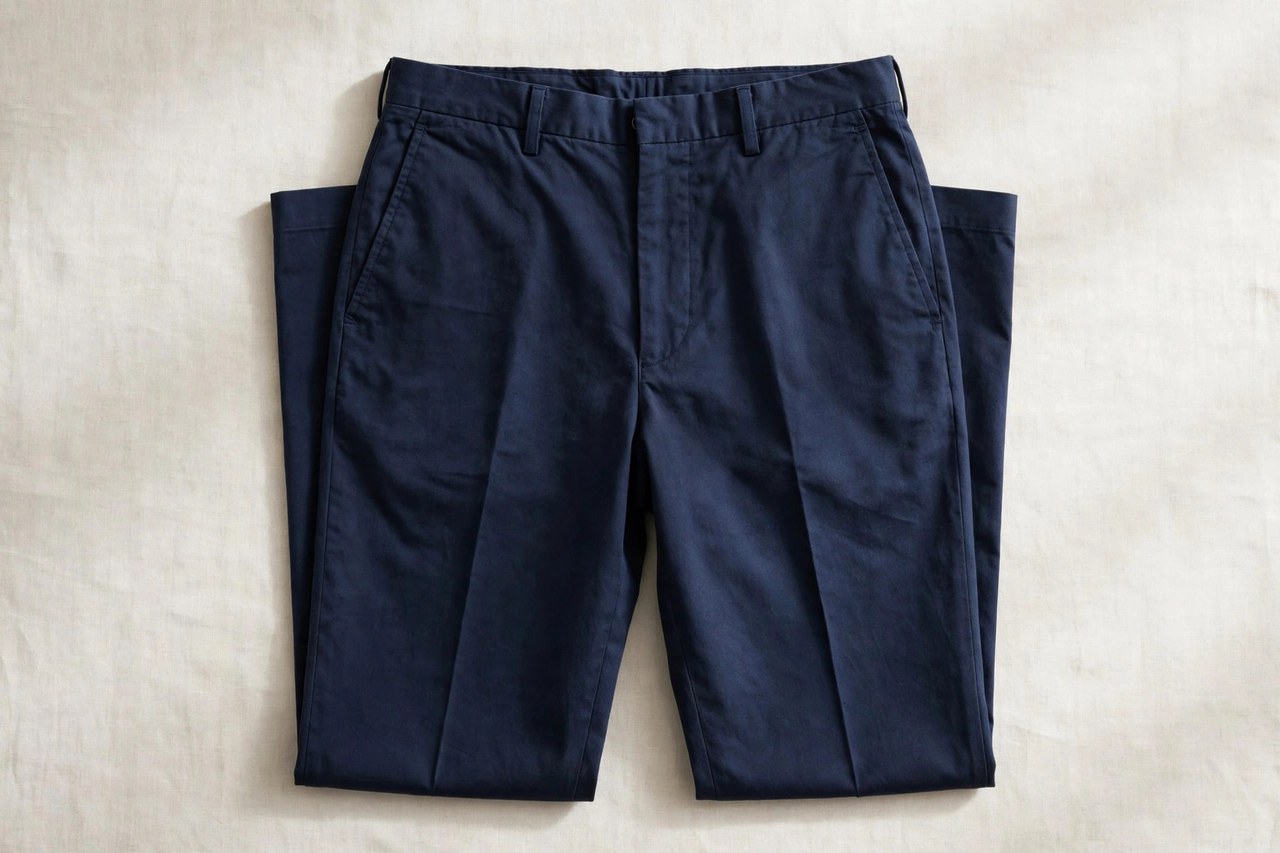
Men's cotton trousers are the tailored end of the cotton leg wardrobe: flat-front or pleated trousers in cotton twill, sateen, gabardine and fine chino cloth, cut and finished like dress trousers - waistbands with proper closures, creases that take a press, hems finished clean. They are the office's warm-weather and business-casual trouser, and this page is their territory; the broader cotton pants page covers the casual majority. This guide is built around the questions buyers actually ask: which style, which size, which fabric, and what will it look like after a year of real use - answered in order, with the trade-offs stated plainly.
Styles and Construction
Cloth decides the trouser's register. Cotton gabardine and sateen carry a slight luster that reads dressiest; fine high-twist twills are the business-casual standard; brushed cottons serve winter's softness. Pure cotton creases willingly and breathes, at the price of wrinkling across a seated day - a few percent of elastane or a wrinkle-resistant finish moderates it, and honest wearers accept the rest as cotton's signature. Construction should match the ambition: a curtain waistband, proper fly and button closure, and pockets cut on the dress pattern (vertical or slanted, not jean-style) are what separate the trouser from the chino in everything but cloth.
For any leg garment the rise is the first specification, because it decides sitting comfort before fabric gets a vote: measure from front waistband through to back and compare it with a pair that already works. Then audit the stress points - bar-tacked belt loops and pocket corners, double-stitched inseams, hems finished evenly - and the pocketing, which should be deep, smooth and strong enough to carry what the garment's pockets invite you to carry.
Fit and Sizing
Fit cotton trousers as dress trousers: waist at the natural position with a finger's ease, seat smooth without pulling, the crease falling straight to a hem with a small break or none over dress shoes. Cotton relaxes a touch at the waist through the day and shrinks slightly in length across early washes - buy the inseam after deciding your wash temperature, and let a tailor finish the hem after the first wash if the cloth is unshrunk. Pleats suit men who sit long hours and carry things in pockets; flat fronts suit the rest.
Measure where the waistband will actually sit, plus inseam to your preferred break, and thigh and seat for closer cuts. Then sit, squat and climb a step in the fitting room - a leg garment that only works standing still does not work. Waistbands relax roughly half an inch in wear and inseams shrink most in early washes, so buy the fit you want after those changes rather than the fit in the mirror.
Wearing and Care
Launder as cotton asks - cool, inside out - and press the crease back in while the trousers are barely damp, or send them with the shirts if your life includes a laundry service; cotton trousers reward pressing more than any casual garment. Rotate at least three pairs through a working week, and keep the darkest, crispest pair for the days the trousers must argue with a blazer.
Wash leg garments inside out and cool; heat is the agent that fades dye, tires elastic and shortens inseams. Dry low or on the line, hang or fold promptly, and crease deliberately or not at all. Walk the stress points each season - hem edges, pocket corners, seat and inner thigh - and mend the small fray while it is still small: leg garments fail gradually, then suddenly, and the two-minute October repair prevents the November replacement.
Common Questions
Can cotton trousers replace wool trousers in an office?
In business-casual settings and warm months, yes - a dark, pressed cotton trouser with a blazer and proper shoes is a complete professional outfit. In formal business dress, wool's crease retention and surface remain the standard; cotton wrinkles honestly across a long day and the room can tell. Match the trouser to the dress code's actual level, not its name.
Pleats or flat front in cotton trousers?
Flat front is the modern default and suits most builds and most offices. Pleats earn their place for men who sit all day, carry pocket loads, or have athletic thighs in tailored cuts - the pleat is working ease, not decoration. In cotton's softer cloth, a single pleat reads classic rather than dated when the fit is otherwise clean.
How do you keep a crease in cotton trousers?
Press it in properly once - damp cloth, hot iron, along the original line - hang the trousers by the waistband or folded over a hanger bar at the crease, and refresh with steam between wears. Cotton takes a crease more willingly than it keeps one; the hanger discipline matters more than the ironing heroics.
More in Men's Clothes Guide C
More to Explore on Apparel Search
- Men's Clothes
- Men's Trousers
- Men's Pants
- Clothes
- Definition of Cotton
- Pant Factory
- Men's Pant Wholesalers
- different styles of pants
- Men's Clothes Guide H-P
- Men's Clothes Guide Q-Z
- Fashion
- Clothing Retail Stores
- Fashion News
- Fashion Employment
- Fashion Designers
- Popular Brands
- Men's Clothing Stores
- Men's Clothing Wholesalers
Looking for Men's Clothing Stores?
This guide explains men's cotton trousers. To browse where to buy, visit our men's clothing store directory, where you can find retailers that carry them.