Men's Carpenter Pants Guide
Men's carpenter pants are work trousers defined by two tradesman's details: a hammer loop on the left leg and a narrow tool pocket on the right, added to a durable five-pocket work cut. They are the uniform of the building trades and the DIY weekend - most often cut from heavy cotton duck canvas or denim, in the natural, stone and brown colors of the job site, with triple stitching and rivets where the work stresses the cloth.
Shop Men's Carpenter Pants Now
Shop Men's Carpenter Pants on Amazon Shop Men's Carpenter Pants on eBayThe Amazon and eBay links on this page are affiliate links. If you make a purchase through them, Apparel Search may earn a commission.
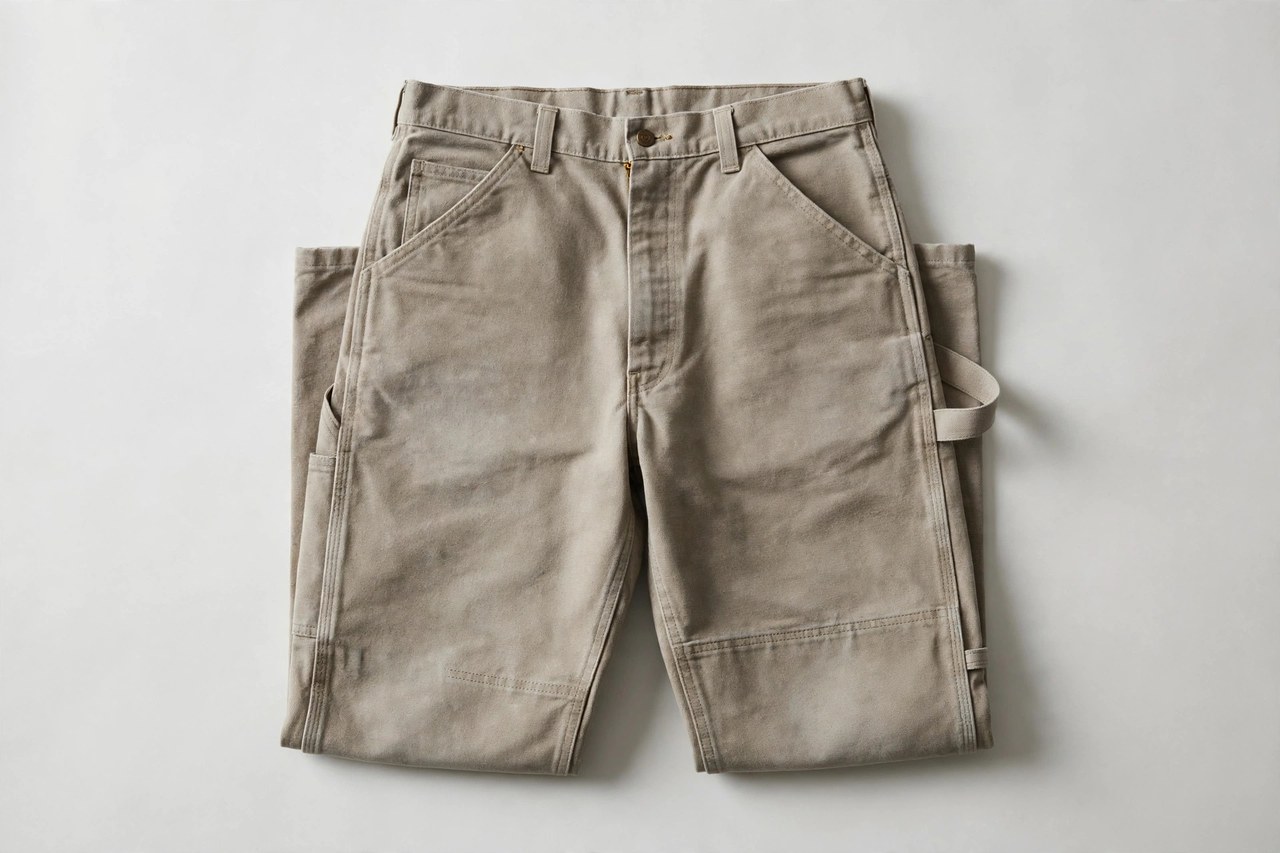
Men's carpenter pants are work trousers defined by two tradesman's details: a hammer loop on the left leg and a narrow tool pocket on the right, added to a durable five-pocket work cut. They are the uniform of the building trades and the DIY weekend - most often cut from heavy cotton duck canvas or denim, in the natural, stone and brown colors of the job site, with triple stitching and rivets where the work stresses the cloth. This guide is built around the questions buyers actually ask: which style, which size, which fabric, and what will it look like after a year of real use - answered in order, with the trade-offs stated plainly.
Styles and Construction
Everything on a carpenter pant answers a task. The hammer loop hangs a hammer or wrench at the thigh; the slim side pocket takes a folding rule, pencil or utility knife; deep front pockets and a watch pocket take the small hardware of a day. Double knees - a second layer over the knee, sometimes with an opening for pads - serve anyone who kneels for a living. Work cuts are relaxed through the thigh to squat and climb, and the traditional fabrics are duck canvas for abrasion and denim for familiarity; modern versions add stretch and lighter weights for the non-professional majority who wear the style for its honest look.
For any leg garment the rise is the first specification, because it decides sitting comfort before fabric gets a vote: measure from front waistband through to back and compare it with a pair that already works. Then audit the stress points - bar-tacked belt loops and pocket corners, double-stitched inseams, hems finished evenly - and the pocketing, which should be deep, smooth and strong enough to carry what the garment's pockets invite you to carry.
Fit and Sizing
Fit carpenter pants like the workwear they are: waist true with room to bend, thigh room to squat without the seams singing, and length that breaks over a boot without dragging a hem through site dirt. If you use knee pads, buy the double-knee version in your exact inseam - pads that sit an inch off the knee are decoration. Remember the trades fit runs generous; men between sizes usually take the smaller for pants worn off the clock and the larger for pants worn on it.
Measure where the waistband will actually sit, plus inseam to your preferred break, and thigh and seat for closer cuts. Then sit, squat and climb a step in the fitting room - a leg garment that only works standing still does not work. Waistbands relax roughly half an inch in wear and inseams shrink most in early washes, so buy the fit you want after those changes rather than the fit in the mirror.
Wearing and Care
Wash them like canvas and denim ask - cool, inside out, no ceremony - and expect sawdust to survive the first rinse of any pocket you forgot to empty. Mend cuff hems and the hammer loop's stitching early, since both carry loads. The patina is the point: fades at the knee and pocket outlines of tools are a carpenter pant's service record.
Wash leg garments inside out and cool; heat is the agent that fades dye, tires elastic and shortens inseams. Dry low or on the line, hang or fold promptly, and crease deliberately or not at all. Walk the stress points each season - hem edges, pocket corners, seat and inner thigh - and mend the small fray while it is still small: leg garments fail gradually, then suddenly, and the two-minute October repair prevents the November replacement.
The carpenter pant's reinforced cousin is the double knee pant, which doubles the fabric exactly where work wears it through.
Common Questions
What is the loop on carpenter pants for?
It is a hammer loop: it hangs a hammer (handle down, head up) at the left thigh so both hands stay free for ladders, material and measuring. It also carries wrenches, pliers and other handled tools. Right-handed layouts assume the hammer rides the left leg while the right hand works the tool pocket side.
What is the thin pocket on the right leg for?
Traditionally a folding rule or carpenter's pencil - the flat, wide pencil that does not roll and marks rough timber - and today it fits utility knives, markers and slim phones. It is the most copied detail in workwear because it is the most used: a dedicated slot beats fishing in a deep front pocket.
Are carpenter pants only for carpenters?
They never were for long: painters, electricians and farmers adopted the cut within the trade, and gardeners, DIYers and the simply pocket-needy followed. The details are functional for anyone who carries small tools - and the relaxed cut and durable cloth need no trade license to justify themselves.
More in Men's Clothes Guide C
Looking for Men's Clothing Stores?
This guide explains men's carpenter pants. To browse where to buy, visit our men's clothing store directory, where you can find retailers that carry them.