Men's Casual Shirts Guide
Men's casual shirts are button-front shirts designed to be worn untucked or loosely tucked, in fabrics and patterns a dress shirt would not carry: oxford cloth, flannel, chambray, linen, seersucker, madras, denim and prints. The casual shirt is the dressed end of everyday wear - the garment that makes jeans look deliberate and chinos look finished - and its whole design, from soft collar to shorter hem, assumes life outside a suit.
Shop Men's Casual Shirts Now
Shop Men's Casual Shirts on Amazon Shop Men's Casual Shirts on eBayThe Amazon and eBay links on this page are affiliate links. If you make a purchase through them, Apparel Search may earn a commission.
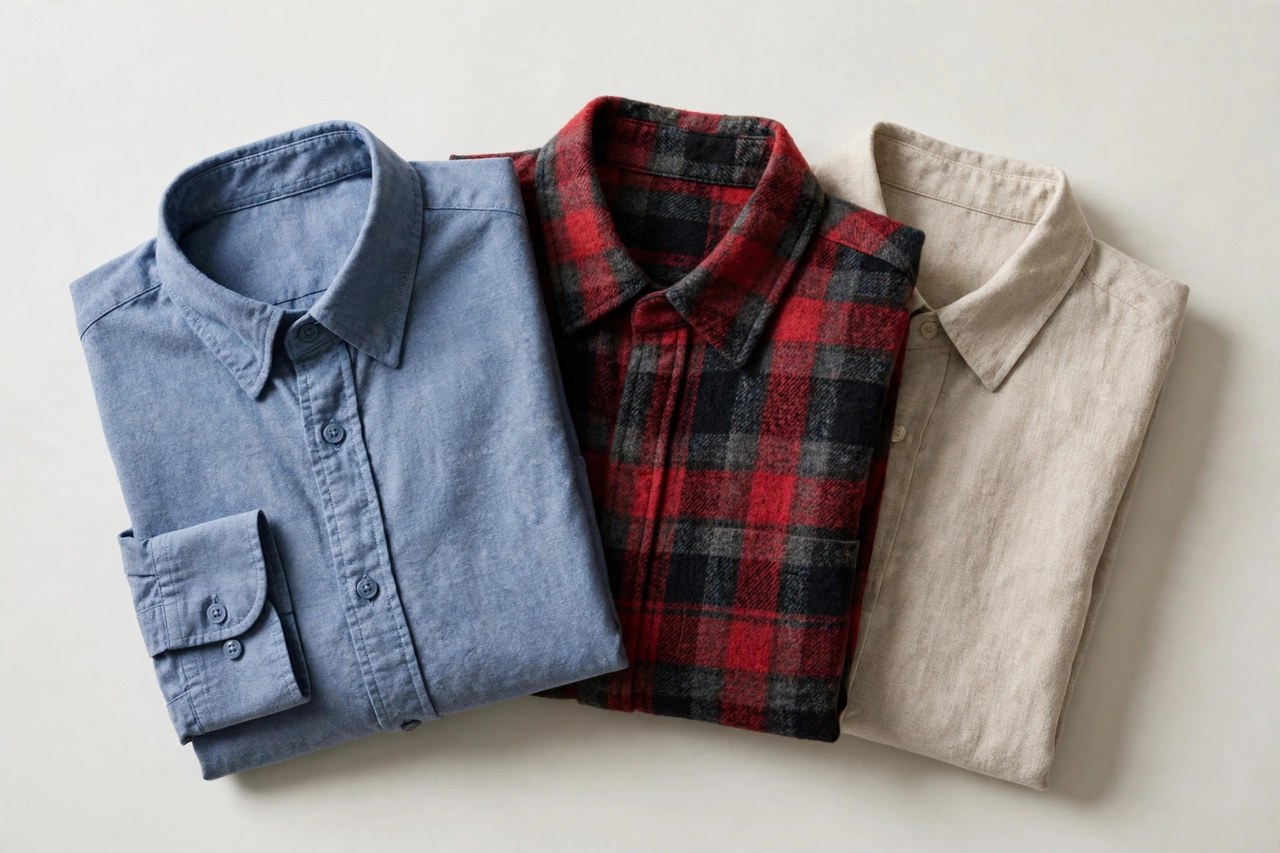
Men's casual shirts are button-front shirts designed to be worn untucked or loosely tucked, in fabrics and patterns a dress shirt would not carry: oxford cloth, flannel, chambray, linen, seersucker, madras, denim and prints. The casual shirt is the dressed end of everyday wear - the garment that makes jeans look deliberate and chinos look finished - and its whole design, from soft collar to shorter hem, assumes life outside a suit. This guide is built around the questions buyers actually ask: which style, which size, which fabric, and what will it look like after a year of real use - answered in order, with the trade-offs stated plainly.
Styles and Construction
Divide the family by fabric weight and occasion. Oxford cloth button-downs are the year-round anchor, structured enough for a knit over them. Flannels own autumn and winter; chambray and denim shirts are the workwear branch, worn as light jackets over tees. Summer belongs to linen, seersucker and camp-collar shirts with their open weaves and relaxed cuts. Details declare intent: a curved, shorter hem is cut to wear out; a long straight hem is cut to tuck; soft unfused collars and single-needle casual patterns (checks, plaids, small prints) keep the register relaxed.
A top earns its keep in finishing: seams that hang straight and stay even at eight to twelve stitches per inch, collars and plackets that lie flat after washing, buttons sewn with thread shanks so they sit in their holes without pulling. Hold the cloth to the light - a tight, even weave or knit outwears a loose one at the same labeled weight, and pattern pieces cut on grain keep the garment from twisting around your body by the third wash.
Fit and Sizing
Fit casual shirts by shoulder and length together: shoulders at the bone, chest easy enough to button over a tee if that is your habit, and an untucked hem ending mid-fly - longer looks like a dress shirt worn wrong, shorter rides up. Sleeves to the wrist bone; casual shirts forgive rolled sleeves, which is the standard adjustment. A casual shirt should never need a tailor's taper to look right; if it billows, the size or the cut, not your tailor, is the problem.
Fit tops shoulders and chest first, because tailors cannot cheaply move either: the shoulder seam ends at the shoulder bone, the chest closes without pulling, and both arms raise without the hem escaping the waistband. Tucked lengths must stay tucked sitting; untucked lengths should end mid-fly. Sleeves are the cheap alteration, shoulders the permanent one - reject a wrong shoulder for any reason, forgive a long sleeve for many.
Wearing and Care
Wash casual shirts cool and hang them from the dryer promptly - most need no iron if they are hung by the hem on a good hanger while damp, and flannel and linen positively prefer the un-ironed state. Button the top button in the closet for collars you want to keep shaped. Flannel pills gently with age; a fabric shaver restores it in minutes.
Launder tops by the label with three defaults: cool or warm water to protect color and trims, dark and printed pieces inside out, and low or line drying, which is the largest single lever on a shirt's lifespan. Fasten buttons and zips before washing to protect the whole load, treat stains before the dryer can set them, and store knits folded so their shoulders keep the shape they were knitted with.
Common Questions
Can a casual shirt be tucked in?
Yes, when its hem allows it: a longer, straighter hem tucks cleanly, and tucking a casual shirt into chinos or cords is the easiest smart-casual move there is. The short curved hem cut for untucked wear will escape at the sides - respect the designer's hem and wear each shirt the way its cut intends.
What is an oxford shirt, exactly?
A shirt of oxford cloth - a basket-weave cotton with a soft, slightly textured hand - usually with a button-down collar. It sits precisely between dress and casual: too textured for a formal suit, too structured for the beach, and therefore the single most useful shirt in a casual wardrobe.
How many casual shirts does a man need?
Five to seven in rotation covers a week of casual dressing across seasons if they are chosen to layer: two oxfords, a flannel, a chambray or denim, a linen or camp shirt for summer, and one or two wildcards in checks or print. Rotation is the care strategy - shirts rested between wears outlast shirts worn in sequence.
More in Men's Clothes Guide C
Looking for Men's Clothing Stores?
This guide explains men's casual shirts. To browse where to buy, visit our men's clothing store directory, where you can find retailers that carry them.