Men's Crew Neck Shirts Guide
Men's crew neck shirts are shirts closed by a round, high neckline that sits at the base of the neck - the crew neck, named for the shirts of rowing crews and standardized by the T-shirt. The category is broader than the tee alone: crew necks appear on T-shirts, long-sleeve shirts, sweatshirts' lighter cousins, thermal shirts and knitted tops, and the neckline is the point of this page - how it is built, how it should fit, and how it compares with the V-neck alternative it shares every drawer with.
Shop Men's Crew Neck Shirts Now
Shop Men's Crew Neck Shirts on Amazon Shop Men's Crew Neck Shirts on eBayThe Amazon and eBay links on this page are affiliate links. If you make a purchase through them, Apparel Search may earn a commission.
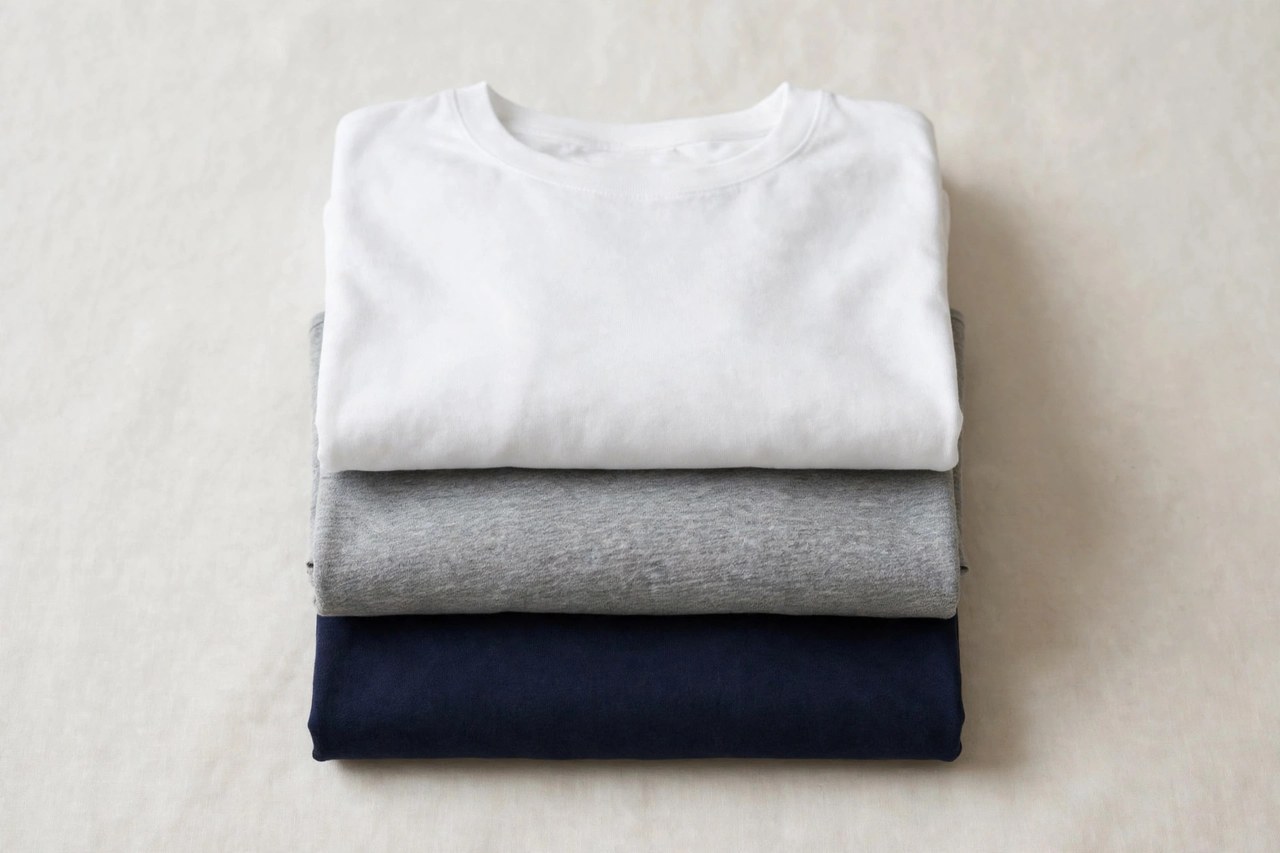
Men's crew neck shirts are shirts closed by a round, high neckline that sits at the base of the neck - the crew neck, named for the shirts of rowing crews and standardized by the T-shirt. The category is broader than the tee alone: crew necks appear on T-shirts, long-sleeve shirts, sweatshirts' lighter cousins, thermal shirts and knitted tops, and the neckline is the point of this page - how it is built, how it should fit, and how it compares with the V-neck alternative it shares every drawer with. This guide is built around the questions buyers actually ask: which style, which size, which fabric, and what will it look like after a year of real use - answered in order, with the trade-offs stated plainly.
Styles and Construction
A crew neck is finished with a ribbed collar band, and that band's construction decides whether the shirt keeps its shape or bacon-necks by the tenth wash: a band with elastane in the rib, set with the body fabric sandwiched and coverstitched, outlasts a plain self-fabric band several times over. Neckline height varies subtly by brand and era - a true crew sits at the collarbone; fashion versions drop toward a scoop. On knitted shirts the crew is the warmer, more covered option; on woven shirts it appears as the band-collar's closed cousin. The crew neck is also the undershirt neckline that shows - deliberately - under an open collar, which is its own styling decision.
A top earns its keep in finishing: seams that hang straight and stay even at eight to twelve stitches per inch, collars and plackets that lie flat after washing, buttons sewn with thread shanks so they sit in their holes without pulling. Hold the cloth to the light - a tight, even weave or knit outwears a loose one at the same labeled weight, and pattern pieces cut on grain keep the garment from twisting around your body by the third wash.
Fit and Sizing
Fit the neck first: the band should lie flat against the base of the neck all the way round - gaping means the size or the band's life is gone, binding means size up. Then the usual shirt rules: shoulders at the bone, body skimming, length to mid-fly if untucked. Under a buttoned casual shirt, a crew undershirt's band will show; men who dislike the look choose the V-neck undershirt (and men who like it, choose the crew) - the only rule is deciding on purpose.
Fit tops shoulders and chest first, because tailors cannot cheaply move either: the shoulder seam ends at the shoulder bone, the chest closes without pulling, and both arms raise without the hem escaping the waistband. Tucked lengths must stay tucked sitting; untucked lengths should end mid-fly. Sleeves are the cheap alteration, shoulders the permanent one - reject a wrong shoulder for any reason, forgive a long sleeve for many.
Wearing and Care
Neckbands die by heat and by being pulled: wash cool, dry low, and put shirts on by stretching the band as little as a T-shirt allows. Fold rather than hang knit crew necks, and retire a shirt when the band ripples permanently - a spent collar makes the whole shirt read old even when the body fabric is sound. A band with elastane content on the label is the simplest longevity purchase in the category.
Launder tops by the label with three defaults: cool or warm water to protect color and trims, dark and printed pieces inside out, and low or line drying, which is the largest single lever on a shirt's lifespan. Fasten buttons and zips before washing to protect the whole load, treat stains before the dryer can set them, and store knits folded so their shoulders keep the shape they were knitted with.
Common Questions
Crew neck or V-neck - which is better?
Neither absolutely: the crew covers more, layers invisibly under crew-neck knits and reads classic; the V opens the neckline, disappears under an open shirt collar, and flatters shorter necks. Most wardrobes hold both, assigned by what goes over them. The deciding context is the layer above, not the shirt itself.
Why does a crew neck collar stretch out?
The ribbed band flexes every time the shirt goes over your head, and plain cotton rib recovers poorly, especially after hot drying. Bands knitted with a few percent elastane, and coverstitched construction, recover far longer. Pulling a shirt off by its collar is the habit that finishes bands fastest.
Should an undershirt show under an open collar?
It is a legitimate classic look - the white crew band under an open oxford is practically a uniform of relaxed American dress - and an equally legitimate choice to hide it with a V-neck. What reads as a mistake is the accidental show: a dingy or stretched band appearing unintentionally. Decide, and keep the band worth showing if you show it.
More in Men's Clothes Guide C
More to Explore on Apparel Search
Looking for Men's Clothing Stores?
This guide explains men's crew neck shirts. To browse where to buy, visit our men's clothing store directory, where you can find retailers that carry them.