Men's V-Neck T-Shirts Guide
A men's V-neck T-shirt is a casual knit tee with a neckline cut into a V at the front, ranging from a shallow notch just below the throat to a much deeper point. It offers a less enclosed feel than a crew neck, shows less undershirt-like formality, and layers neatly under open shirts and jackets. The style is a warm weather and casual wardrobe staple, with the depth of the V being the main choice that changes its character.
Shop Men's V-Neck T-Shirts Now
Shop Men's V-Neck T-Shirts on Amazon Shop Men's V-Neck T-Shirts on eBayThe Amazon and eBay links on this page are affiliate links. If you make a purchase through them, Apparel Search may earn a commission.
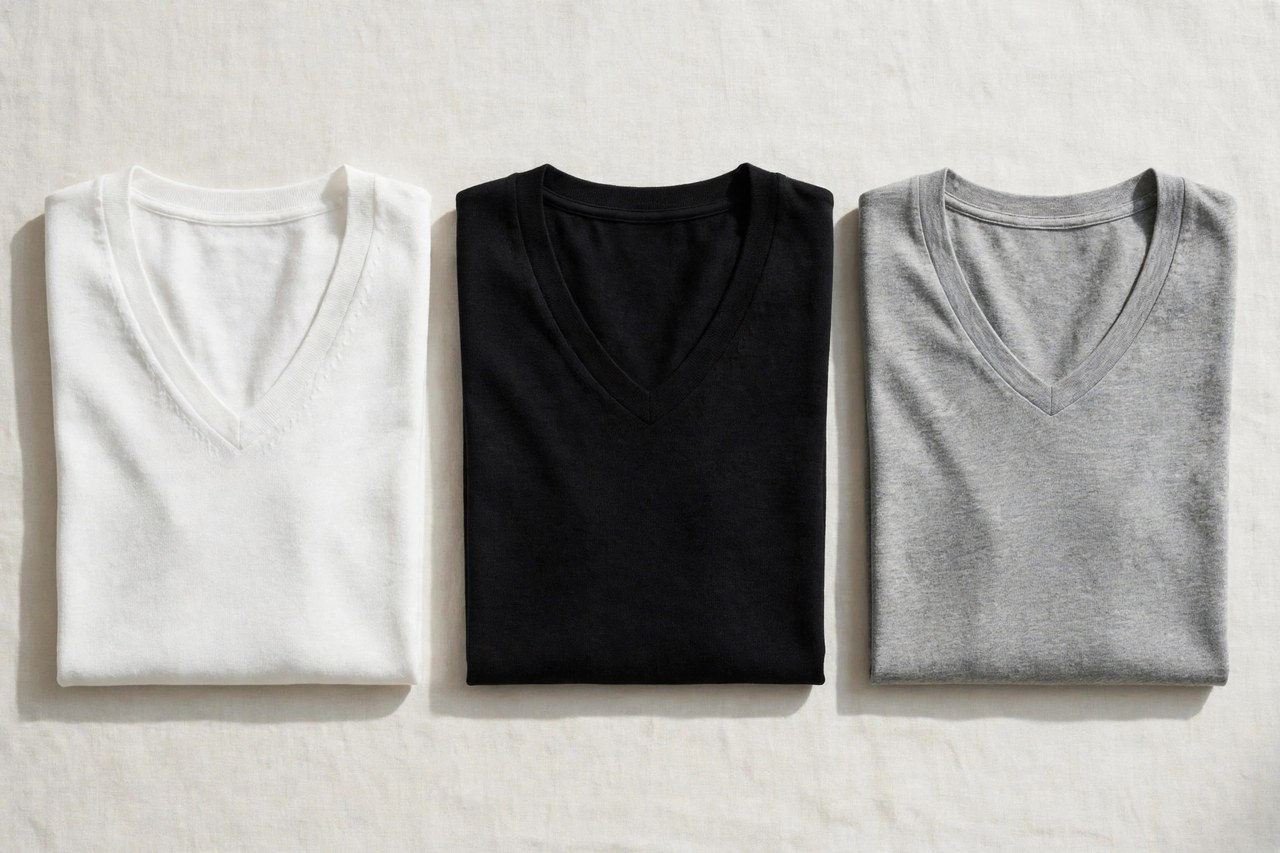
A men's V-neck T-shirt is a casual knit tee with a neckline cut into a V at the front, ranging from a shallow notch just below the throat to a much deeper point. It offers a less enclosed feel than a crew neck, shows less undershirt-like formality, and layers neatly under open shirts and jackets. The style is a warm weather and casual wardrobe staple, with the depth of the V being the main choice that changes its character. This guide is built around the questions buyers actually ask: which style, which size, which fabric, and what will it look like after a year of real use - answered in order, with the trade-offs stated plainly.
Styles and Construction
Most V-neck tees are cotton jersey, cotton-polyester blends for shape retention, or cotton-modal blends for a softer drape, in weights from light and breathable to substantial and opaque. The neckline may be finished with a ribbed band, a self-fabric binding, or a raw-looking edge, and a well made band lies flat without gaping. Look for side seams or quality tubular knits, even shoulder stitching, and fabric that is not so thin it becomes sheer in white or clings unevenly.
A top earns its keep in finishing: seams that hang straight and stay even at eight to twelve stitches per inch, collars and plackets that lie flat after washing, buttons sewn with thread shanks so they sit in their holes without pulling. Hold the cloth to the light - a tight, even weave or knit outwears a loose one at the same labeled weight, and pattern pieces cut on grain keep the garment from twisting around your body by the third wash.
Fit and Sizing
Decide the V depth first: a shallow V ending high on the chest is the most versatile and office-adjacent under a jacket, while a deep V is strictly casual. The body should follow your shape without compression, the shoulder seams should sit correctly, and the hem should cover the waistband when you raise your arms. White and light tees should be checked for opacity in daylight. Because knit tees can shrink, compare washed measurements or follow the maker sizing guidance closely.
Fit tops shoulders and chest first, because tailors cannot cheaply move either: the shoulder seam ends at the shoulder bone, the chest closes without pulling, and both arms raise without the hem escaping the waistband. Tucked lengths must stay tucked sitting; untucked lengths should end mid-fly. Sleeves are the cheap alteration, shoulders the permanent one - reject a wrong shoulder for any reason, forgive a long sleeve for many.
Wearing and Care
Wash V-neck T-shirts inside out in cool water with similar colors to protect the fabric and any print, and avoid high dryer heat, which shrinks cotton and can distort the neck band. Reshape the V while damp and dry low or on a line. Fold rather than hang lighter tees to avoid shoulder stretching, store whites separately from dark dyes, and treat underarm or neckline stains promptly before heat from drying sets them into the jersey.
Launder tops by the label with three defaults: cool or warm water to protect color and trims, dark and printed pieces inside out, and low or line drying, which is the largest single lever on a shirt's lifespan. Fasten buttons and zips before washing to protect the whole load, treat stains before the dryer can set them, and store knits folded so their shoulders keep the shape they were knitted with.
Common Questions
How deep should a men's V-neck T-shirt be?
For most men a shallow to moderate V ending a few inches below the collarbone is the most wearable choice. It looks open without revealing much chest. Save deeper Vs for beach or very casual settings, and check the depth seated as well as standing, since the neckline drops when you sit.
Is a V-neck tee better than a crew neck for layering?
A V-neck layers more discreetly under an open collared shirt or unbuttoned overshirt because less of the tee shows and its lines follow the outer opening. A crew neck shows a clear band at the throat, which can look intentional in casual outfits but busier under a partially open shirt.
Why does the V band on my tee ripple after washing?
Rippling usually comes from heat, stretching the neckline over a hanger, or a band cut with too little recovery for the body fabric. Wash cool, reshape the band while damp, dry flat or low, and slip the tee off without pulling hard at the neck. Better bands include slight elastic recovery.
More in Men's Clothes Guide V
Background
A T-shirt (or tee shirt, or tee) is a style of unisex fabric shirt, named after the T shape of the body and sleeves. T-shirts are generally made of a light, inexpensive fabric, and are easy to clean. It is normally associated with short sleeves, a round neck line known as a crew neck, with no collar. However, other neckline shape options are available. One of the most popular alternatives to the crew neck would be the V-neck. The neckline is the top edge of a garment that surrounds the neck, especially from the front view. A crew neck has a round neckline and no collar. The v-neck has a "v" shaped neckline. V-neck (2–4 linear edges, side edges diverge) originate from the middle east, these are formed by two diagonal lines from the shoulders that meet on the chest creating a V shape. The depth of the V can vary, ranging from demure styles to plunging.
More to Explore on Apparel Search
Looking for Men's Clothing Stores?
This guide explains men's v-neck t-shirts. To browse where to buy, visit our men's clothing store directory, where you can find retailers that carry them.