Men's V-Neck Shirts Guide
A men's V-neck shirt is a woven or dress-casual shirt with an opening that angles down from the shoulders to a point at the upper chest, without a full buttoned collar closing at the throat. The V shape gives a more open neckline than a crew or band collar, works open over a plain undershirt, and suits warm weather, relaxed office dress, and smart casual outfits where a traditional collar feels too formal or restrictive.
Shop Men's V-Neck Shirts Now
Shop Men's V-Neck Shirts on Amazon Shop Men's V-Neck Shirts on eBayThe Amazon and eBay links on this page are affiliate links. If you make a purchase through them, Apparel Search may earn a commission.
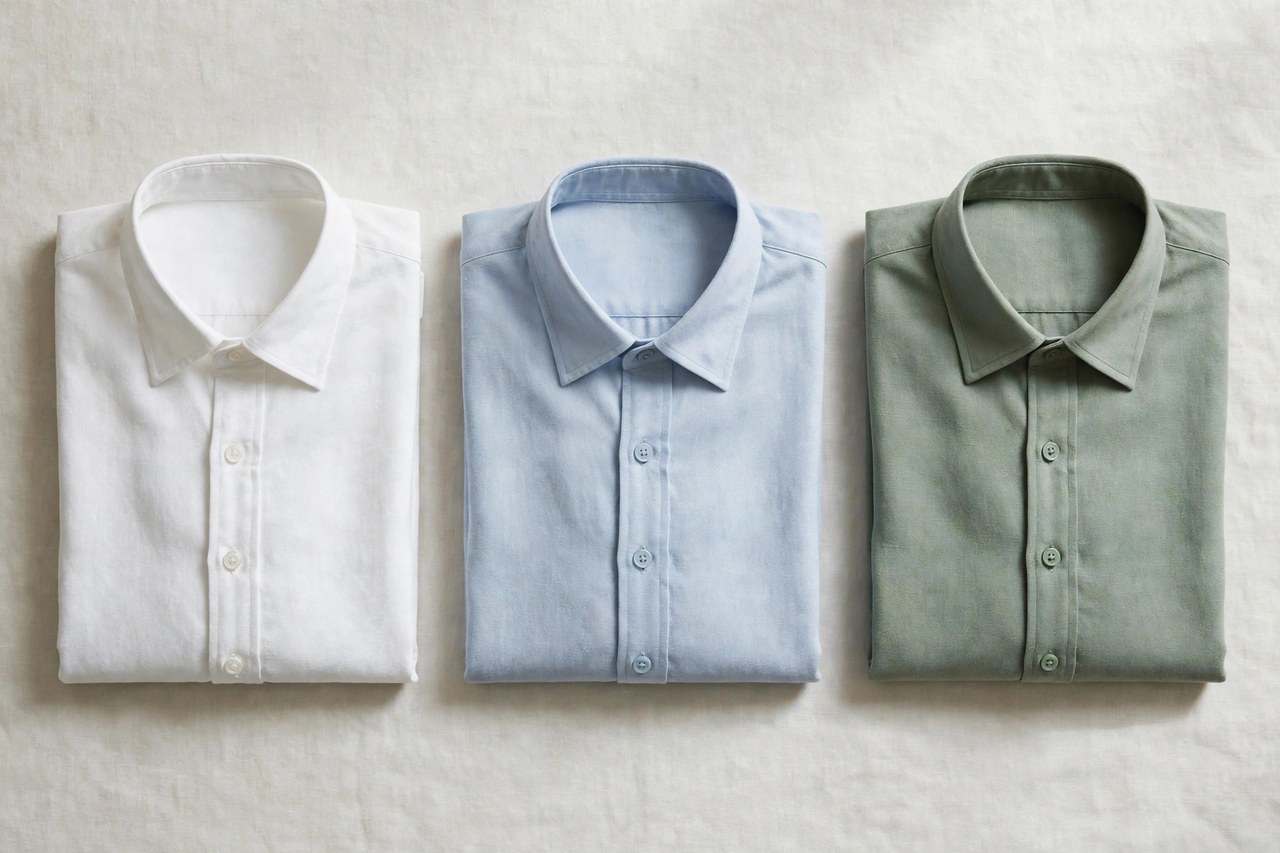
A men's V-neck shirt is a woven or dress-casual shirt with an opening that angles down from the shoulders to a point at the upper chest, without a full buttoned collar closing at the throat. The V shape gives a more open neckline than a crew or band collar, works open over a plain undershirt, and suits warm weather, relaxed office dress, and smart casual outfits where a traditional collar feels too formal or restrictive. This guide explains what to look for, how the sizing actually works, which fabrics and constructions earn their price, and how to care for the garment so it keeps doing its job season after season.
Styles and Construction
Look for woven fabrics such as cotton poplin, linen, linen-cotton blends, chambray, and lightweight twill, chosen for breathability and how crisply they hold the V opening. Better shirts reinforce the point of the V with neat stitching or a small facing so it does not stretch or curl. Details include short or long sleeves, chest pockets, button or snap plackets below the point, and curved hems for wearing untucked. Seams should lie flat and pattern stripes should align cleanly at the shoulders.
A top earns its keep in finishing: seams that hang straight and stay even at eight to twelve stitches per inch, collars and plackets that lie flat after washing, buttons sewn with thread shanks so they sit in their holes without pulling. Hold the cloth to the light - a tight, even weave or knit outwears a loose one at the same labeled weight, and pattern pieces cut on grain keep the garment from twisting around your body by the third wash.
Fit and Sizing
Fit should follow the shoulders first, with the seam sitting at the shoulder bone and enough chest ease to sit and reach without pulling across the V. The point should end around the upper chest, not low enough to require an undershirt for modesty in professional settings. Sleeve length, body length for tucking, and taper through the waist vary by brand, so compare garment measurements with a shirt you already wear well rather than relying only on a size letter.
Fit tops shoulders and chest first, because tailors cannot cheaply move either: the shoulder seam ends at the shoulder bone, the chest closes without pulling, and both arms raise without the hem escaping the waistband. Tucked lengths must stay tucked sitting; untucked lengths should end mid-fly. Sleeves are the cheap alteration, shoulders the permanent one - reject a wrong shoulder for any reason, forgive a long sleeve for many.
Wearing and Care
Wash woven V-neck shirts according to the fabric label, usually in cool or warm water with similar colors, and fasten any placket buttons to protect the neckline shape. Iron or steam the V facing and collar band flat while slightly damp, paying attention to the point. Hang on a shaped hanger or fold neatly for storage, keep linen away from prolonged direct sunlight, and repair a loose stitch at the V promptly before repeated washing widens the opening.
Launder tops by the label with three defaults: cool or warm water to protect color and trims, dark and printed pieces inside out, and low or line drying, which is the largest single lever on a shirt's lifespan. Fasten buttons and zips before washing to protect the whole load, treat stains before the dryer can set them, and store knits folded so their shoulders keep the shape they were knitted with.
Common Questions
How is a V-neck shirt different from a V-neck T-shirt?
A V-neck shirt is usually woven, with more structure, a faced or banded opening, and sometimes a partial placket, so it reads dress-casual. A V-neck T-shirt is a soft knit tee with a ribbed or bound neckline and a simpler, more casual construction overall.
Can I wear a V-neck shirt to a smart casual office?
Yes, if the V is moderate, the fabric is neat rather than slouchy, and the shirt is pressed and paired with tailored trousers. Choose a plain color or subtle pattern, avoid a very deep opening, and follow your workplace dress code if it requires a collar.
Should anything show underneath a V-neck shirt?
A plain V-neck undershirt can sit invisibly below the opening when you want an extra layer. Avoid a high crew undershirt peeking above the point, which looks untidy. In warm weather many men wear the shirt alone, provided the opening depth feels comfortable and appropriate.
More in Men's Clothes Guide V
Background
A shirt is a cloth garment for the upper body. The neckline of the shirt can come in various styles. The neckline is the top edge of a garment that surrounds the neck, especially from the front view. One common variation of a shirts neckline is the v-neck style. V-neck (2–4 linear edges, side edges diverge) originate from the middle east, these are formed by two diagonal lines from the shoulders that meet on the chest creating a V shape. The depth of the V can vary, ranging from demure styles to plunging. The surplice version of this neckline (known as a portrait neckline) is an alternative. The V may also be truncated by a small bottom edge, forming a trapezoid.
Looking for Men's Clothing Stores?
This guide explains men's v-neck shirts. To browse where to buy, visit our men's clothing store directory, where you can find retailers that carry them.