Men's V-Neck Undershirts Guide
A men's V-neck undershirt is a lightweight underlayer with a front neckline cut low enough to stay hidden beneath an open collared shirt or a shirt worn without a tie. It absorbs perspiration before it reaches the outer shirt, adds a smooth layer in cool weather, and helps light colored dress shirts look more even. Unlike a fashion V-neck tee, it is cut specifically to disappear, with a deeper neckline and a close, longer body.
Shop Men's V-Neck Undershirts Now
Shop Men's V-Neck Undershirts on Amazon Shop Men's V-Neck Undershirts on eBayThe Amazon and eBay links on this page are affiliate links. If you make a purchase through them, Apparel Search may earn a commission.
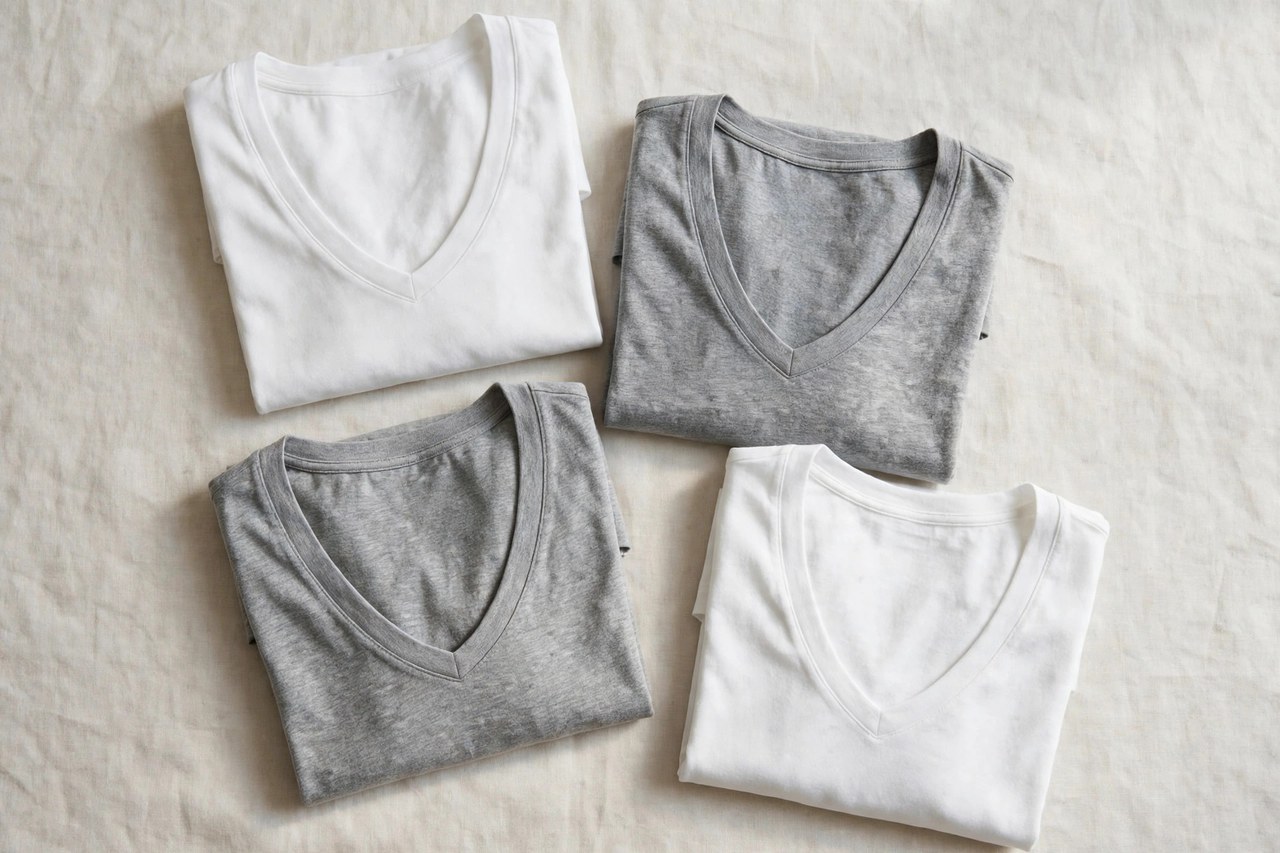
A men's V-neck undershirt is a lightweight underlayer with a front neckline cut low enough to stay hidden beneath an open collared shirt or a shirt worn without a tie. It absorbs perspiration before it reaches the outer shirt, adds a smooth layer in cool weather, and helps light colored dress shirts look more even. Unlike a fashion V-neck tee, it is cut specifically to disappear, with a deeper neckline and a close, longer body. This guide explains what to look for, how the sizing actually works, which fabrics and constructions earn their price, and how to care for the garment so it keeps doing its job season after season.
Styles and Construction
Typical fabrics are combed cotton for softness and absorbency, cotton-modal for a smoother feel and better shape retention, and synthetic or blended mesh fabrics designed to wick moisture in heat. The neckline binding should be low profile so it does not create a ridge under a dress shirt. Look for a body without bulky side seams if you are sensitive to rubbing, flat shoulder seams, and a hem long enough to stay tucked through a full day of sitting and reaching.
A top earns its keep in finishing: seams that hang straight and stay even at eight to twelve stitches per inch, collars and plackets that lie flat after washing, buttons sewn with thread shanks so they sit in their holes without pulling. Hold the cloth to the light - a tight, even weave or knit outwears a loose one at the same labeled weight, and pattern pieces cut on grain keep the garment from twisting around your body by the third wash.
Fit and Sizing
Choose the V depth from the shirts you actually wear: the undershirt point should sit below the lowest button you normally leave open, so no fabric shows at the throat. The body should fit close without compressing, because excess fabric bunches visibly under a fitted shirt. Length matters more than in a tee; it should remain tucked when you raise your arms. Skin tone shades can be less visible under white shirts than bright white, depending on your skin and shirt fabric.
Fit tops shoulders and chest first, because tailors cannot cheaply move either: the shoulder seam ends at the shoulder bone, the chest closes without pulling, and both arms raise without the hem escaping the waistband. Tucked lengths must stay tucked sitting; untucked lengths should end mid-fly. Sleeves are the cheap alteration, shoulders the permanent one - reject a wrong shoulder for any reason, forgive a long sleeve for many.
Wearing and Care
Because undershirts absorb perspiration, wash them regularly in warm or cool water according to the label, turning them inside out and washing whites separately to keep them bright. Treat underarm discoloration early and avoid excessive dryer heat, which breaks down elastic fibers and modal blends over time. Dry low or on a line, fold neatly, and replace undershirts when the neckline stretches out, the body thins, or persistent odor remains after washing, since a worn layer protects the outer shirt less effectively.
Launder tops by the label with three defaults: cool or warm water to protect color and trims, dark and printed pieces inside out, and low or line drying, which is the largest single lever on a shirt's lifespan. Fasten buttons and zips before washing to protect the whole load, treat stains before the dryer can set them, and store knits folded so their shoulders keep the shape they were knitted with.
Common Questions
Why choose a V-neck undershirt over a crew neck?
A V-neck stays hidden when a collared shirt is worn open at the neck or without a tie, while a crew neck band often shows at the throat. Choose a crew instead if you always button to the top or want visible coverage at the neckline in cold weather.
Should an undershirt show under a white dress shirt?
Ideally the outline is minimal. A white undershirt can create a visible contrast line under a thin white shirt, while a shade close to your skin tone often reads less noticeably. Keep the V below the open button, choose a smooth lightweight fabric, and avoid prints or logos underneath.
How many V-neck undershirts do most men need?
A practical rotation covers your working week plus laundry turnaround, often five to seven for men who wear one daily. Having several lets each rest and wash properly without rushing a damp one back into service. Adjust the number for climate, perspiration, and how often you wear open collared shirts.
More in Men's Clothes Guide V
Background
A shirt is a cloth garment for the upper body. An undershirt is an article of underwear worn underneath a dress shirt intended to protect it from body sweat and odors. Alternatively, it may be worn to protect the body from stiff or otherwise uncomfortable fabric that a person may be required to wear (such as a mandatory work uniform). It can have short sleeves or be sleeveless. The term most commonly refers to upper-body wear worn by males. This article of clothing typically has a low, round neckline that can be worn for athletic purposes. However, undershirts can also have a v-neck neckline. V-neck (2–4 linear edges, side edges diverge) originate from the middle east, these are formed by two diagonal lines from the shoulders that meet on the chest creating a V shape.
More to Explore on Apparel Search
Looking for Men's Clothing Stores?
This guide explains men's v-neck undershirts. To browse where to buy, visit our men's clothing store directory, where you can find retailers that carry them.