Men's Undershirts Guide
A men's undershirt is the thin knit top worn under a dress shirt or sweater to absorb perspiration, protect the outer garment, soften the outline of the body under thin cloth, and add a light layer of warmth or modesty. This guide treats the undershirt strictly as a product: crew and V-neck cuts, tank-style undershirts, fabrics, sizing and care for the hardest-working layer in the drawer.
Shop Men's Undershirts Now
Shop Men's Undershirts on Amazon Shop Men's Undershirts on eBayThe Amazon and eBay links on this page are affiliate links. If you make a purchase through them, Apparel Search may earn a commission.
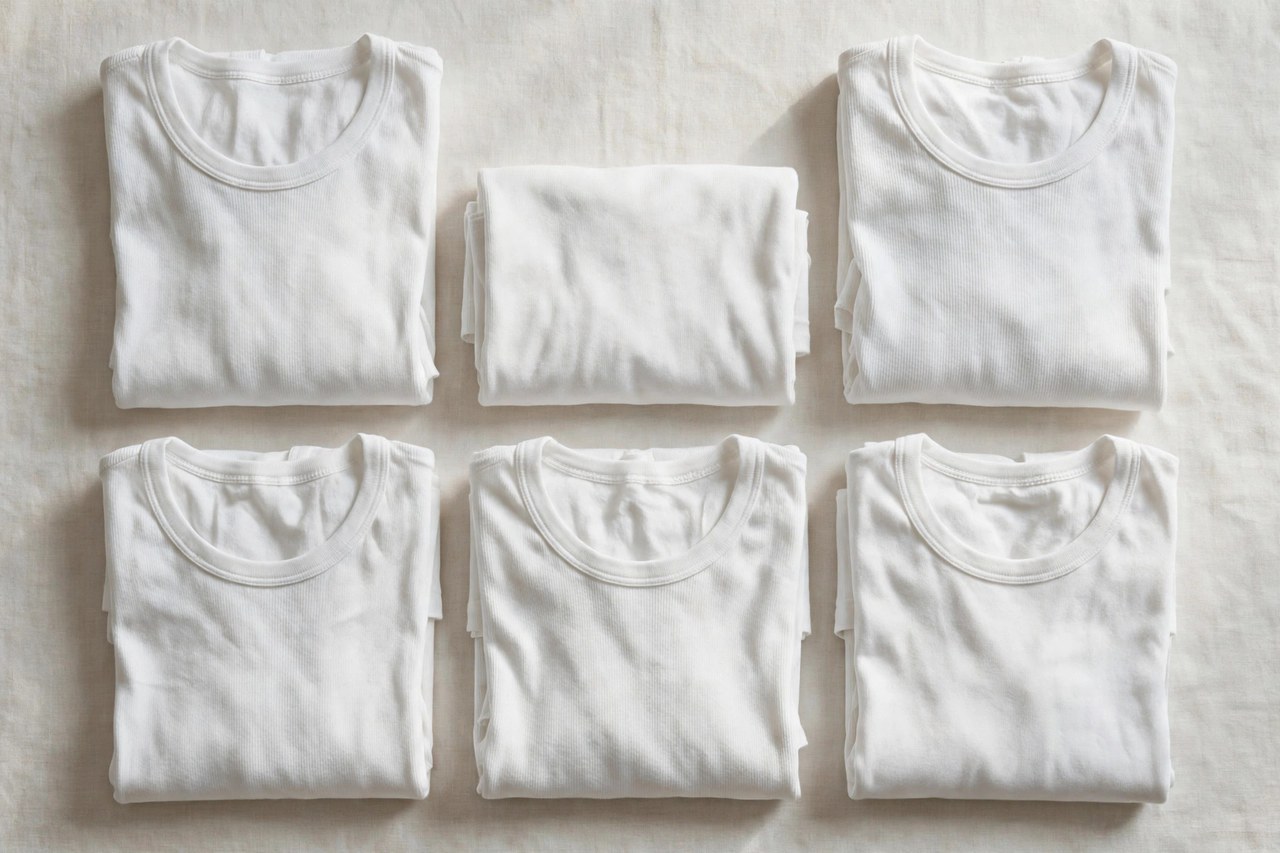
A men's undershirt is the thin knit top worn under a dress shirt or sweater to absorb perspiration, protect the outer garment, soften the outline of the body under thin cloth, and add a light layer of warmth or modesty. This guide treats the undershirt strictly as a product: crew and V-neck cuts, tank-style undershirts, fabrics, sizing and care for the hardest-working layer in the drawer. This guide is built around the questions buyers actually ask: which style, which size, which fabric, and what will it look like after a year of real use - answered in order, with the trade-offs stated plainly.
Styles and Construction
The cut decision is neckline. A crew neck shows a ring of white under an open collar and suits casual layering; a V-neck stays invisible under an open dress-shirt collar, and deeper V cuts exist for two-buttons-open wear. Sleeve length matters too: short sleeves protect a dress shirt's underarm area, while sleeveless tank undershirts (ribbed cotton A-shirts) cover less but layer coolest. Fabrics divide into combed cotton (soft, absorbent, the standard), cotton-modal (smoother, more shape-retentive), and synthetics with moisture management for men who run warm. Better undershirts are cut longer than a t-shirt so they stay tucked, with a close body that does not bunch under a fitted shirt and flat seams that do not print through.
A top earns its keep in finishing: seams that hang straight and stay even at eight to twelve stitches per inch, collars and plackets that lie flat after washing, buttons sewn with thread shanks so they sit in their holes without pulling. Hold the cloth to the light - a tight, even weave or knit outwears a loose one at the same labeled weight, and pattern pieces cut on grain keep the garment from twisting around your body by the third wash.
Fit and Sizing
An undershirt should fit like a second skin: close through the chest and body without compression, because any excess cloth folds and shows under a dress shirt, and any shortage rides up out of the waistband. Buy by chest measurement, choose the longer 'tall' cuts if you are long in the torso, and judge the fit tucked in, sitting down - that is the position the garment must survive. Ribbed knits stretch to fit a range; smooth jerseys need the truer size.
Fit tops shoulders and chest first, because tailors cannot cheaply move either: the shoulder seam ends at the shoulder bone, the chest closes without pulling, and both arms raise without the hem escaping the waistband. Tucked lengths must stay tucked sitting; untucked lengths should end mid-fly. Sleeves are the cheap alteration, shoulders the permanent one - reject a wrong shoulder for any reason, forgive a long sleeve for many.
Wearing and Care
Undershirts live a hard laundry life and should be bought and washed as the work garments they are. Wash whites hot enough to keep them white - they grey from body oils and detergent residue - and use an oxygen soak periodically. Replace an undershirt when the neckline sags, the body yellows beyond soaking back, or the underarms stiffen: its job is to look clean even when only a sliver shows at the collar, and a tired undershirt fails that job visibly.
Launder tops by the label with three defaults: cool or warm water to protect color and trims, dark and printed pieces inside out, and low or line drying, which is the largest single lever on a shirt's lifespan. Fasten buttons and zips before washing to protect the whole load, treat stains before the dryer can set them, and store knits folded so their shoulders keep the shape they were knitted with.
Common Questions
Crew neck or V-neck undershirt - which should I wear?
Match the neckline to the shirt above it. Wear a V-neck whenever the outer shirt's collar will be open, so no undershirt shows; wear a crew neck under closed collars, knitwear and casual layers, where its ring at the neck is expected and also protects the outer garment's collar band from skin oils.
Why do undershirts need to be longer than t-shirts?
Because they must stay tucked through a working day of sitting, reaching and bending. The extra length - often two to four inches over a fashion tee - anchors below the waistband of the trousers. An undershirt that escapes is not a size problem so much as a length problem, which is why tall cuts exist even for average-height men with long torsos.
How many undershirts should a man own?
Enough to match his laundry cycle with one clean spare: for most men that means five to seven in the style he wears daily. They are low-cost, high-wear garments that age by the wash, so a rotation bought together and replaced together keeps the whole drawer at the same standard.
More in Men's Clothes Guide U
Background and History
An undershirt is technically a type of underwear worn underneath a dress shirt intended to protect the dress shirt from body sweat and odors. Some men wear them as a type of t-shirt that is not worn under another shirt. A man's undershirt can have short sleeves or be sleeveless. The term most commonly refers to upper-body wear worn by males. This article of clothing typically has a low, round neckline that can be worn for athletic purposes. It also makes dress shirts less transparent. This type of shirt can also be worn during winter months as an extra layer of warmth. Apparel Search is a leading guide to fashion, style, clothing, glam and all things relevant to apparel. We hope that you find this Men's Undershirts page to be helpful. What ever you are wearing , is in fashion. Learn about other types of shirts and t-shirt styles . It is always a fabulous day to learn more about men's fashion. Please don't wear your undershirts over shirts. Men's
More to Explore on Apparel Search
Looking for Men's Clothing Stores?
This guide explains men's undershirts. To browse where to buy, visit our men's clothing store directory, where you can find retailers that carry them.