Men's Casual Sportswear Guide
Men's casual sportswear is clothing borrowed from sport and worn for life: polo shirts, track jackets, sweatshirts, joggers, tennis and golf clothing's civilian descendants, and the whole athleisure wardrobe. The garments keep sport's engineering - breathable knits, stretch, moisture management - but their venue is the street, the office-casual Friday and the weekend. This page covers the traditional branch; its designer descendant, contemporary sportswear, has its own guide.
Shop Men's Casual Sportswear Now
Shop Men's Casual Sportswear on Amazon Shop Men's Casual Sportswear on eBayThe Amazon and eBay links on this page are affiliate links. If you make a purchase through them, Apparel Search may earn a commission.
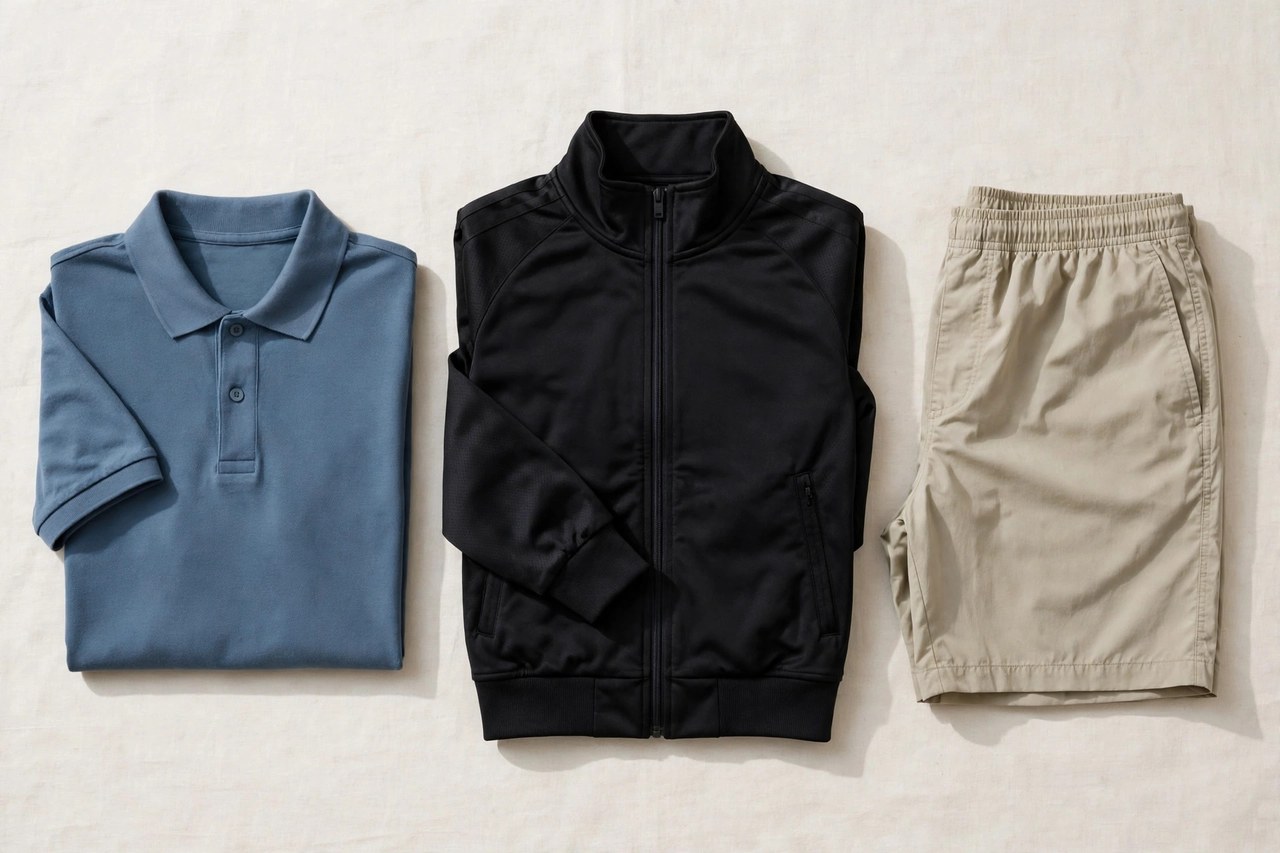
Men's casual sportswear is clothing borrowed from sport and worn for life: polo shirts, track jackets, sweatshirts, joggers, tennis and golf clothing's civilian descendants, and the whole athleisure wardrobe. The garments keep sport's engineering - breathable knits, stretch, moisture management - but their venue is the street, the office-casual Friday and the weekend. This page covers the traditional branch; its designer descendant, contemporary sportswear, has its own guide. This guide explains what to look for, how the sizing actually works, which fabrics and constructions earn their price, and how to care for the garment so it keeps doing its job season after season.
Styles and Construction
The classics each carry a sport's DNA. The polo is tennis and golf's shirt, its knitted collar and placket built to look composed while moving. The sweatshirt and hoodie are training-ground cotton fleece turned universal layer. Track jackets and joggers come from the warm-up suit, and shorts descend from every sport at once. Fabric is the category's real subject: piqué cotton, jersey, French terry, fleece and modern technical knits, each trading structure for comfort in a different proportion. Worn well, casual sportswear looks intentional; worn carelessly, it looks like the gym bag dressed you.
The durable buying order is job, specification, budget - in that sequence. Decide what the garment must do, translate that into fiber, weight, construction and size numbers, and only then shop price. Read labels as specifications, inspect the garment inside out where finishing is unposed, and prefer the maker who publishes measurements to the one who publishes adjectives. A garment that matches your measurements, climate and laundry will be worn; one that misses any of the three becomes expensive storage.
Fit and Sizing
Fit is the whole discipline: sportswear's ease must be designed, not defaulted. A polo should skim the torso with sleeves ending mid-bicep, joggers taper to a clean cuff, sweatshirts end at the waistband rather than the thigh. Size down the billow you would accept in actual training kit, keep colors coordinated with your casual wardrobe rather than your team's, and reserve true performance gear - with its logos and neon - for performance.
Measure yourself once a year and keep the numbers - chest, waist, inseam, foot, head - because bodies drift gradually while size habits never do. Shop from measurements, try garments under real conditions (over layers, in your own shoes, late in the day for footwear), and be honest about alterations: lengths and small waist changes tailor beautifully; shoulders, rises and patterns are the garment you bought forever.
Wearing and Care
Wash sportswear inside out and cool; technical knits lose their wicking finish to fabric softener and high heat, so skip both. Cotton fleece shrinks in length if tumble-dried hot - dry low or line-dry your best pieces. The category's enemies are the dryer and the chair-back: hang or fold pieces properly and piqué collars and ribbed cuffs keep their engineered shape.
Five minutes when a garment comes off - shake it out, hang or fold it correctly, note the stain and the loose button - prevents most of the damage later blamed on quality. Keep a small kit where the clothes live: brush, lint roller, conditioner suited to your leathers, black, navy and grey thread. Clothing rarely dies at once; it fades by small neglects, and small attentions reverse the process at the same pace.
Common Questions
What is the difference between casual sportswear and athleisure?
They are the same family at different ages: casual sportswear is the traditional term for sport-derived everyday clothing (polos, sweatshirts, track jackets), while athleisure is the modern, tighter, more technical and more fashion-conscious wave of the same idea. The contemporary sportswear page in this guide covers the designer end of that spectrum.
Can casual sportswear look smart?
Yes, at its clean end: a fitted plain polo or a fine-gauge track jacket over chinos, with clean minimal shoes, reads smart-casual in many settings. The rules are fit, plainness and condition - no team logos, no gym wear, nothing that looks slept in - after which sport's neatness carries the outfit.
Why should you not use fabric softener on sportswear?
Softener works by coating fibers, and the coating clogs the engineered channels that move moisture in technical knits, while also trapping odor in synthetics. The garment comes out softer and functions worse. A vinegar rinse or a sports-specific wash preserves the wicking you paid for.
More in Men's Clothes Guide C
Looking for Men's Clothing Stores?
This guide explains men's casual sportswear. To browse where to buy, visit our men's clothing store directory, where you can find retailers that carry them.