Men's Sportswear Guide
Men's sportswear is the broadest word in this letter's sports family: historically the American term for a man's casual wardrobe entire, and today the category where athletic clothing and everyday clothing meet - track jackets and joggers worn as outfits, sneakers as default footwear, hoodies as outerwear. In modern usage, sportswear is the style system built from sport, while sports apparel (its sibling guide) is the equipment built for sport.
Shop Men's Sportswear Now
Shop Men's Sportswear on Amazon Shop Men's Sportswear on eBayThe Amazon and eBay links on this page are affiliate links. If you make a purchase through them, Apparel Search may earn a commission.
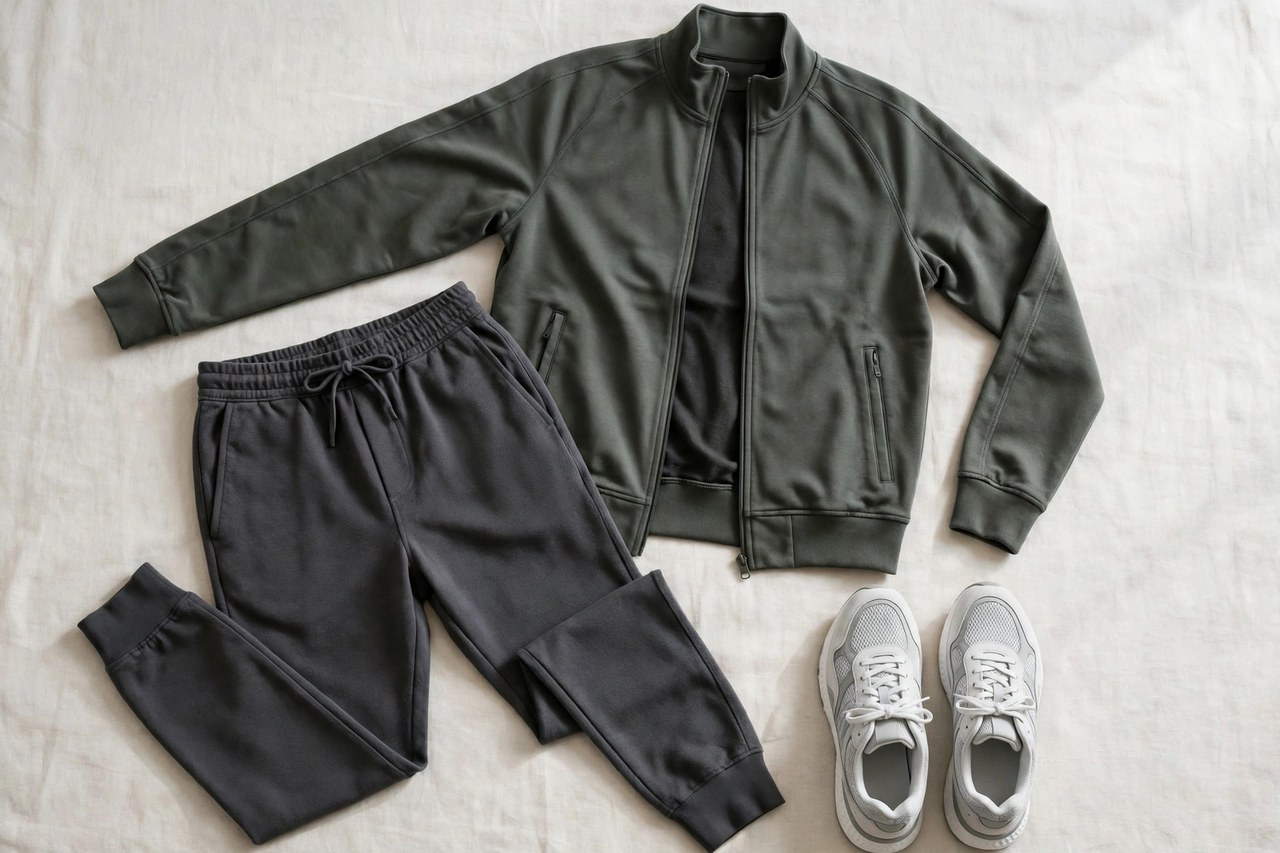
Men's sportswear is the broadest word in this letter's sports family: historically the American term for a man's casual wardrobe entire, and today the category where athletic clothing and everyday clothing meet - track jackets and joggers worn as outfits, sneakers as default footwear, hoodies as outerwear. In modern usage, sportswear is the style system built from sport, while sports apparel (its sibling guide) is the equipment built for sport. This guide walks through the choices that matter - style, fit, fabric and finish - with the practical detail a product listing rarely gives you, and closes with the care habits that keep the garment in service.
The Athletic Wardrobe as a Style System
The sportswear wardrobe has its own classics. The track jacket and its matching or contrasting bottoms; the jogger, tapered and cuffed where the sweatpant once ballooned; the hoodie in its heavyweight, structured modern form; the coach's jacket, the warm-up pant, the athletic short worn off-duty; and the sneaker rotation that anchors all of it. Fabric is the category's quiet revolution - loopback cotton fleece, technical twill, scuba and bonded knits - giving athletic shapes a tailored finish their gym ancestors never had. Worn well, sportswear is a system of matched effort: shoes, bottoms and top all at the same level of intention.
The durable buying order is job, specification, budget - in that sequence. Decide what the garment must do, translate that into fiber, weight, construction and size numbers, and only then shop price. Read labels as specifications, inspect the garment inside out where finishing is unposed, and prefer the maker who publishes measurements to the one who publishes adjectives. A garment that matches your measurements, climate and laundry will be worn; one that misses any of the three becomes expensive storage.
Fit and Proportion
Fit is what separates sportswear-as-style from sportswear-as-giving-up. The modern silhouette is tapered and clean: joggers that narrow to the ankle without gripping the calf, hoodies with structure at the shoulder, track jackets that close smoothly. Everything at the same volume and cleanliness - a crisp outfit in athletic grammar. The pieces are forgiving, which is the point, but forgiving is not shapeless: size for the line, and let the fabrics' engineering show. When in doubt, one unmistakably tailored piece (a clean minimal sneaker, a structured cap) pulls the set into intention.
Measure yourself once a year and keep the numbers - chest, waist, inseam, foot, head - because bodies drift gradually while size habits never do. Shop from measurements, try garments under real conditions (over layers, in your own shoes, late in the day for footwear), and be honest about alterations: lengths and small waist changes tailor beautifully; shoulders, rises and patterns are the garment you bought forever.
Wearing and Care
Sportswear pieces are mostly cotton fleece and technical synthetics and wash like it: cool, inside out, softener only where no wicking is claimed, dried low. The category's real maintenance is rotation and presentation - fleece pills where bags rub, white sneakers confess every mile, and elastic cuffs tire in the dryer. Keep the rotation fresh and the sneakers cleaner than the gym's, and sportswear holds its register: the deliberate ease that made it the default dress of the century so far.
Five minutes when a garment comes off - shake it out, hang or fold it correctly, note the stain and the loose button - prevents most of the damage later blamed on quality. Keep a small kit where the clothes live: brush, lint roller, conditioner suited to your leathers, black, navy and grey thread. Clothing rarely dies at once; it fades by small neglects, and small attentions reverse the process at the same pace.
Common Questions
How is sportswear different from sports apparel and activewear?
Intention and venue. Sports apparel is built to be played in - engineered fibers, sport-specific cuts. Activewear is its close synonym in the training market. Sportswear is the wardrobe category: clothing with athletic DNA worn for life rather than for the game - the track jacket at lunch, the jogger as a trouser substitute. The garments overlap; the question that sorts them is whether the piece's first job is performance or presentation.
Can sportswear look smart?
Yes - it is the dominant smart-casual language of the moment when it is fitted, coordinated and clean: tapered joggers with a structured hoodie and minimal sneakers reads as an outfit anywhere casual is allowed. It fails when volume, stains or gym-wear signals (mesh shorts, a race tee) drag it back to the locker room. The line is not the category; it is the care taken inside it.
What are the essential sportswear pieces?
A heavyweight hoodie, a track or coach's jacket, tapered joggers, a quality sweatpant or warm-up bottom, athletic shorts in a clean cut, and the sneaker rotation beneath them all - one minimal leather pair, one runner. Built in a restrained palette (black, grey, navy, olive), these combine into weeks of coherent outfits, which is precisely why the category conquered the casual wardrobe.
More in Men's Clothes Guide S
Sportswear in Summary
In summary, sportswear can be defined as clothes worn for casual outdoor use or for such sports activities as jogging, cycling, tennis and sailing - relaxed casual wear - and the term can also be referenced as activewear, clothing designed specifically for participating in sporting activities or certain other forms of physical activity. Sportswear is a broad category including tops, bottoms and more; for the participation side of the family, see our men’s activewear guide.
Looking for Men's Clothing Stores?
This guide explains men's sportswear. To browse where to buy, visit our men's clothing store directory, where you can find retailers that carry them.