Men's Boat Shoes Guide
Men's boat shoes are the low leather moccasins built for wet decks: a siped rubber sole that grips slick fiberglass, water-tolerant leather uppers, and 360-degree rawhide lacing that keeps the shoe on a heeling deck. Invented for sailors in the 1930s, they escaped the marina to become a summer casual standard - but the genuine article is still a tool first, and its details separate a real deck shoe from a land-only lookalike.
Shop Men's Boat Shoes Now
Shop Men's Boat Shoes on Amazon Shop Men's Boat Shoes on eBayThe Amazon and eBay links on this page are affiliate links. If you make a purchase through them, Apparel Search may earn a commission.
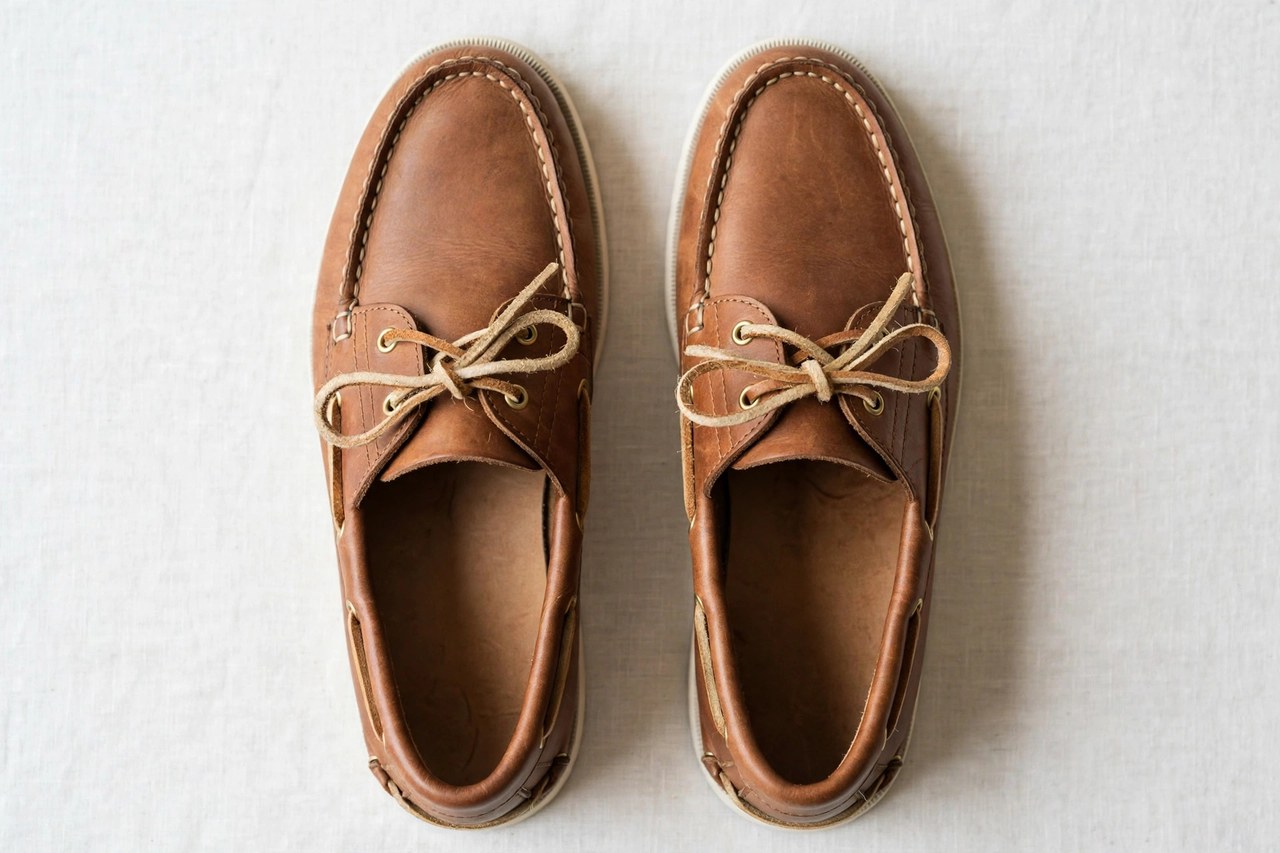
Men's boat shoes are the low leather moccasins built for wet decks: a siped rubber sole that grips slick fiberglass, water-tolerant leather uppers, and 360-degree rawhide lacing that keeps the shoe on a heeling deck. Invented for sailors in the 1930s, they escaped the marina to become a summer casual standard - but the genuine article is still a tool first, and its details separate a real deck shoe from a land-only lookalike. This guide is built around the questions buyers actually ask: which style, which size, which fabric, and what will it look like after a year of real use - answered in order, with the trade-offs stated plainly.
Styles and Construction
The sole is the signature: razor-cut sipes - thin slits across the rubber - open under pressure to channel water and bite wet surfaces, the same principle as a tire tread in miniature. Uppers are oiled or nubuck leather chosen to survive soaking and dry back without cracking, with rust-proof eyelets and a leather lace running around the heel so the shoe can be cinched truly secure. Fashion versions borrow the silhouette with ordinary soles and fashion leathers; they are fine shoes ashore but they are not deck equipment.
Judge any pair by the same construction checklist: how the sole is attached (cemented soles are light and cheaper, stitched welts are repairable and dearer), what the lining does with moisture over a long day, and whether the insole is removable if you use your own supports. Weight matters more than most listings admit - a heavy pair taxes every step, while a well-balanced lighter pair disappears on the foot. Finally, check the outsole compound against your surfaces: hard rubber lasts, soft rubber grips, and the right answer is the one matched to where the shoes will actually walk, play or work.
Fit and Sizing
Boat shoes are worn barefoot or with no-show socks, and they stretch: buy them snug, almost a half-step tight, because the leather molds to the foot within a few wears and a loose start becomes a sloppy shoe forever. The heel will slip for the first days - that is the moc construction settling, not a sizing error - but toes should never be cramped. Width runs honest; wide feet should take the wide fitting rather than sizing up into length.
Fit footwear at the end of the day, when feet are at their largest, wearing the socks you will actually use. There should be roughly a thumb's width - about half an inch - between your longest toe and the end of the shoe, the heel should hold without lifting out as you walk, and the widest part of your foot should sit in the widest part of the shoe. Sizes are not standardized between makers, so treat your measured length and width as the truth and the printed size as a starting guess; between sizes, the one that needs no breaking-in argument is usually right.
Wearing and Care
Let soaked boat shoes dry slowly, stuffed with paper, away from heat; salt water left in leather stiffens it, so rinse salt out with fresh water after real marine use. Condition the uppers when they dry pale, and expect the white siped soles to grey with honest use - it is patina, not failure. A boat shoe resoled is rare; a boat shoe properly dried and conditioned lasts many summers instead.
Care is rotation first: never wear the same pair on consecutive days if you can help it, because twenty-four hours lets moisture leave the lining and cushioning recover its shape. Brush or wipe down after wear, use trees or stuffing to hold the shape while drying, and never dry footwear on direct heat, which cracks leather and warps adhesives. Condition leather on schedule rather than on appearance - by the time it looks thirsty it is already dry - and reproof water-resistant finishes when water stops beading on the surface.
Common Questions
What makes a boat shoe grip wet decks?
Siping: the sole carries many thin razor slits that flex open as the shoe bears weight, channeling water out from under the rubber and presenting fresh edges to the surface - the same idea as winter tire sipes. A smooth fashion sole with a boat-shoe silhouette has none of this, which is why genuine deck shoes and lookalikes behave so differently on a wet dock.
Should boat shoes fit tight?
Snug at purchase, yes - the oiled leather uppers relax and mold to your feet within several wears, so a comfortable-loose start becomes a sloppy shoe. Expect slight heel movement for the first few outings while the moccasin construction settles, but never toe cramping. If you are between sizes, the smaller size in a wide fitting usually beats sizing up.
Do you wear socks with boat shoes?
Traditionally no - the leather lining is designed for bare feet, and the look is part of the shoe's identity. Modern no-show socks give the barefoot look with better hygiene and less odor, and are a sensible compromise for all-day wear. Visible athletic socks with boat shoes remain a style error by near-universal agreement.
More in Men's Clothes Guide B
Paul Sperry and the Siped Sole
Boat shoes (also known as deck shoes) are typically canvas or leather with non-marking rubber soles designed for use on a boat; a siping pattern is cut into the soles to provide grip on a wet deck; the leather construction, along with the application of oil, is designed to repel water; the stitching is highly durable; and boat shoes are traditionally worn without socks. Modern boat shoes were invented in 1935 by American Paul A. Sperry of New Haven, Connecticut, after noticing his dog’s ability to run easily over ice without slipping — using a knife, he cut siping into his shoes’ soles. And no, you don’t have to own a boat to own this type of footwear.
More to Explore on Apparel Search
Looking for Men's Clothing Stores?
This guide explains men's boat shoes. To browse where to buy, visit our men's clothing store directory, where you can find retailers that carry them.