Raglan Sleeve
Fashion Terms — the Apparel Search fashion terminology directory
A raglan is a type of sleeve that extends in one piece fully to the collar, leaving a diagonal seam from underarm to collarbone and giving the garment a relatively undefined shoulder line. There is no shoulder seam in a raglan garment. The style is liked for its comfortable fit and relatively easy construction, and it is common on sweatshirts, jersey shirts and baseball-style tees.
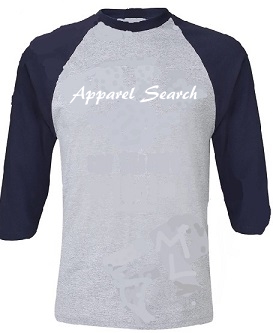
A raglan is a type of sleeve. The distinguishing characteristic of this type of sleeve is that it extends in one piece fully to the collar, leaving a diagonal seam from underarm to collarbone giving the garment a relatively undefined look.
 This
sleeve is well liked for its comfortable fit and relatively easy
construction. Its diagonal seam line can lead into another seam or form
part of a neckline. It can be cut on the straight or bias grain, with a
one- or two-piece construction. The shoulder curve is part of the sleeve
shape, and is created by a dart, a seam, or gathers.
The curve of the dart or seam should conform to your own shoulder and upper arm shape, with the sharpest part of the curve neither above nor below the point of your shoulder.
A raglan sleeve is often used when making items of clothing such as sweatshirts and other shirts made from jersey fabric. A raglan sleeve is only one piece, instead of several pieces sewn together and attached to the shell of the garment. This style makes shirts easy to move around in and very comfortable. There is no shoulder seam in a garment with this type of sleeve. Raglan sleeves are often worn by baseball players because they provide ease of movement when making the throwing motion. The three quarter sleeve raglan is common and sometimes referenced as baseball shirts.
Shirts made with the raglan sleeve design tend to be more casual. T-shirts with short or three-quarter length sleeves are often made this way. In many cases, the sleeve is made from fabric of a different color than the rest of the shirt, creating a sporty look.
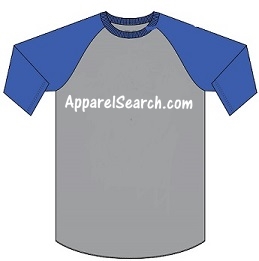
In summary, the raglan sleeve construction is different from that of typical shirt sleeves, because it has a seam that goes from the underarm straight to the neckline.
If you would like to learn more about shirt construction, you may want to also read about shirt yokes, smile pockets, and gussets.
Learn about different t-shirt styles.
What are raglan shirts? Now you know.
Recognizing and Wearing the Raglan
The fastest way to identify a raglan is to follow the seam. On an ordinary shirt, a seam circles the armhole where the sleeve joins the body, and a second seam sits on top of the shoulder. On a raglan, neither exists: a single diagonal seam runs from under the arm up to the neckline, front and back, and the sleeve fabric itself forms the shoulder. Because the sleeve and shoulder are one piece, the shoulder line looks soft and undefined rather than tailored — which is why raglan construction reads as casual and sporty, and why it suits knit fabrics such as jersey, sweatshirt fleece and t-shirt cotton that are cut and sewn rather than shaped on the body.
That softness is also the raglan's functional advantage. A set-in sleeve anchors the garment at the shoulder point, and raising the arm pulls against that anchor. A raglan's diagonal seam moves the join away from the point of motion, so the whole sleeve travels with the arm — the reason baseball players throw in raglans and the reason the style dominates athletic undershirts, training tops and sweatshirts. The contrasting-color version, where the sleeve is cut from a different fabric than the body, makes the diagonal construction visible and turns a pattern-cutting decision into the shirt's main design feature.
For makers, the raglan is forgiving in one way and demanding in another. It is relatively easy to construct — fewer pieces, no easing a sleeve cap into an armhole — but the fit lives in the shoulder curve built into the sleeve itself. That curve, formed by a dart, seam or gathers, has its sharpest point exactly at the wearer's shoulder point: place it too high or too low and the sleeve pulls or collapses. Related construction details worth reading alongside this term are shirt yokes, which shape the back shoulder in woven shirts, and gussets, the inserts used to add strength and movement at stress points — three different answers to the same problem of fitting cloth around a moving shoulder.
Common Questions
How is a raglan sleeve different from a regular set-in sleeve?
A set-in sleeve is a separate piece joined to the body at a shoulder seam around the armhole. A raglan sleeve reaches all the way to the collar in one piece, so its seam runs diagonally from the underarm to the collarbone and there is no shoulder seam at all.
Why are raglan shirts called baseball shirts?
Raglan sleeves give the throwing arm a full, unrestricted motion, so they became standard on baseball undershirts. The three-quarter sleeve version in a contrasting color is still commonly referenced as a baseball shirt.
Can a raglan sleeve be made in one or two pieces?
Yes. The raglan can be cut in one- or two-piece construction, on the straight or bias grain; the shoulder curve within the sleeve is shaped by a dart, a seam or gathers, and should conform to the wearer's own shoulder and upper-arm shape.