Ringer Tees
Fashion Terms — the Apparel Search fashion terminology directory
A ringer T-shirt is a T-shirt in which the primary jersey fabric is one color, but the ribbing used for the collar and the sleeve bands is in a contrasting color — originally most commonly a white shirt with black ribbing. Ringers were introduced in the United States in the early 1950s, became popular with youth and the rock-and-roll subculture, and peaked through the 1970s.
What is a ringer tee? First of all, a “tee” is the same thing as “t-shirt”.
A ringer T-shirt is a T-shirt in which the primary jersey shirt fabric is one color, but the ribbing used for the collar and the sleeve bands are of a contrasting color.
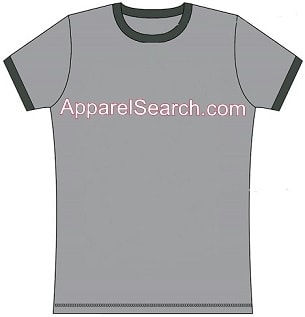
Originally the most common ringer colors were white with black ribbing. However, over the years the options have increased dramatically. Ringer style t-shirts come in tons of various color combinations.
Ringers were first introduced in the United States in the early 1950s. The contrasting trim color style became popular among youth and the rock-and-roll subculture. The shirt was often worn by athletes and school age children.
Ringers grew in popularity as the 1970s began and remained popular throughout that decade. But in the 1980s, other fashions eclipsed the ringer T-shirt.
In the early 2000s, ringer T-shirts experienced a resurgence, mostly among teens. Although they had a bit of a surge, they did not appear to reach the level of importance experienced during the 1970s.
Ringer tees will most likely come in and out of style as the decades continue to tick past.
Thank you for using the Apparel Search website.
One Trim Detail, Seventy Years of Revivals
The ringer is a study in how little design a garment needs to become a style. The T-shirt itself is unchanged — same jersey body, same cut — and the entire identity sits in two narrow bands of contrasting ribbing at the neck and sleeves. That economy is why the style could spread so quickly in the 1950s: any manufacturer could make a ringer from an existing tee pattern by swapping the trim fabric, and any wearer could signal membership in the youth and rock-and-roll culture of the moment with an inexpensive, everyday garment. Athletes and school-age children adopted it for the same reason — it was a uniform-like shirt that still read as casual and a little rebellious.
The ringer's timeline since then is a clean example of the fashion cycle this directory's retro term describes. Peak popularity through the 1970s; eclipse in the 1980s, when other silhouettes took over; a genuine resurgence in the early 2000s, driven mostly by teens rediscovering the 1970s version — at which point the new ringers were, in the strict sense, retro garments, new clothing imitating a recent-past style. The color range expanded along the way from the original white-with-black formula to a wide field of body-and-trim combinations, but the recognition test never changed: contrast at collar and cuff means ringer.
For product descriptions and catalog copy, the practical point is precision. Ringer names the trim, raglan names the sleeve, and ringspun — the neighboring term in this section — names how the yarn of the fabric itself was spun. A single tee can legitimately be described with all three words at once, each answering a different buyer's question: how it is trimmed, how it is constructed, and how its cotton was made. Keeping the three terms separate is what makes a garment description trustworthy.
Common Questions
What makes a T-shirt a ringer?
The contrasting ribbing: the collar and sleeve bands are made of ribbed trim in a different color from the shirt's main jersey body. Everything else about the shirt is a standard tee — the trim is the entire definition.
When were ringer tees most popular?
Ringers were introduced in the US in the early 1950s and grew in popularity as the 1970s began, remaining popular throughout that decade, worn by athletes and school-age children. They faded in the 1980s, then resurged in the early 2000s, mostly among teens, without reaching their 1970s importance.
Is a ringer tee the same as a raglan tee?
No. A ringer is defined by its contrasting collar and sleeve-band ribbing; a raglan is defined by its sleeve construction, extending to the collar on a diagonal seam. A shirt can be both — a raglan tee with contrasting ringer trim — but the terms name different features.