Men's Big and Tall Tees Guide
Big and tall tees - the word 'tee' used the way most men use it, for the everyday short-sleeved knit shirt in all its plain, pocket, henley-neck and longline forms - get their own page because the everyday rotation is a different problem from the base garment. The t-shirts page covers the pattern and the blank; this page covers the wardrobe: how many tees, in which variants, at what quality tier, a bigger or taller man actually wears through a week, and how the variants divide the work.
Shop Men's Big and Tall Tees Now
Shop Men's Big and Tall Tees on Amazon Shop Men's Big and Tall Tees on eBayThe Amazon and eBay links on this page are affiliate links. If you make a purchase through them, Apparel Search may earn a commission.
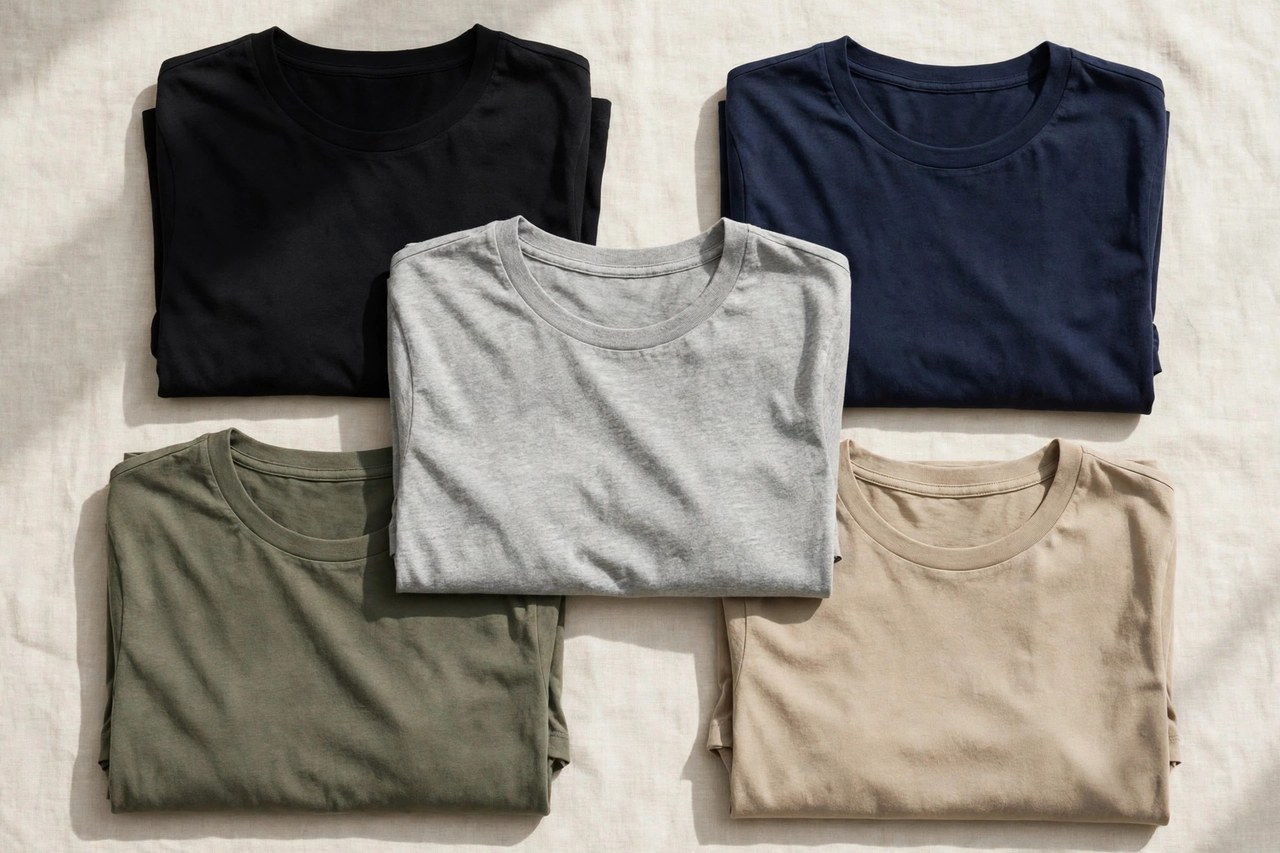
Big and tall tees - the word 'tee' used the way most men use it, for the everyday short-sleeved knit shirt in all its plain, pocket, henley-neck and longline forms - get their own page because the everyday rotation is a different problem from the base garment. The t-shirts page covers the pattern and the blank; this page covers the wardrobe: how many tees, in which variants, at what quality tier, a bigger or taller man actually wears through a week, and how the variants divide the work.
Big and tall sizing answers two different bodies with two different ranges: big sizes (1X through 6X in most lines) add circumference - chest, waist, seat and thigh - at regular lengths, while tall sizes (LT through 4XLT) add length - sleeves, body, rise and inseam - at a given circumference. Many men need one, some need both, and buying the wrong axis is the classic big-and-tall mistake: a big size bought for length drowns the shoulders, and a tall size bought for girth strains at every closure. Measure both axes - circumference where the garment closes, and length where it must reach - and order from the maker's own chart, because an X in one brand is a rumor in another.
Sizing for Bigger and Taller Frames
The rotation arithmetic for extended sizes carries a wrinkle: your size is scarcer, restocks are slower, and a favorite tee cannot be replaced on a lunch break. So the rotation runs deeper in the proven styles - five to seven everyday tees in the core colors (white, black, navy, grey, and one seasonal), duplicated in the single most-worn variant - and shallower in experiments. Tall buyers should lock in the tall version of any tee that proves itself immediately, while the production run lasts: tall tees are made in shorter runs and vanish first.
Proportions are the second half of the system. A garment simply scaled up in every dimension fits nobody: proper big-and-tall patterns widen the shoulder and chest without dropping the armhole to the waist, add rise so a waistband sits where trousers are meant to sit, and grade pockets, collars and cuffs up modestly rather than comically. When a tall or big version looks like a regular garment photographed through a magnifier, that is usually better than it sounds - restraint in grading is what keeps a 3X shirt reading as a shirt and not as a tent with buttons.
Fabric and Construction
Variants divide by neckline and detail: crew necks as the default architecture, V-necks (modest depth in larger sizes reads best) for open-collar days, pocket tees where a chest pocket is graded and placed correctly - high and proportionate, not a stamp on the midsection - and henley tees whose button placket adds structure that plain knits lack. Longline tees deserve a caution in tall sizes: fashion length plus tall length can overshoot into tunic territory; judge the total inches against your torso, not the label's enthusiasm.
Construction tells separate a shirt that lasts from one that twists after three washes: side seams should hang straight on a flat surface, collars and plackets should lie flat without curling, and stitching should run even - roughly eight to twelve stitches per inch on better garments - with no loose threads at stress points. Shoulder seams belong on the shoulder bone, and buttonholes should be dense and cleanly cut. Hold the fabric to the light: a tight, even weave wears longer and keeps its color better than a loose one at the same labeled weight.
Wearing and Care
Care for tees in extended sizes follows the same rules as any quality garment, with two additions: the extra fabric weight makes hangers work harder, so fold heavy knits and use broad hangers for tailored pieces; and alterations budget matters more, because a hem or sleeve adjustment is often the difference between an extended size that fits and one that merely covers.
Launder by the label, but know the defaults: cool or warm water preserves color and elastic trims, turning printed or dark garments inside out protects their faces, and tumble-low or line drying is the single biggest lever on a shirt's lifespan. Button buttons and zip zips before washing to protect both the garment and its load-mates. Iron or steam on the fabric's own setting, store knits folded rather than hung so shoulders keep their line, and treat stains before the wash, not after the dryer has set them.
Common Questions
How many tees should a big or tall man own?
A working core of eight to twelve: five to seven everyday crews in rotation, a couple of variants (pocket, henley, V-neck) for range, and two held in reserve against the size-scarcity problem - extended sizes restock slowly, so your drawer is your supply chain. Replace on condition: collar gone wavy, body twisted, or length shrunk past service. Quality in the core beats quantity in the experiments, every week of the year.
Is a pocket tee a good idea in big sizes?
When the pocket is graded honestly - placed on the chest at natural height and scaled modestly to the garment - yes: it adds a finished detail and a genuinely used pocket. When a maker pastes a regular pocket onto a 4X chest, it sits low and small and looks like a postage stamp. The product photo on the largest size tells you which maker you are dealing with.
Henley or crew neck for a bigger frame?
Both earn their place. The crew is the default - cleanest line, best under layers. The henley's short button placket adds vertical structure and a touch of formality that dresses a tee up a half-step, and its open neck suits men who find a high crew restrictive. Keep the placket buttons' quality in mind: on a fuller chest the placket works, and cheap buttons announce it.
More Big and Tall Guides
Background
Tees in extended sizes are part of the Big and Tall collection, listed on its second page. The links below lead to big and tall clothing stores and onward through the collection’s other categories, and this guide covers the garment’s extended sizing, fabrics, fit and care, written for big and tall men.
Looking for Men's Clothing Stores?
This guide explains men's big and tall tees and their sizing. To browse where to buy, visit our men's clothing store directory, where you can find retailers that carry extended sizes.