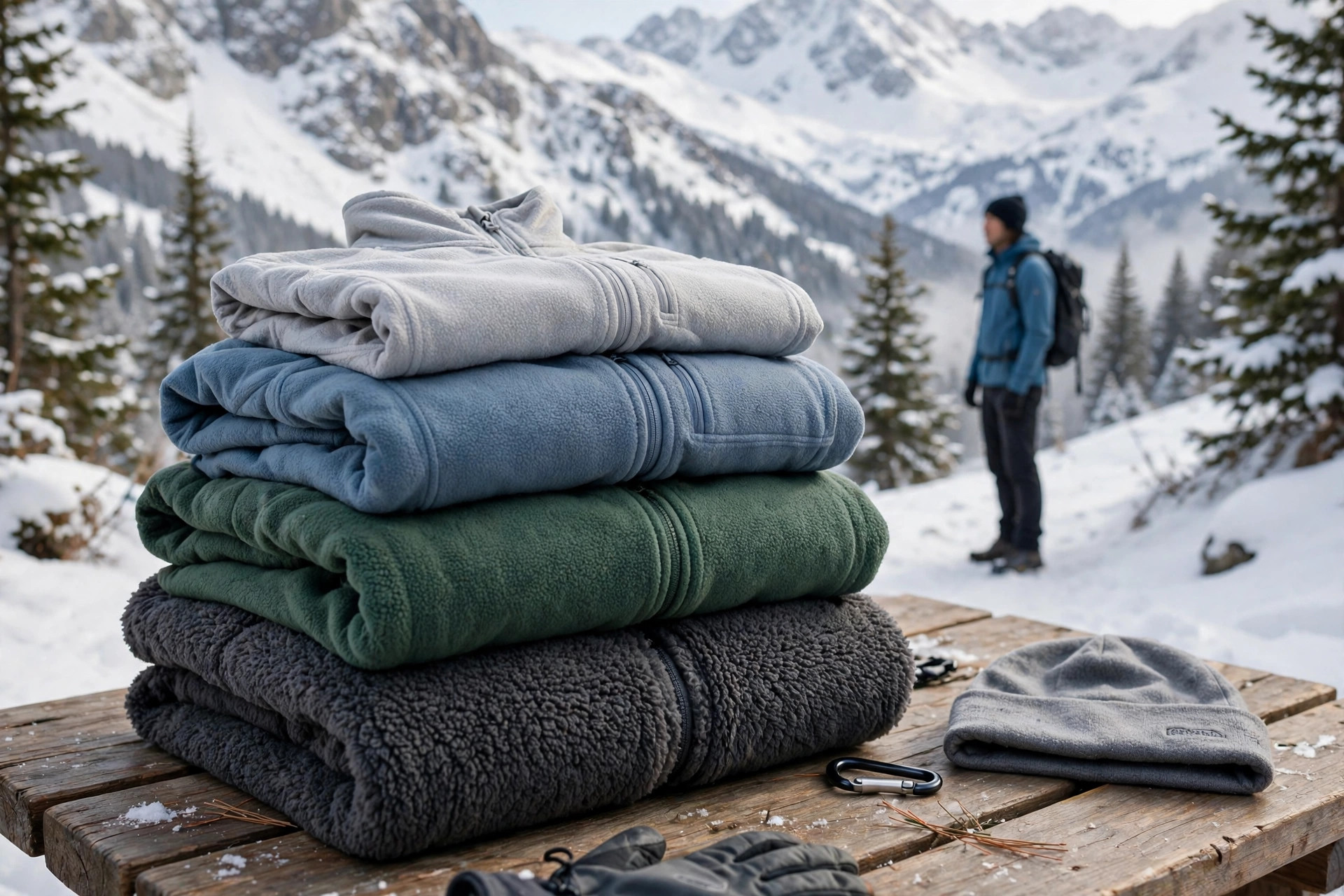
Fleece weight describes the thickness and warmth class of a fleece fabric, using a naming convention popularized by the original fleece maker and now used loosely across the industry: roughly 100 for lightweight or micro fleece, 200 for midweight, and 300 for heavyweight. The numbers are class labels rather than a precise, universal measurement, but they remain a useful shorthand for comparing warmth within and often across brands.
The 100, 200, and 300 Classes and R-Value Context
Lightweight or micro fleece, the 100 class, is thin, highly breathable, and quick to dry. It works as a light mid layer for high-output activity, as a cool-weather layer on its own, and as part of sleep and camp clothing. It offers modest warmth and almost no wind resistance, so in exposed conditions it needs a wind layer over it to perform.
Midweight fleece, the 200 class, is the general-purpose standard: noticeably warmer, still breathable, and the weight most people picture as a fleece jacket. It suits typical winter hiking, skiing under a shell, and everyday cold-weather wear. Heavy fleece, the 300 class, is thick and warm, closer to a light jacket in its own right, and best for low-output use, very cold days, and camp or resort wear. Its bulk makes it less attractive for packing and for layering under trim shells.
Insulation is sometimes described with R-value, a measure of resistance to heat flow used most formally for building materials and sleeping pads. Higher R-value means more insulation. Fleece garments are not usually sold with standardized R-values, and thickness, loft, fit, and wind exposure change real warmth so much that the weight class plus intended use remains the more practical guide. As a general context, warmth rises with thickness across the classes, but doubling fabric weight does not double usable warmth once wind and compression are taken into account.
Grid Versus Classic Fleece, and Choosing by Use
Classic fleece has a uniform brushed surface on one or both sides. It is simple, durable, comfortable, and inexpensive, and it remains a sound default. Grid fleece places raised squares of brushed fabric in a grid over a lighter base. The channels between squares vent moisture and cut weight and bulk, so grid fleece breathes and dries better for active use, while feeling slightly less warm when standing still in wind. High-loft fleeces, with long, fluffy fibers, push in the opposite direction: maximum warmth for weight, with less durability and wind resistance.
Choosing by use keeps the decision simple. For moving hard in cold weather, choose micro or grid fleece and carry a shell. For general winter activity under a shell, choose 200-class classic fleece. For standing, sitting, and the coldest low-output days, choose 300-class or high-loft fleece and accept the bulk. Many active winter users own a grid piece and a classic midweight piece, a combination that covers most days without overlap.
Common Questions
- What do fleece 100, 200, and 300 mean?
- They are weight class labels from a long-standing naming convention: about 100 for lightweight or micro fleece, 200 for midweight general-purpose fleece, and 300 for heavy, warm fleece. They are class labels rather than an exact universal measurement, but they are a useful shorthand for comparing warmth.
- Which fleece weight is best for general winter use?
- The 200 class, or midweight, is the best general choice. It is warm enough as a mid layer for typical winter hiking and skiing under a shell, while staying breathable and packable enough for active use. Lighter and heavier classes suit more specific purposes.
- What is the difference between grid fleece and classic fleece?
- Classic fleece has a uniform brushed surface and is simple, durable, and warm. Grid fleece has raised brushed squares separated by channels that vent moisture and reduce weight, so it breathes and dries better for high-output activity but feels less warm in wind when standing still.
- Does fleece block wind?
- Standard fleece blocks very little wind, which passes through the knit and removes much of its warmth in exposed conditions. A wind shell or softshell over fleece restores its insulation. Some fleeces add a wind-blocking membrane, but they breathe less than standard fleece.
Outdoor Layering & Insulation Series
This guide is part of the Apparel Search outdoor layering and insulation series. Browse the full series below, or start from the women's winter clothing guide.