Men's Groomsmen Attire Guide
Groomsmen attire from the groom's brief to the final fitting: matching suits, tuxedos, mismatched looks, accessories and the rental-versus-buy decision.
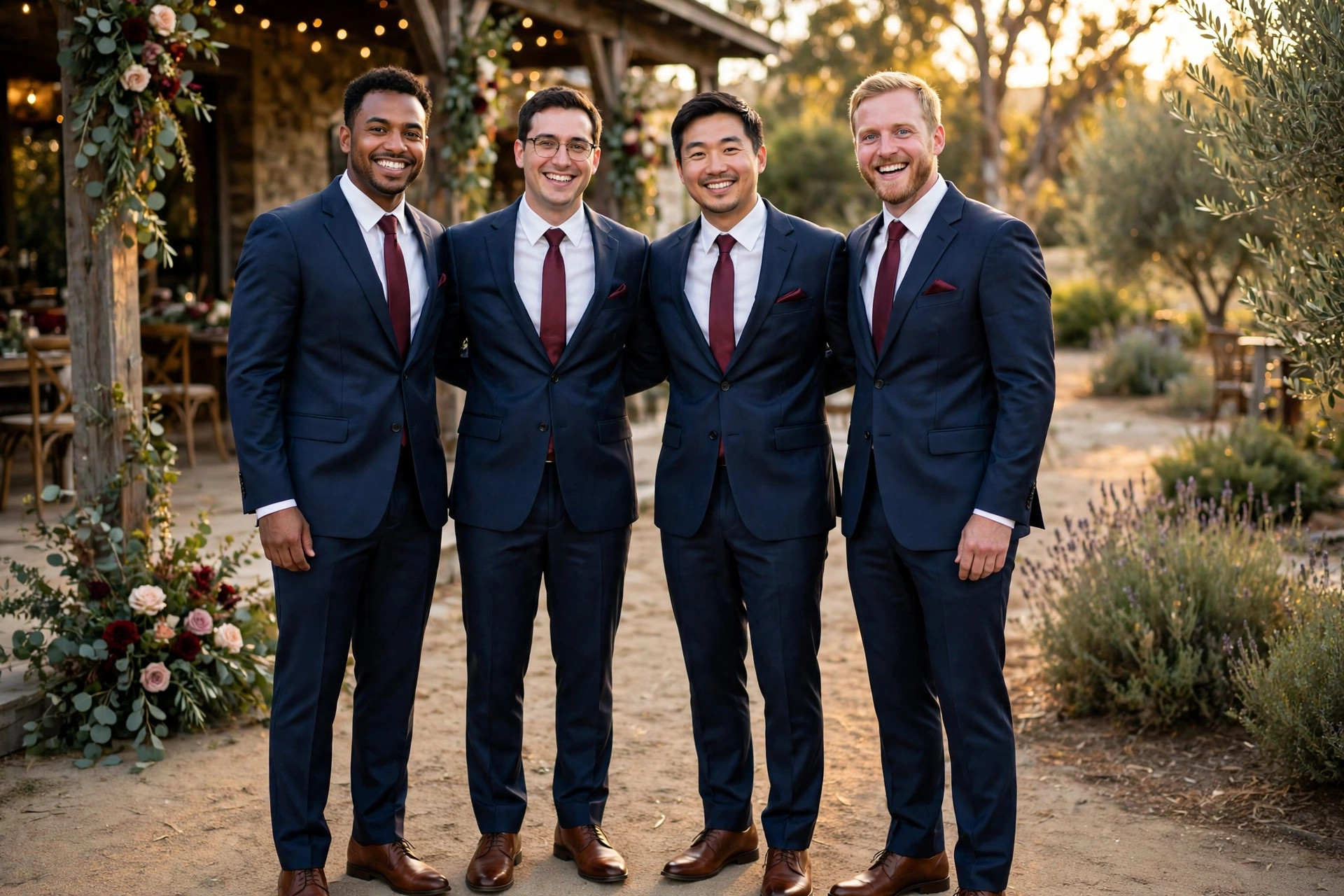
Groomsmen attire starts with one rule: the couple decides, the groomsmen execute. Your job is to wear the chosen suit, in the chosen color, fitted properly and on time — the photographs last forever, and a groomsman who improvises is visible in every single one of them.
This guide covers how the main choices are usually made — matching or mismatched, suit or tuxedo, rent or buy — what the accessories involve, and the timeline that keeps the whole party out of trouble.
Suits, Tuxedos and the Formality Ladder
Black tie: tuxedos with a black bow tie, a formal shirt and black patent or polished dress shoes; the groom may distinguish himself with a different bow tie, boutonniere or pocket square. Formal and cocktail: matching suits in navy, charcoal or black with a coordinated tie. Beach, garden and rustic: lighter suits in tan, light grey or linen blends, sometimes without ties, occasionally with braces or waistcoats carrying the matching element.
The groom traditionally stands half a step apart from his groomsmen — a different shade, a waistcoat they do not wear, or a distinct tie — so guests can read the wedding party at a glance. Take your cue from his choice rather than adding distinctions of your own.
Matching, Mismatched and Coordination
Fully matching suits remain the standard because they photograph cleanly and remove every decision from the group. The modern alternative is a controlled mismatch: the same trousers and jackets in one fabric with individual shirts, or one suit color across different body-comfort cuts, or identical accessories — tie, pocket square, shoes and boutonniere — unifying suits the men already own.
Coordination with the bridesmaids usually runs through the accessories: ties and pocket squares picking up the bridesmaids' color, and boutonnieres matching the bouquets. Whoever is organizing fittings should circulate the exact color names and fabric, not photographs alone — navy in a phone photo is not a specification.
Rent or Buy, Fittings and Timeline
Renting suits the one-wear formal brief and keeps the whole party in identical cloth; buying suits a classic navy or charcoal two-piece the men will wear for years. Either way, order or reserve three to four months out, measure every man rather than asking his guessed size, and schedule the final fitting the week of the wedding with the actual shoes and shirt.
Do break in dress shoes, match belt to shoes, keep socks dark and long, and steam or press everything the day before. Don't substitute your own tie, shoes or sunglasses for photographs, and don't leave the group order to the last month — popular sizes in popular colors genuinely sell and rent out.
Common Questions
Who chooses and who pays for groomsmen attire?
The couple chooses the attire so the wedding party coordinates. Groomsmen traditionally pay for their own suit rental or purchase and accessories, though customs vary by family and region, and some couples cover the cost.
Should groomsmen match the groom exactly?
Almost exactly, with one deliberate distinction for the groom — a different tie, a waistcoat, or a unique boutonniere — so he stands out in photographs. Groomsmen should match each other precisely unless a controlled mismatched look is the plan.
When should groomsmen order their suits?
Three to four months before the wedding for purchases and group rentals, with measurements taken rather than guessed, and a final fitting in the wedding week wearing the actual shirt and shoes.
More Occasion & Wedding Guides on Apparel Search
Dress codes, wedding-party guides and outfits for the other big occasions in the diary:
- Wedding Guest Attire
- Mother of the Bride Guide
- Mother of the Groom Guide
- Black Tie Optional Guide
- Festive Attire Guide
- Dressy Casual Guide
- Women's Concert Outfit Guide
- Women's Date Night Outfit Guide
- Men's Formalwear Guide
- Men's Suits Guide
- Men's Tuxedos Guide
- Women's Maid of Honor Dress Guide
- Women's Beach Wedding Guest Outfit Guide
- Women's Courthouse Wedding Guest Outfit Guide
Keep planning the occasion wardrobe with our next guide.
Next: Maid of Honor Dress Guide »Looking for Men's Clothing Stores?
This guide helps you plan what to wear. To browse where to buy, visit our men's clothing store directory, where you can find retailers that carry occasion clothing.