Apparel Search Guide Series
Wedding Attire Around the World
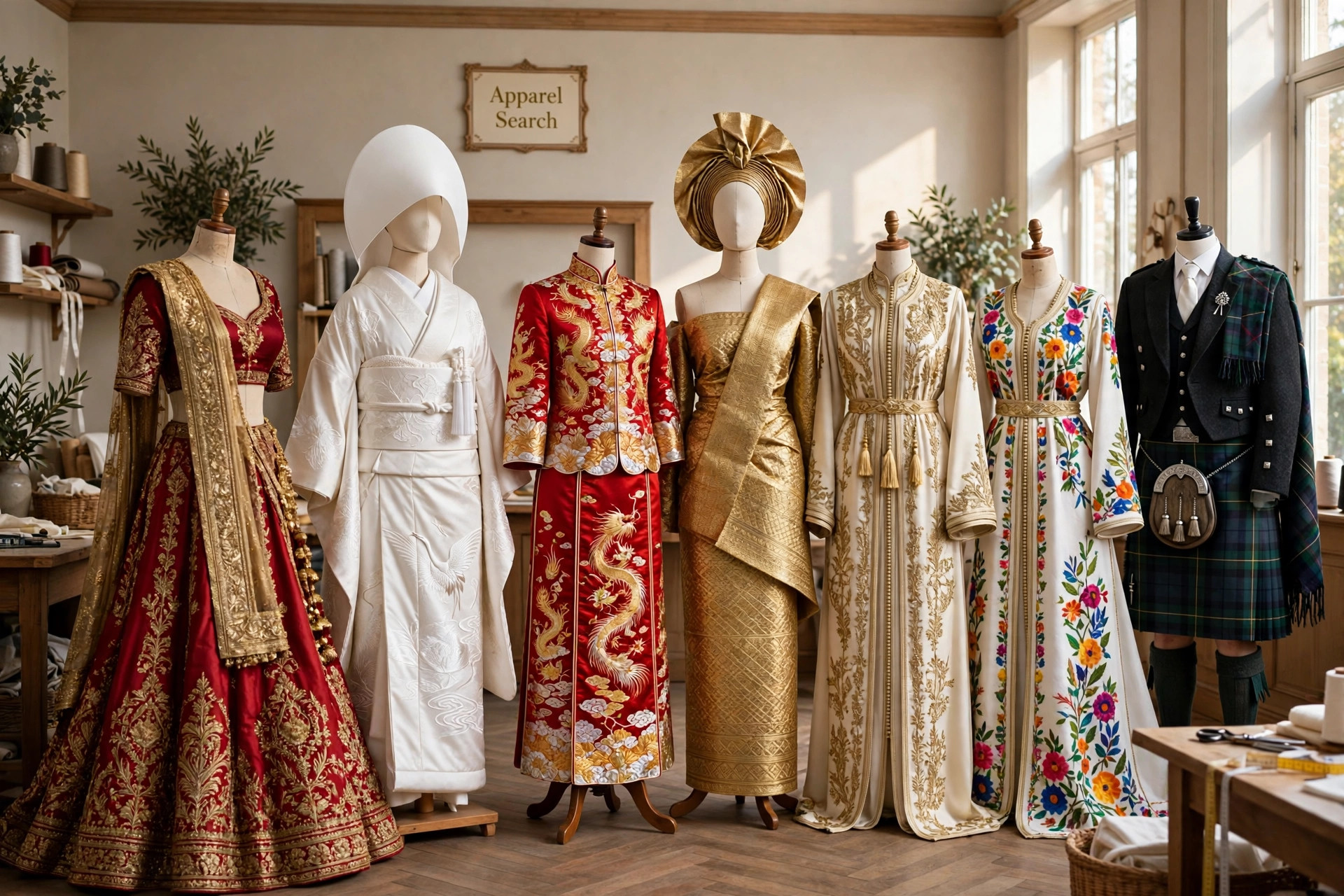
Ask what a bride wears and the honest answer is: where? In much of the world she wears red, not white — for luck. In Japan she may wear purest white, as brides have for centuries. In India her wedding is not one outfit but a wardrobe, changed ceremony by ceremony across days. This series takes one country at a time and explains its wedding clothing properly: the bridal and groom versions of its traditional garments, the colors and what they mean, the jewelry that carries the marriage itself, and how couples today blend heirloom dress with modern fashion.
Search Apparel Search
Start Here
A Wedding Is a Wardrobe
Three ideas run through almost every wedding tradition on earth, and they explain why wedding clothing deserves a guide series of its own. The first is color as language. Red — the color of luck, prosperity, fertility and protection — is the great bridal color of Asia: the Indian bride's Banarasi silk and the Chinese bride's qun kua are red for the same ancient reasons. The white dress that much of the West treats as timeless is, by comparison, a recent fashion: it spread after Queen Victoria married in white in 1840, and in several of the cultures in this series white was traditionally a color of mourning. Neither tradition is wrong; they are answers to different questions about what a marriage should look like.
The second idea is that a wedding is rarely one event. An Indian wedding unfolds over days of ceremonies, each with its own dress code — yellow for the turmeric ritual, green for the henna, sparkle for the night of music. A Pakistani wedding gives the bride three celebrations and three distinct looks. A Moroccan bride may change caftans several times in a single evening. Wedding attire, in most of the world, is a wardrobe planned like a campaign, not a dress bought for a day.
The third is that wedding clothes are where heirloom textiles live. The cloth a culture weaves best — Banarasi brocade, handwoven kente, Kerala's gold-bordered kasavu — is the cloth it saves for weddings, and wedding garments are the ones kept, lent, inherited and re-worn across generations. Our country-by-country traditional dress guides explain those garments as everyday and ceremonial dress; this series picks each one up at the moment it becomes bridal. And if your own question is the guest's one — what do I wear to a wedding? — our Wedding Guest Attire guides cover dress codes and seasons from the other side of the aisle.
Nor is a wedding outfit usually the end of the story. A bridal sari is re-worn at family weddings for decades, lent in time to daughters and daughters-in-law, and in old age may be cut down into quilts and cushion covers — a working life few Western wedding dresses, worn once and boxed away, ever approach. The wardrobe a bride carries into her new home is less a shopping result than a family archive in cloth, and the guides in this series treat it that way: as dress, as craft, and as inheritance.
The Guides
Asia
India
Five days of dressing — haldi yellow, mehndi green, a red Banarasi or lehenga for the ceremony itself, and jewelry that carries the marriage in it. Our first guide in the series.
Read the guide ↑Pakistan
Three celebrations, three wardrobes: the mehndi's yellows and greens, the baraat's deep red bridal dress, and the walima's cooler, paler glamour.
Read the guide ↑China
The qun kua — a jacket and skirt dense with gold dragon-and-phoenix embroidery — tea-ceremony dressing, and the modern white-gown second act.
Read the guide ↑Japan
The all-white shiromuku and wataboshi hood of the Shinto ceremony, the vivid iro-uchikake worn after, and the groom's crested montsuki hakama.
Read the guide ↑Korea
A bridal hanbok in festive red and green, the groom's layered dress, and the pye-baek — the bowing ceremony with its own family dress code.
Read the guide ↑Vietnam
The ao dai in bridal red and gold, worn with the circular khan dong headdress — and a matching ao dai for the groom.
Read the guide ↑Indonesia
Not one bridal look but many: the Javanese kebaya with its gold paes forehead painting, the Sundanese siger crown, and the splendor of Bali and Sumatra.
Read the guide ↑Philippines
The groom's embroidered barong and the bride's terno with its butterfly sleeves — Filipiniana wedding dress in piña cloth and lace.
Read the guide ↑The Guides
Africa and the Middle East
Morocco
A celebration measured in dresses: the bride changes through several caftans in one night, dressed, jeweled and crowned by the negafa.
Read the guide ↑Nigeria
Aso ebi for the whole hall, the bride's woven aso-oke with a sculpted gele headwrap, and the groom's grand, flowing agbada.
Read the guide ↑Ghana
Handwoven kente cloth draped for bride and groom — its patterns chosen for their names and meanings on the day.
Read the guide ↑Ethiopia
White cotton habesha dress with tibeb borders woven in gold thread, the netela shawl — and matching white dress for the groom.
Read the guide ↑The Gulf
Henna-night dressing, gold worn in weight, and the bridal dress traditions of the Arabian Peninsula.
Read the guide ↑The Guides
Europe and the Americas
Scotland
Highland wedding dress: the groom's tartan kilt outfit, the bride's tartan sash, and the luckenbooth brooch given as a token of love.
Read the guide ↑Mexico
The groom's embroidered charro suit, the bride's china poblana colors or white dress and rebozo — and the lasso laid over the couple's shoulders.
Read the guide ↑Two Companion Series
Before the Wedding Layer, the Garment Itself
Every guide in this series stands on a garment explained elsewhere on Apparel Search. Read the wedding guide for the ceremony, then visit the Traditional Dress by Country series for the garment's full story — its parts, its making, its everyday life — as with the sari of India, whose wedding form our India guide takes up. And for the couple's own industry — the weavers, jewelers and bridal businesses behind the clothes — each wedding guide links its country's page in the World Clothing Industry directory.
Behind every guide also stands the trade that makes the clothes: the master weavers of Banaras and Kanchipuram, the embroidery workshops of Lucknow, the kiltmakers of Scotland, the tailors who cut a city's worth of matching aso-ebi in Lagos. A wedding is the fashion industry's oldest commission — a whole wardrobe, made to be kept — and this series reads it from both sides of the fitting-room door.
Common Questions
Common Questions
What is this guide series about?
It is a country-by-country guide to wedding clothing: what brides and grooms wear, what their families wear, and how the dressing changes from ceremony to ceremony. Each guide covers the wedding layer of a country's dress — the bridal and groom versions of its garments, the colors and their meanings, the jewelry and headpieces, and how modern couples mix tradition with contemporary fashion.
Why do so many of the world's brides wear red?
Across much of Asia and beyond, red is the color of luck, prosperity, fertility and protection — exactly what a marriage is meant to bring. Brides in India and China have worn red for centuries. The white wedding dress is the younger tradition: it spread from Britain after Queen Victoria married in white in 1840, and in several cultures white was long a color of mourning rather than celebration.
How does this section differ from Traditional Dress by Country?
The Traditional Dress guides explain the base garment — the sari, the kimono, the kilt — as a country's everyday and ceremonial clothing. This section starts where those guides stop: it covers only what changes at a wedding, when the garment becomes bridal, gains ceremonial colors and jewelry, and is worn through days of ritual. The two series link to each other throughout.
How does it differ from the Wedding Guest section?
The Wedding Guest section is for the people in the seats: dress codes, seasons and what to wear as an attendee. This section is about the couple at the center — the bride's and groom's own clothing and its cultural meaning. If you are dressing for someone else's wedding, start with the guest guides; if you want to understand the couple's clothing, you are in the right place.
Keep Exploring