Jump to a Season
Boho Through the Year
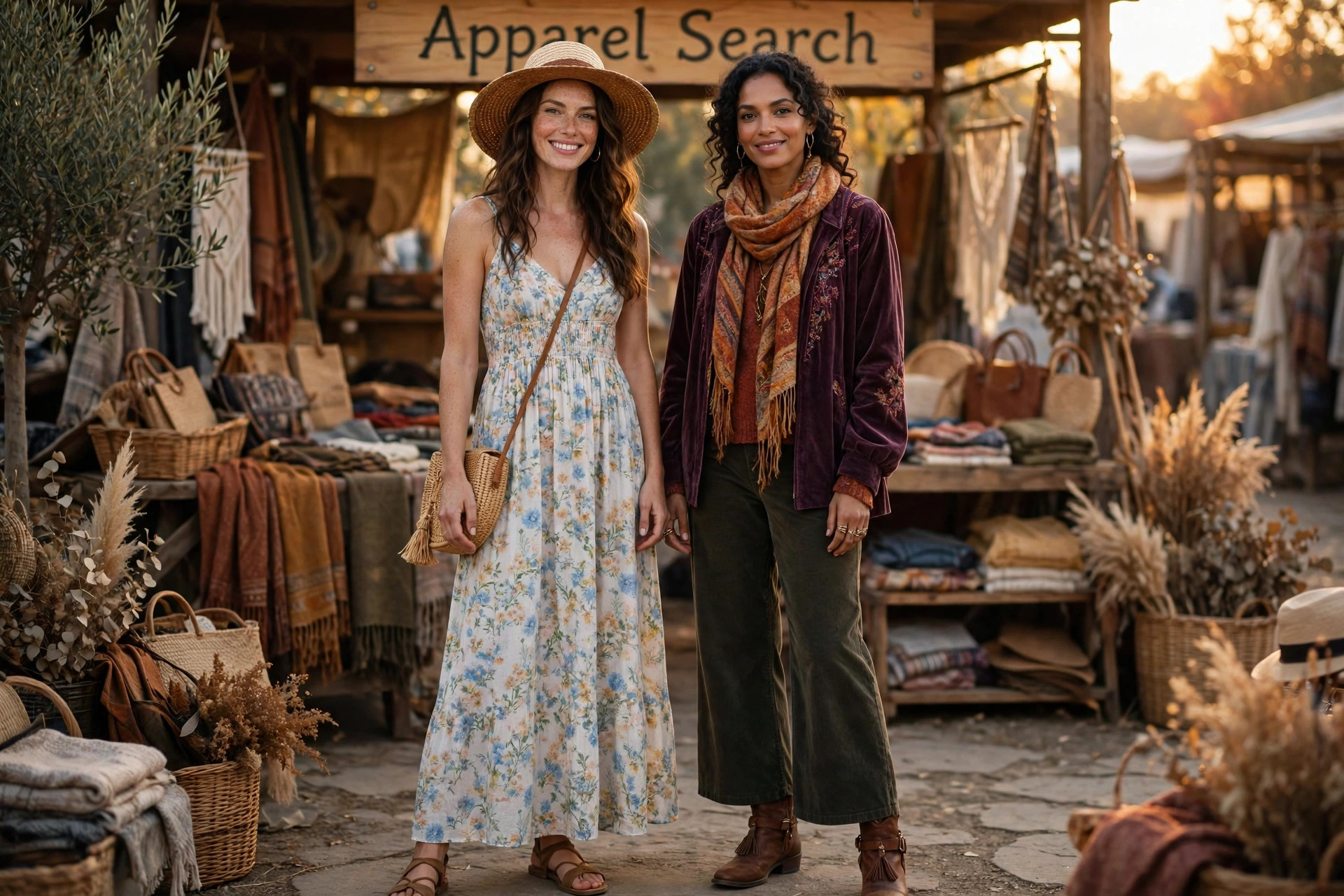
Boho is often mistaken for a summer-only style because its lightest, most famous version — the gauze maxi dress and sandals — belongs to warm weather. In truth the style is a year-round system: the silhouettes stay loose and layered in every season, while the fabrics gain or lose weight around them. Spring thins the layers, summer strips them to almost nothing, autumn rebuilds them in suede and denim, and winter goes deep — velvet, knits, boots and the richest colours of the palette.
This page maps those changes. The base wardrobe it assumes is the one built in women’s boho outfits and boho dresses; the background and palette are on the boho style hub.
Spring & Summer
Spring Float and Summer — Including Festival Season
Spring
Spring boho is the transition: midi and maxi dresses return, but under a denim jacket or a light cardigan, with ankle boots still in rotation and the first scarves worn as colour rather than warmth. Fabrics lighten to cotton, rayon challis and linen blends; prints brighten toward floral. The layered jewellery comes back out as necklines open up. Spring is also when the ivory and white branch of boho — broderie, eyelet and lace — starts its season; how to wear lace is the companion guide.
Summer and festival season
Summer boho is the style at its most recognisable: gauze and voile maxi dresses, peasant blouses with shorts or flowing skirts, flat sandals, straw hats, woven bags and sunglasses. Layers shrink to texture — crochet over cotton, a scarf as a belt or headscarf. Festival season, which runs through the summer, is where this version dresses up: the same clothes with the accessories turned up, fringe and hats and stacked jewellery all permitted at once. The festival outfit guide covers that crossover in full, including the practical side — sun, dust, long days on grass — that pure style guides forget.
Autumn & Winter
Autumn Suede and Winter Velvet
Autumn
Autumn is arguably boho’s best season, because layering — the style’s core skill — becomes necessary rather than decorative. Maxi dresses go under suede jackets and long cardigans; peasant blouses pair with corduroy and denim; ankle boots replace sandals; the palette deepens to rust, olive, mustard and burgundy. Felt hats replace straw. Nothing in the wardrobe is discarded — the summer dresses simply gain layers, which is the economic charm of the style.
Winter
Winter boho keeps the flow and changes the cloth. Velvet maxi dresses and skirts, heavy knits worn long, wool scarves, lined boots and long coats replace the summer set, and the fabric stories behind the two key materials are in the fabric stories guide. Prints go darker-ground; jewellery goes chunkier to hold its own against knitwear. The silhouette rule tightens slightly — with this much volume, one defined point, usually a belt over the coat or dress, keeps the outfit intentional.
The System
Fabrics by Season and Making One Wardrobe Last the Year
The seasonal fabric map is simple. Warm months: cotton gauze and voile, linen, rayon challis, crochet and lace, straw and canvas. Cold months: velvet, suede, corduroy, denim, wool knits, felt and leather. The bridge pieces — the maxi dresses, peasant blouses, belts, jewellery and ankle boots — work in both halves, dressed up or down by what joins them. That is why a boho wardrobe can be smaller than most: its pieces are not season-locked, only season-layered.
Plan purchases by the cold half of the year, when boho is hardest to find done well, and let summer take care of itself — floaty dresses are everywhere in June, while a good velvet boho dress in November is a find. The finishing touches that change with the seasons are detailed in boho accessories.
Questions
Common Questions
Is boho a summer-only style?
No. Summer is its lightest and most famous version, but boho is a year-round system of loose silhouettes and layering. In autumn and winter the fabrics change to suede, velvet, corduroy and wool knits, boots replace sandals, and the colours deepen, while the shapes stay the same.
What do you wear for boho style in winter?
A velvet or dark-print maxi dress or skirt, a long knit cardigan or coat, a wool scarf and felt hat, lined ankle boots, and chunkier layered jewellery. Keep one defined point, such as a belt, so the extra volume still reads as an intentional outfit.
How does festival dressing differ from everyday boho?
Festival boho uses the same clothes — maxi dresses, peasant tops, denim, hats — with the accessories turned up: fringe, stacked jewellery and hats all at once, plus practical choices for sun and long days outdoors. Everyday boho limits the statement pieces to about two at a time.
More to Explore
Search Apparel Search