Start Here — Three Fabrics, Three Stories
Why These Three Fabrics Belong Together
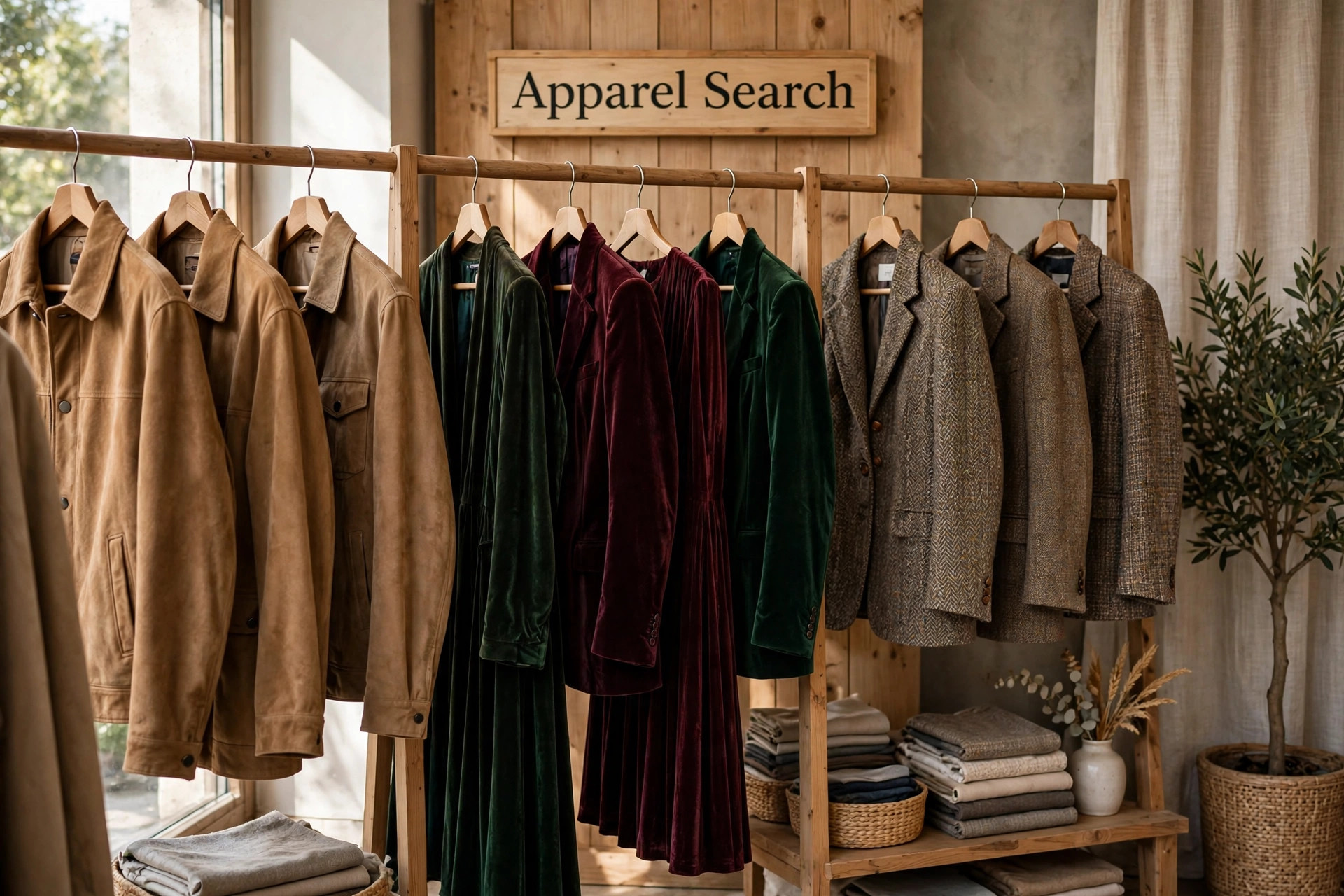
Some fabrics are a background. Suede, velvet and tweed are not: each one changes the temperature, the texture and the mood of everything worn next to it, and each one rewards a wearer who understands it. Suede brings a matte, brushed softness that makes simple outfits look considered. Velvet drinks the light and gives it back slowly, which is why it can carry an evening on its own. Tweed carries pattern inside its weave, so a single jacket does the work of a print, a texture and a colour palette at once. This hub is the front door to the three guides: start with the fabric you own, or the one you keep admiring, and work down.
Each fabric below gets two pages. The main guide covers the whole wardrobe question — the pieces, the colours, the occasions and the care. The styling spoke goes narrower and more practical, with copyable outfit formulas for the two hardest-working pieces in that fabric. Read the guide first for judgement, then the spoke for tomorrow morning.
Search Apparel Search
The Three Fabrics — At a Glance
Suede, Velvet and Tweed, Side by Side
- Suede — a brushed leather with a soft nap. Best pieces: jackets, skirts, dresses and shirts. Season: spring and autumn first, dry winter days second. Weakness: water. Full guide: How to Wear Suede; the fabric itself is defined in the suede definition.
- Velvet — a woven pile fabric that shifts colour as it moves. Best pieces: blazers, trousers, dresses and jackets. Season: autumn and winter, with a holiday peak. Weakness: crushing and shiny pressure marks. Full guide: How to Wear Velvet; see also the velvet definition.
- Tweed — a flecked, textured wool weave. Best pieces: jackets, suits, skirts and coats. Season: autumn through spring. Weakness: looking costumey when every piece shouts heritage at once. Full guide: How to Style Tweed; background in the tweed definition.
The three also pair with each other better than most people expect. A suede skirt under a tweed jacket is a texture conversation, not a clash, because both fabrics are matte. Velvet is the one glossy note in the family, so it works as the single rich piece against either of the other two — a velvet blazer over a tweed skirt, or velvet trousers with a suede jacket, each give an outfit depth without a single print.
One Rule for All Three
Let One Character Fabric Lead
Every guide in this family returns to the same rule: one character fabric per outfit does the leading, and everything else supports it in quieter cloth — denim, cotton knit, plain wool, smooth leather. Two character fabrics can share an outfit when both are matte, as with suede and tweed. Three at once almost never works outside a runway. If you remember nothing else from Fabric Stories, remember that — and then go and read the guide for the fabric you actually own, starting with suede, velvet or tweed.
Questions
Common Questions
What is the difference between suede, velvet and tweed?
Suede is a brushed leather with a soft matte nap, velvet is a woven fabric with a short dense pile that shifts colour in the light, and tweed is a flecked textured wool weave with pattern built into the cloth itself. All three add texture to an outfit, but they behave differently: suede fears water, velvet fears crushing, and tweed is the hardiest of the three.
Can suede, velvet and tweed be worn together?
Two at a time, yes, when both are matte: a suede skirt with a tweed jacket works well. Velvet is the rich, light-catching one of the family, so wear it as the single lead piece against either of the other two rather than combining all three at once.
Which of the three fabrics is easiest to care for?
Tweed. A wool tweed jacket or skirt needs only airing, brushing and occasional dry cleaning. Suede needs protection spray and a suede brush, and velvet needs steaming rather than ironing and storage that keeps the pile uncrushed.