The Fleck Is the Signature
A Pattern Woven In, Not Printed On
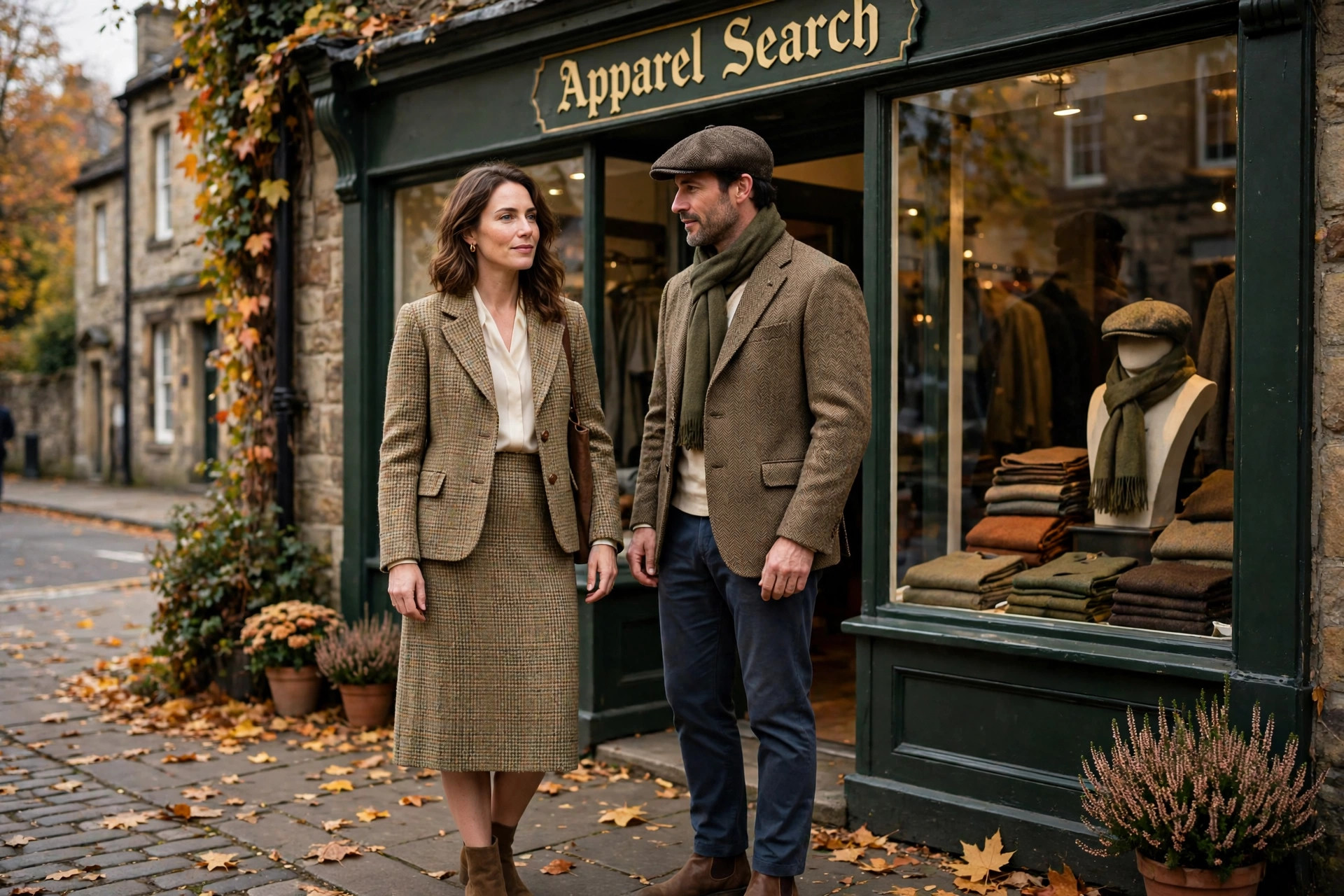
Tweed is a wool cloth woven with flecks of contrasting yarn — see the tweed definition for its weave and history — so its colour is never flat: look closely and a brown tweed turns out to hold rust, mustard, cream and moss. That built-in complexity is tweed’s styling gift. A tweed garment quietly contains the colours of everything you might wear with it, which is why a tweed jacket can pull a whole outfit together when nothing else seems to match.
This page is the wearing companion to How to Style Tweed, which works outfit by outfit. It sits in a fabric family with its two neighbours: How to Wear Corduroy, the ribbed everyday cousin, and How to Wear Velvet, the dressy smooth pile. Tweed is the tailored one of the three — the fabric of jackets, suits and coats — and its two big decisions are pattern and weight.
Search Apparel Search
Types & Weights
Herringbone, Donegal, Checks — and How Heavy
| Type | What it looks like | Where it shines |
|---|---|---|
| Herringbone | Broken zigzag twill, usually quiet two-tone | Blazers and coats — the most versatile tweed |
| Donegal | Plain weave flecked with bright slubs of colour | Jackets, skirts and knitwear with character |
| Checks & plaids | Windowpane, Prince of Wales and estate checks | Suits and statement coats; the boldest option |
| Houndstooth | Small broken checks, often black and white | Skirts, dresses and sharp city tailoring |
Weight matters as much as pattern. Heavy traditional tweeds were woven to shed weather on a hillside and will keep a coat genuinely warm; midweight tweeds carry most jackets and suits; lightweight and blended tweeds — wool softened with silk, cotton or synthetic yarns — make unlined spring jackets and skirts possible. Handle the cloth before judging a garment: tweed should feel springy and dry, never limp.
The Pieces
Jackets, Skirts, Suits and Coats
The jacket is tweed’s flagship: a single-breasted blazer in herringbone or Donegal goes over knitwear, shirts and even plain t-shirts, and a cropped, collarless tweed jacket with braid or fringe trim is the classic partner to skirts and dresses. Skirts — straight, A-line or pleated — hold tweed’s shape beautifully and wear with tights and boots all winter. A tweed suit, matching or in a coordinating check, is the full statement: powerful in heritage cloth, lighter and sharper in modern cuts. And the tweed coat is the investment piece, warm enough for real winter and patterned enough to lift plain outfits underneath it for years. Smaller doses count too — a tweed cap, waistcoat or bag carries the texture without the commitment.
Two Ways to Wear It
Heritage Styling Versus Modern Tweed
Heritage styling leans into tweed’s origins: earthy flecked cloth, a hacking jacket with corduroy trousers or a full suit with a tattersall shirt, brogues, knit ties, flat caps. It reads warm, established and unmistakably countryside — and head-to-toe it can tip into costume, so even heritage dressers usually break the set with one plain, modern piece. Modern tweed keeps the weave and changes everything else: lighter cloth in black, white, pastel or jewel colours, cropped jackets with jeans and trainers, tweed miniskirts with plain knits, a tweed blazer over a hoodie. The rule for both directions is the same — tweed is visually busy, so let it be the texture and the pattern of the outfit, and keep its companions smooth and quiet.
Outfits
Formulas for Women and Men
A tweed skirt suit or jacket-and-skirt pairing with a silk blouse, tights and loafers or low heels.
A cropped tweed jacket over a plain white tee and straight jeans, with trainers or ankle boots.
A herringbone tweed jacket with flannel trousers, an Oxford shirt, a knit tie and brogues.
A tweed blazer over a crew-neck sweater and dark denim, or a tweed coat over an all-black outfit.
For occasion dressing, tweed’s structure is an asset: a tweed jacket sharpens a plain dress, a tweed coat makes a simple winter wedding-guest outfit look considered, and matching tweed accessories — the cap or hat from the tweed hat tradition — finish a heritage outfit without adding a second patterned garment. When two tweeds meet in one outfit, keep one quiet: herringbone with plain Donegal can work; two loud checks cannot.
Care Basics
Looking After Wool Tweed
Tweed asks for less washing and more brushing than almost any other fabric. Brush a jacket or coat down after wear with a natural-bristle clothes brush to lift dust and rain spots, hang it for a day before returning it to the wardrobe, and let that routine carry most of the year. Tailored tweed is dry-clean only when it truly needs it — over-cleaning strips wool’s natural oils. Store pieces on shaped hangers with air around them, and guard against moths, which target wool left unbrushed: cedar, lavender or a sealed garment bag through the summer months. Press with a cool iron through a cloth, never directly on the weave. Looked after this way, good tweed does not wear out — it mellows.
Questions
Common Questions
What is the difference between heritage and modern tweed?
Heritage tweed is the traditional cloth — heavier wool, earthy flecked colours, herringbone and check patterns — worn in classic shapes like the hacking jacket and the full suit. Modern tweed keeps the textured weave but lightens the cloth, brightens or monochromes the colour, and cuts it into contemporary pieces: cropped jackets, miniskirts, blazers worn with jeans and trainers.
Can tweed be worn outside autumn and winter?
Lightweight tweed can. Summer-weight tweeds in wool blends, cotton blends and pale colours appear in unlined jackets, skirts and shorts for spring, and they breathe far better than the heavy winter cloth. The traditional heavy tweeds, though, are cold-weather fabrics — wearing one in July is a warmth decision, not just a style one.
How should tweed be cleaned and stored?
Most tailored tweed is dry-clean only, and it needs cleaning less often than people think — brush it after wear, air it, and spot-clean marks promptly. Store it hanging on a shaped hanger with room around it, and protect it from moths with cedar or a garment bag, since moths love unwashed wool.