01 — The Garment
What a Barn Jacket Is
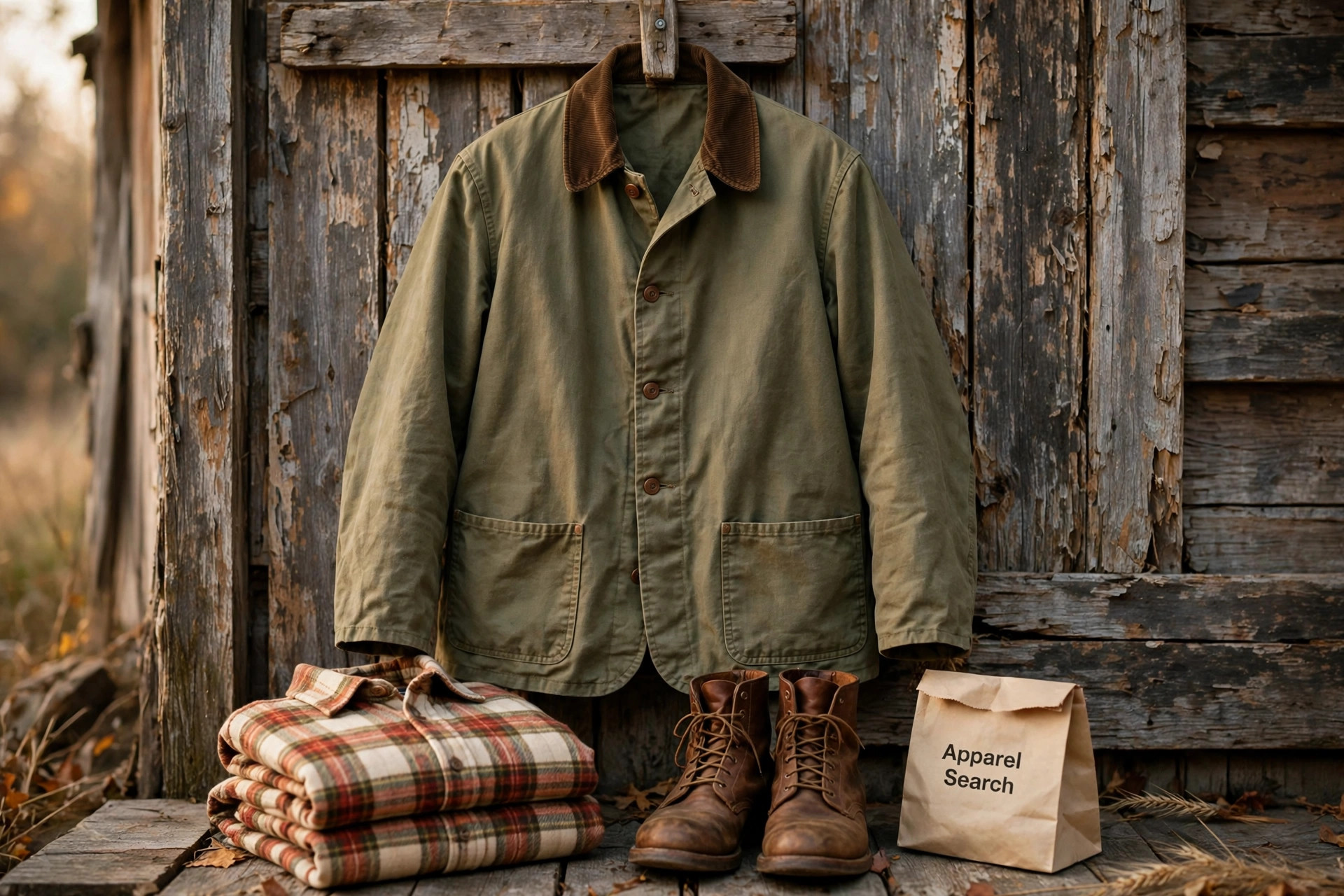
A barn jacket — also sold as a barn coat when it runs longer — is a sturdy, straight-cut work jacket built for outdoor labor and now worn far beyond the farm. It was shaped by American agricultural work in the early twentieth century: farmers, ranch hands and hunters needed an outer layer that shrugged off brush and barbed wire, carried tools and shells in pockets that opened with cold or gloved hands, and left the arms free to lift, reach and drive. The answer was a hip- or thigh-length jacket of heavy cotton canvas, closed with buttons or snaps, finished with a contrasting collar that stood up against the wind.
What carries the barn jacket into fashion is that nothing on it is decoration. The big patch pockets, the reinforced elbows found on work versions, the blanket or plaid linings, even the corduroy collar — softer against the neck than canvas and replaceable when it wore — all began as answers to a job. When fashion rediscovers it, as it has decisively for fall 2026, it is borrowing that honesty. The same family includes its closest relatives: the pocket-front chore coat, the weatherproofed waxed jacket, and the military-derived field jacket covered in the men's field jacket guide. This hub explains the barn jacket itself; the linked guides take each relative in turn.
02 — Anatomy
The Details That Define It
- The shell. Heavy cotton canvas or cotton twill — the cloth family defined on the canvas definitions page. Duck canvas, the tightest plain weave, is the traditional choice: stiff when new, it softens with wear and outlasts lighter twills by years.
- The collar. Corduroy or leather, almost always in a contrasting brown or tan against an olive, tan or navy shell. It is the barn jacket's visual signature — turn it up and the jacket reads unmistakably; it also protects the neck seam, the first place canvas frays.
- The pockets. Two large bellows or patch pockets at the hip, often with separate hand-warmer entries behind them, plus a chest pocket. They are sized for tools, twine, gloves and a phone — not for show.
- The front. Buttons or snaps under a plain placket, easy to open one-handed. Work versions add a two-way zip behind the buttons; fashion versions usually keep buttons only.
- The lining. Unlined for three-season wear, cotton-flannel or plaid-blanket lined for warmth, quilted in the coldest work versions. The lining, more than the shell, decides the jacket's season.
- The cut. Straight through the body with room to reach and layer, sleeves set for movement rather than tailored close. A barn jacket that fits like a blazer has lost the plot — and the layering room that makes it useful.
Barn Jacket, Chore Coat, Field Jacket or Waxed Jacket?
Four work jackets are constantly confused, and the differences are practical. The barn jacket is the farm garment: canvas, corduroy collar, big bellows pockets, often lined. The chore coat is the workshop garment: lighter twill or denim, a shirt-style collar, and a row of even patch pockets — the full comparison is in the chore coat guide. The field jacket is the military garment: four bellows pockets, a drawstring waist and epaulettes, made for uniforms rather than farms. The waxed jacket is defined by its finish rather than its cut — cotton proofed with wax to shed rain, the country counterpart detailed in the waxed jacket guide. Their shared ancestor is utility, and their shared cousin is the belted, pocketed safari jacket, defined separately in the clothing definitions.
03 — Fit & Seasons
Fit, Layering and When to Wear One
Buy a barn jacket to fit over the thickest sweater you realistically wear in it, with the front closing without strain and the hem reaching at least the hip. The shoulders should sit at your own shoulder line — the boxy body supplies the ease, so there is no need to size up, and sizing up mostly adds sleeve length. In the layering system set out in the layering pieces guide, the barn jacket is an outer layer with a working mid beneath it; unlined versions cover spring and fall, blanket-lined versions handle most of winter in temperate climates, and only the quilted work versions compete with the coats in the heavyweight outerwear guide.
Styling is where the current revival lives: the jacket's ruggedness is a deliberate contrast against dresses, tailoring and clean denim, and the dedicated how to style a barn jacket page works through the outfits for women and men. Men shopping the traditional work cut should start with the men's barn jackets guide, which covers shells, linings and the work-versus-fashion fit split in detail.
Search Apparel Search
04 — Good to Know
Common Questions
What is the difference between a barn jacket and a chore coat?
Cut and origin. A barn jacket is the heavier farm garment — canvas shell, contrasting corduroy or leather collar, large bellows pockets, often blanket- or flannel-lined. A chore coat is the lighter workshop garment — twill, denim or moleskin, a plain shirt-style collar, and a row of even patch pockets, usually unlined. If it has a corduroy collar and hip bellows pockets, it is a barn jacket; if it has four flat patch pockets and a shirt collar, it is a chore coat.
Are barn jackets warm enough for winter?
It depends on the lining, not the name. An unlined canvas barn jacket is a spring-and-fall layer. Flannel- and blanket-lined versions handle cool winter days, especially over a sweater, and quilted work versions go further — but canvas is wind-resistant rather than insulated, so in severe cold a dedicated heavyweight coat is the warmer tool. Check the lining first and treat 'barn jacket' as a cut, not a warmth rating.
Can women wear barn jackets?
Yes — the current revival is led as much by women's styling as men's. The straight, boxy cut works as a deliberate contrast with dresses, skirts and tailored trousers, and many are sold unisex or in women's cuts with the same canvas and corduroy collar. The styling page linked from this guide works through the proportions: keep the rest of the outfit clean and let the jacket supply the texture.
How do you clean a canvas barn jacket?
Brush off dried mud, spot-clean marks with a damp cloth and mild soap, and avoid frequent machine washing, which fades canvas unevenly and softens the structure that makes the jacket hang properly. When a wash is unavoidable, use cold water, a gentle cycle and air drying. Waxed versions are never machine washed — they are sponged clean and re-waxed instead, as the waxed jacket guide explains.
A Neighbour in Suede
Suede: the Other Heritage Layer
The barn jacket shares its dry-day, heritage-leaning season with suede, the fabric that softens the same wardrobes from the other direction. How to Wear Suede covers suede jackets, skirts and dresses, their colours and their care.