01 — The Tradition
The Men's Barn Jacket: A Work Cut That Never Left
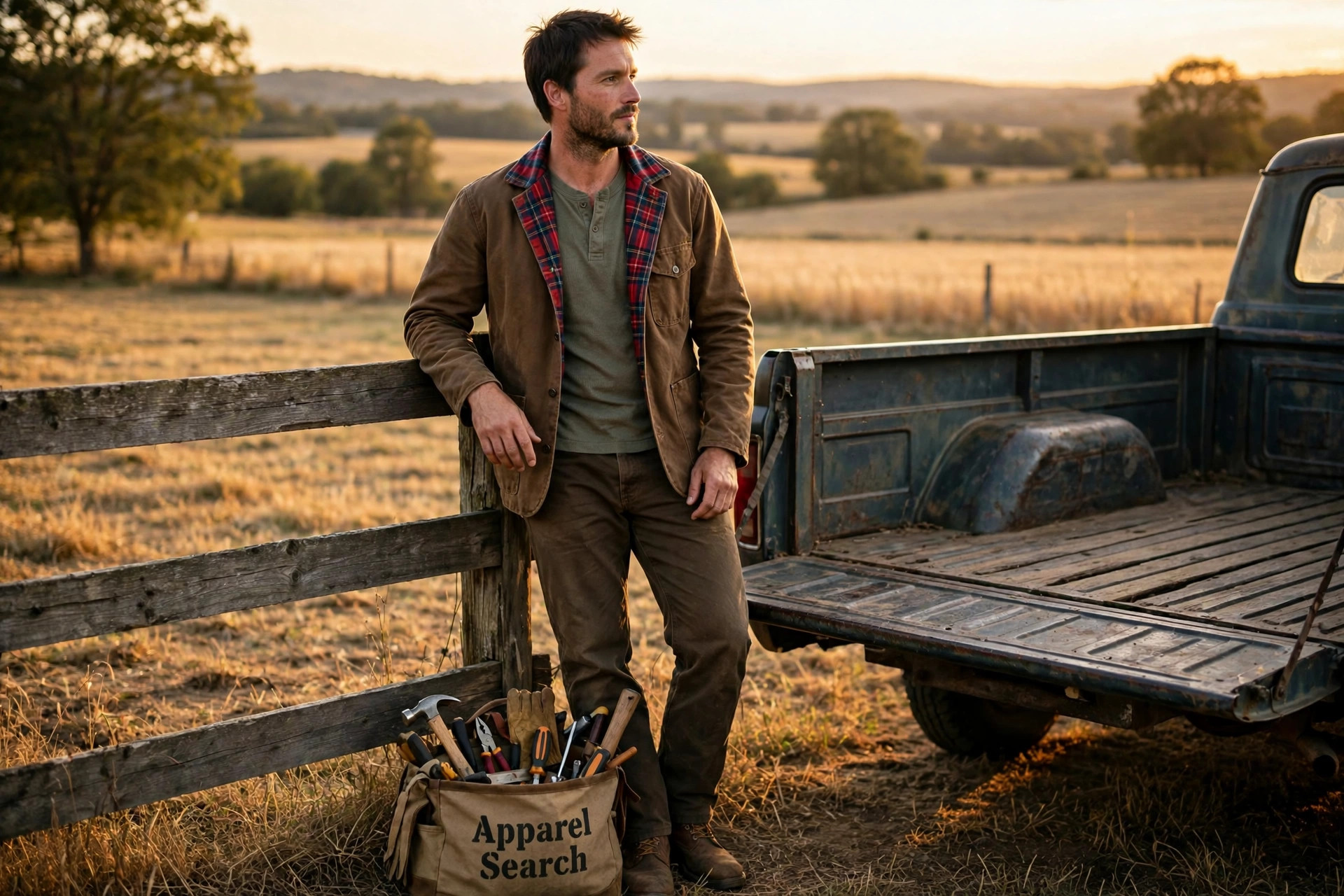
The men's barn jacket is the least changed garment in the modern wardrobe. The jackets sold for farm and ranch work today — heavy duck canvas, corduroy collar, bellows pockets, blanket or quilted lining — are recognizably the jackets worn a century ago, because the job never changed. What changed is the second market: the same jacket, cut a little trimmer and offered in fashion colors, now sells as a style piece to men who will never mend a fence in it. Both versions are legitimate, but they are not the same product, and choosing well means deciding which one you are actually buying. The barn jacket guide gives the shared history and anatomy; this page is the men's buying and wearing detail.
Start with the shell. Duck canvas — the tight, plain-weave cotton detailed in the canvas definitions — is the work standard: abrasion-proof, wind-resistant, stiff enough at first that a new jacket can nearly stand up on its own, then softening over a season of wear into a personal fit. Fashion versions often substitute a lighter cotton twill, which drapes better on day one and suits town wear, at the cost of the armor-like durability. Waxed canvas sits between the two and connects this page to the waxed jacket guide: same family, weatherproofed finish, more care required.
02 — Shells & Linings
Linings Decide the Season
| Lining | Warmth | Best for |
|---|---|---|
| Unlined | Shell only — a wind layer, not insulation | Spring and fall over a sweater; the most versatile buy |
| Cotton flannel / plaid | Light warmth, breaks the wind chill | Cool autumn days; the classic barn look at the collar turn-down |
| Blanket wool-blend | Substantial warmth without bulk | Late fall and mild winter; the traditional work choice |
| Quilted synthetic | The warmest option in the family | Real winter work; competes with lighter parkas |
The collar deserves its own check: corduroy is traditional and comfortable, leather is dressier and longer-lived, and a canvas self-collar usually signals a fashion reinterpretation rather than a work jacket. Buttons should be large enough for gloves; snaps are faster but less traditional. Two-way zips behind a button placket appear on work versions meant for sitting machinery and saddles — a split back vent serves the same purpose. None of these details is decorative, which is the point of the garment, and the same utility-first logic runs through the wider men's workwear guide.
Work Cut or Fashion Cut?
The work cut is boxy, long-sleeved and sized to layer: buy your normal size and it will fit over a hoodie. The fashion cut is trimmed through the body, shorter, and sized like a casual blazer: it styles cleanly over a shirt but will not take a thick sweater. Neither is wrong — but a work cut worn as a fashion piece swamps a slim outfit, and a fashion cut bought for actual outdoor work restricts every reach. Try the jacket on doing what you will do in it: arms forward, arms up, front closed, sitting down. The barn jacket earns its keep in motion, a test it shares with its workshop cousin in the chore coat guide.
03 — Wearing & Care
What to Wear It With — and Making It Last
The men's pairings are well worn-in: flannel shirts and canvas pants for the full work register, henleys and thermal knits under the unlined shell, chinos and an Oxford shirt when the jacket goes to town. Footwear follows the same logic — the men's boots guide covers the lace-up and Chelsea styles that match the jacket's weight; light trainers under heavy canvas look unbalanced. Full outfit formulas, including the polished version, are on the how to style a barn jacket page.
Care is refreshingly plain. Brush canvas after dirty work, sponge marks rather than washing the whole jacket, and air it on a line instead of tumble drying. A quality canvas barn jacket improves for a decade: the cloth fades at the folds, the collar molds, small tears get patched rather than retired. That longevity is the real difference between the work original and its fast-fashion echoes, whose thin shells and glued collars are built to survive a season of photographs, not a season of weather. Buy the heavy one, in your size, lined for your climate — it is one of the few jackets that can plausibly be a ten-year purchase.
04 — Good to Know
Common Questions
How should a men's barn jacket fit?
In a work cut, your normal size should close comfortably over a heavy sweater, with sleeves reaching the wrist bone when your arms are forward and the hem covering the hip. In a fashion cut, it fits closer, like a casual blazer, and is meant to layer over a shirt or fine knit only. The shoulder seam should sit at your own shoulder in both — the ease belongs in the body, not in dropped shoulders.
What is the difference between a barn jacket and a trucker jacket?
Length, cloth and origin. A trucker jacket is a short, waist-length denim jacket with a fitted cut and metal buttons, born as a jeans jacket. A barn jacket is longer — hip to thigh — cut loose for layering, made of canvas rather than denim, and finished with a corduroy collar and bellows pockets. The trucker is a fashion staple that came from work; the barn jacket is still sold as actual workwear.
Is a barn jacket warm enough for winter?
A blanket-lined or quilted barn jacket over a sweater handles mild to moderate winter for most men, and the canvas shell blocks wind well. It is not an expedition garment: in severe cold, or standing still in it for hours, a dedicated insulated coat wins. Match the lining to your climate using the table on this page, and remember the jacket was designed for active outdoor work, which generates its own heat.
How do you break in a stiff new canvas barn jacket?
Wear it — that is the whole method. Duck canvas softens at the elbows, collar and pocket edges over the first weeks of real use, molding to how you move. Avoid washing it to force softness: washing fades the cloth unevenly and shortens the jacket's life. If the collar is uncomfortably stiff, flexing it by hand and wearing the jacket up a few times speeds the process without damage.
More to Explore
Search Apparel Search