01 — The Finish
What a Waxed Jacket Is — and How the Finish Works
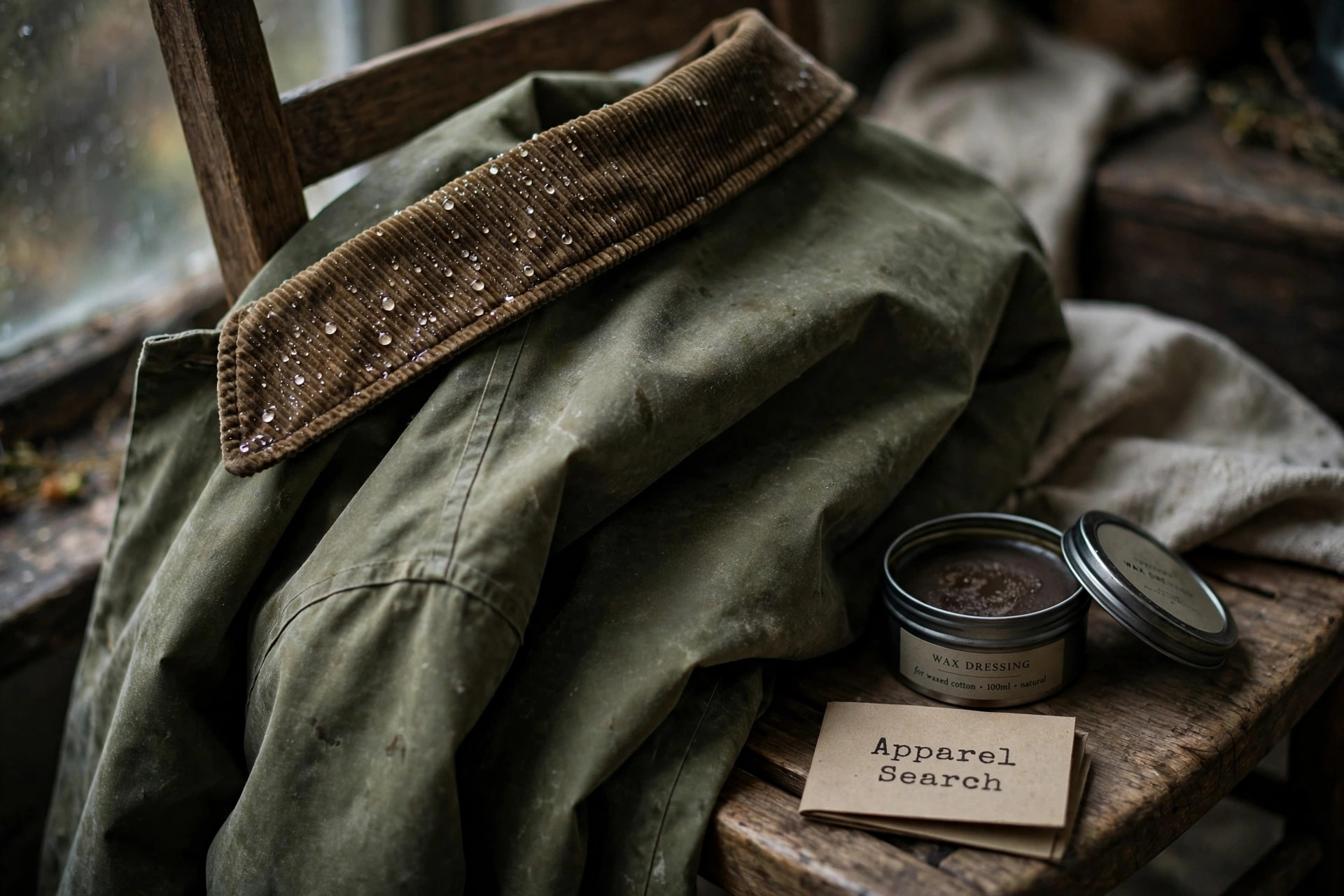
A waxed jacket is a cotton jacket — most often a country or work style — whose cloth has been impregnated with wax so that rain beads and runs off instead of soaking in. The short dictionary version lives on the waxed jacket definition page; this guide is the full treatment: how the finish works, how it compares with modern waterproofs, how to choose a jacket, and how to renew the proofing yourself. Waxing cloth is one of the oldest weatherproofing technologies in clothing, the same principle that proofed sailors' smocks and farmers' outer layers long before synthetic membranes existed.
The mechanism is simple and repairable. Wax fills the spaces between the cotton fibers and coats each thread, so water meets a surface it cannot wet. The cloth keeps its natural toughness and much of its breathability, which is why waxed cotton became the standard outer layer for gamekeepers, riders, motorcyclists and farmers: it resists thorn and brush that shred thin coated shells, it never peels, and when the finish thins at the shoulders and folds it can be restored at a kitchen table. Its natural partners are the other heritage work jackets — the barn jacket guide is the hub for the family — and many barn jackets are sold in waxed versions.
02 — The Alternatives
Waxed, Oiled and Modern Waterproof: An Honest Comparison
| Finish | How it resists water | Strengths and limits |
|---|---|---|
| Waxed cotton | Dry wax worked into the weave | Tough, quiet, repairable forever by re-waxing; water-resistant rather than fully waterproof in prolonged downpours |
| Oiled cotton | Oil-based dressing in the weave | Richer, darker hand and similar resistance; can feel slightly heavier and marks more readily when new |
| Coated / membrane | Synthetic layer bonded to the cloth | Lighter and fully waterproof when new; once the coating cracks or delaminates, the garment is finished |
Choose waxed cotton when durability, quiet cloth and lifetime repairability matter more than absolute waterproofing or minimum weight — country wear, dog walking, riding, and the shoulder seasons. Choose a modern membrane when you will stand in heavy rain for hours or need the lightest possible shell, the territory covered by the rain and shell options in the heavyweight outerwear guide. Many walkers own both and pick by forecast.
03 — The Renewal
How to Re-Wax a Jacket, Step by Step
- Clean it first. Brush off dried mud and sponge the jacket with cold water only. Never machine wash, never use detergent — both strip the existing wax and the finish you are about to renew.
- Dry it completely. Hang it in moving air until bone dry; wax will not take evenly on damp cloth.
- Warm the dressing. Stand the tin in warm water until the wax softens to a spreadable paste. Work in a warm room so it stays workable on the cloth.
- Apply in small sections. Rub the dressing in with a cloth or sponge, working it into seams, shoulders, elbows and pocket edges — the high-wear zones that lose proofing first. Err on the generous side; excess can be evened out, thin spots cannot be fixed later.
- Even it with gentle heat. A hairdryer on a low setting melts the surface wax into a uniform finish. Keep the dryer moving and never scorch the cloth.
- Hang it overnight. Let the jacket cure in a ventilated space for at least 24 hours before wearing. A freshly waxed jacket can transfer a little dressing to car seats and light clothing for the first few wears.
Three Care Rules That Decide a Waxed Jacket's Life
- Never machine wash it. Detergent and agitation strip the wax unevenly and the jacket emerges mottled and unproofed. Sponge cleaning is not a compromise — it is the specified care.
- Re-wax little and often. A light annual renewal, concentrated on shoulders and folds, keeps resistance high and the finish even. Waiting until the jacket soaks through makes the job bigger and the result patchier.
- Store it hung, cool and dry. Never folded wet, never in a sealed bag. Waxed cotton is a natural finish on a natural cloth: give it air and it will serve for decades.
04 — Choosing
Choosing Weight, Lining and Fit
Waxed jackets come in light, mid and heavy cotton weights. Light weights suit town and travel — they pack, they breathe, and they proof a shower. Mid weights are the country default. Heavy weights, often with blanket or check-cotton linings, pair with the layering approach in the layering pieces guide: the waxed shell stops weather, the layers beneath supply warmth, since wax itself insulates hardly at all. Fit should allow that layering — room for a sweater and sleeves long enough for riding or reaching.
Details worth checking are the same ones that separate honest country clothing from costume: a corduroy collar that stands against weather, non-rust hardware, and pockets that close. The waxed jacket's closest tailored relative is the trench — its parts are set out on the trench coat definition page and its modern cuts in the women's trench coat guide: the trench is a city garment made weatherproof by cloth and cut, the waxed jacket a country garment made weatherproof by finish. Both have earned their centuries.
05 — Good to Know
Common Questions
Is a waxed jacket fully waterproof?
It is honestly described as water-resistant. A well-maintained waxed jacket sheds showers, drizzle and wet brush for hours, but prolonged heavy rain can eventually work through seams and worn patches — which is why the finish is maintained by re-waxing rather than trusted forever. For standing in downpours, a modern membrane shell is the more waterproof tool; for country durability and lifetime repairability, waxed cotton wins.
How often should you re-wax a jacket?
For a jacket in regular use, a light renewal once a year is the standard rhythm, with extra dressing worked into shoulders, elbows and pocket edges — the zones that flex and rub the finish away first. Jackets worn rarely may go two years. The signs that renewal is due are visible: pale, dry-looking patches at the folds and water starting to darken the cloth instead of beading on it.
Can you machine wash a waxed jacket?
No. Machine washing with detergent strips the wax — unevenly, so the jacket comes out mottled and its weather resistance largely gone. Waxed jackets are cleaned by brushing off dried mud and sponging with cold water, then re-waxed when the finish thins. If a jacket has been machine washed by mistake, a full, careful re-waxing as described on this page restores most of its resistance.
Does wax transfer to car seats and other clothes?
A freshly waxed jacket can transfer a small amount of dressing for the first few wears, which is why jackets are hung to cure for at least 24 hours after re-waxing and why owners keep them off pale upholstery at first. Once cured and worn in, transfer is negligible. It is a real but minor cost of the finish, and one reason waxed jackets are usually darker, working garments rather than pale fashion pieces.
More to Explore
Search Apparel Search