The Jacket in Brief
Warmth Drawn in Stitch Lines
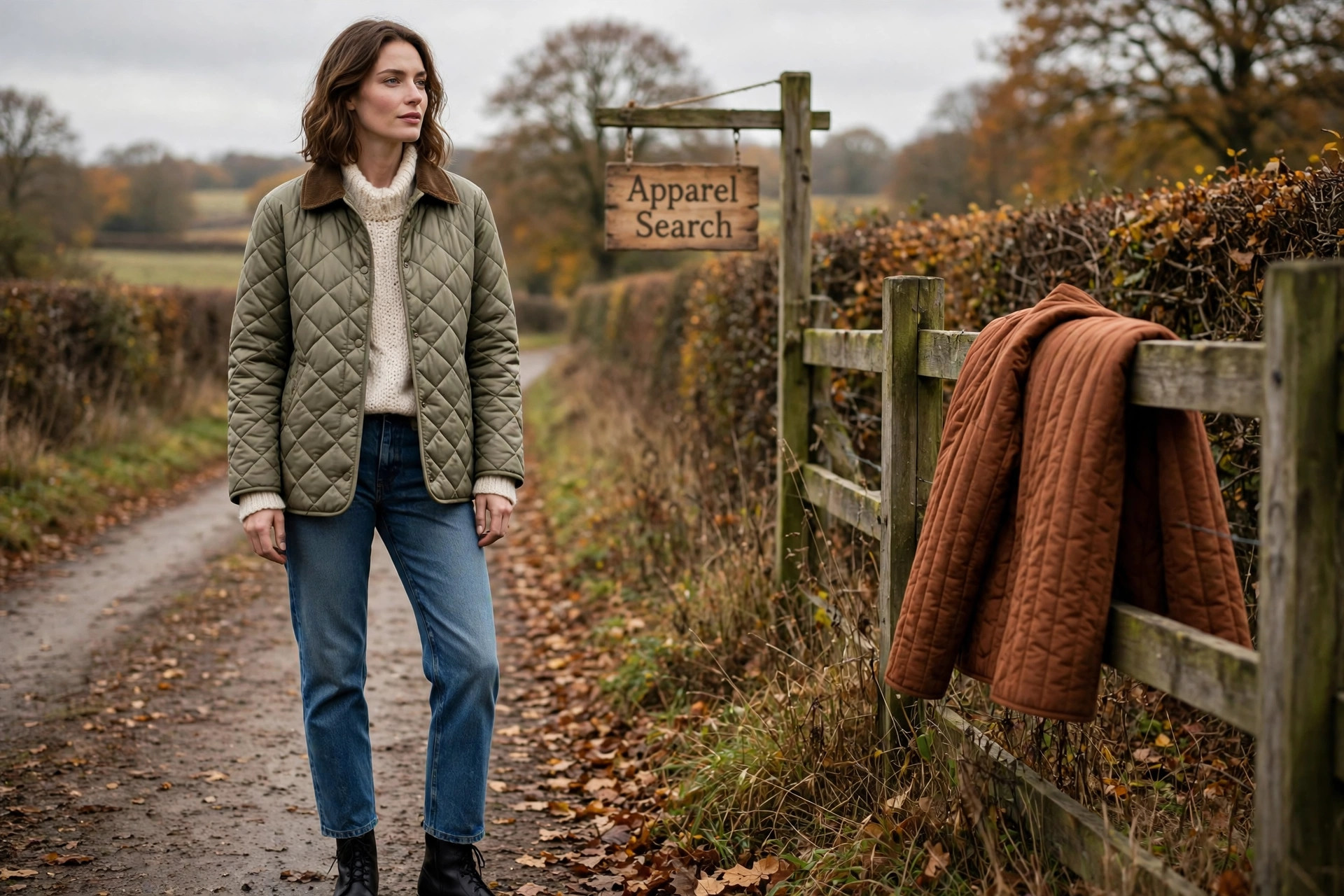
A quilted jacket is two light shells stitched together through a layer of insulation, the stitching holding the fill in place and drawing a pattern across the surface. For women, that construction has been cut every way a jacket can be cut — cropped and boxy, belted and tailored, hip-length for every day and longline for cold commutes — a family, not a single garment, so choosing means knowing its branches.
The women’s versions share their construction with the country classic in the men’s quilted jacket guide, but the styling runs wider — over dresses, as a barn jacket, in colours beyond the countryside palette. This guide covers patterns, fits, weights and the wearing.
Quilting Patterns
Diamond, Channel and Onion Quilting Compared
The pattern decides how much fill the jacket can hold and how flat it sits. Three patterns cover most of what is sold:
| Pattern | How it looks | Fill and warmth | Best for |
|---|---|---|---|
| Diamond | Small stitched diamonds; flat, neat, tailored | Thin synthetic fill, held evenly; light warmth, almost no bulk | Layering, under coats, the country classic |
| Channel | Parallel horizontal or vertical stitched lines | Thicker synthetic or down fill; warmest of the three | Colder weather and longline styles |
| Onion | Curved, overlapping rows; soft and rounded | Light to medium fill, with a little natural ease | Relaxed and longline fits, a gentler look |
A fourth pattern, the chevron, zigzags the stitching on fashion-led styles. Whichever you choose, check the seams: even, dense stitching keeps the fill in place; wide spacing is pattern for its own sake.
Lengths & Fits
Cropped, Hip-Length and Longline
Cropped and boxy quilts end at or above the waist — the dress-friendly length, easiest worn open over knitwear. Hip-length is the classic cut: it takes a belt or drawstring well and suits most heights. Longline quilts run to mid-thigh or the knee, behave almost like coats, and are the commuter’s choice over dresses and wide trousers.
Fit follows the job. A tailored fit, often with princess seams or a belt, works for smarter settings. A relaxed or oversized fit is a layering tool — it must pass over a chunky knit without pulling, so size for the jumper, not for a T-shirt.
Barn-Jacket Styling
The Quilted Barn Jacket
The barn jacket is the quilted jacket’s workwear cousin: a boxy, hip-length body, a contrasting corduroy or canvas collar, usable patch pockets, and snaps up the front. Quilted versions swap the heavy canvas for a padded shell, keeping the shape and losing the weight — an autumn fixture over plaid shirts, knits and denim.
Wear it the way the barn jacket guide sets out — collar up against the wind — and borrow the formulas in how to style a barn jacket: straight jeans and boots for the country reading, or a midi skirt and loafers somewhere smarter. Olive, tan and rust are the heritage colours; black is the city translation.
Layering Weights
Choosing a Weight for the Season
Lightweight quilts — thin diamond quilting, lightly lined — are spring jackets, and double as an extra layer under a winter coat. Midweight quilts carry enough synthetic fill for autumn and mild winter days, roughly 40 to 60 degrees, especially over knitwear. Heavyweight quilts — wide channel quilting, down or high-loft fill, often longline — are genuine winter jackets; below that, the heavier coats in the women’s winter coats guide take over.
Two details shift a jacket a full weight class: a fleece or brushed lining, and a water-repellent finish that stops light rain soaking the fill and stealing its insulation.
Wearing It
With Dresses, Denim and Boots
With dresses: match lengths deliberately. A cropped quilt over a midi or maxi dress keeps the dress in charge; a longline quilt over a short or knitted dress keeps the line unbroken. Belt a relaxed fit when the dress is full. With denim: straight or wide-leg jeans with the jacket open over a plain knit is what these styles were made for; double denim works if the jacket is a clearly different colour.
With boots: ankle boots suit cropped and hip-length quilts; knee boots belong with longline quilts and knitted dresses. Chunky soles ground an oversized fit; a sleeker boot smartens a tailored one.
Colours
From Countryside Olive to City Black
The heritage palette — olive and sage greens, tan, navy and rust — still does the most work: it sits naturally with denim, corduroy and knitwear and hides everyday marks. Black and charcoal are the urban versions, chosen to pass over tailoring and dresses. Cream and stone show the pattern most clearly, at the price of more careful wear. Coloured quilts — burgundy, mustard, dusty blue — work best as the single colour statement in a neutral outfit.
Care
Washing and Storing a Quilted Jacket
Most synthetic-filled quilts machine-wash cold on a gentle cycle; close every zip, snap and button first to protect the shell. Dry flat or tumble on low, shaking the fill back into its channels or diamonds. Down fills need a down-specific detergent and thorough drying before they loft again. Brush a corduroy collar when dry, sponge single marks instead of washing the whole jacket, and store it hanging — long compression flattens any fill.
Questions
Common Questions
How warm is a women’s quilted jacket?
Warmth depends on the fill and the quilting. A classic diamond quilt with a light synthetic fill is a cool-weather layer, comfortable roughly from 40 to 60 degrees Fahrenheit, and warmer with knitwear under it. A thicker channel-quilted or down-filled longline style is a genuine winter jacket — for deep cold, compare the coats in the women’s winter coats guide.
Can you wear a quilted jacket with a dress?
Yes — it is one of the jacket’s best tricks. A cropped or waist-length quilt over a midi or maxi dress keeps the dress as the focus and adds structure at the shoulder; a longline quilt works over a knitted dress and boots. Belt a relaxed fit if the dress underneath is full.
What is the difference between diamond, channel and onion quilting?
Diamond quilting stitches the fill into small diamonds, giving a flat, even layer with a tailored feel. Channel quilting uses parallel horizontal or vertical lines and suits thicker fills. Onion quilting uses curved, overlapping rows that look like onion layers — softer and rounder, and common on relaxed and longline styles.
How do you wash a women’s quilted jacket?
Most synthetic-filled quilts machine-wash cold on a gentle cycle; close every zip and fastening first, then dry flat or tumble on low to settle the fill evenly. Down fills need a down-specific detergent and thorough drying. Always follow the maker’s label — a corduroy collar, faux-leather trim or a belt can change the instructions.
More to Explore
Search Apparel Search