Start Here
A Winter Coat Is a System, Not Just a Style
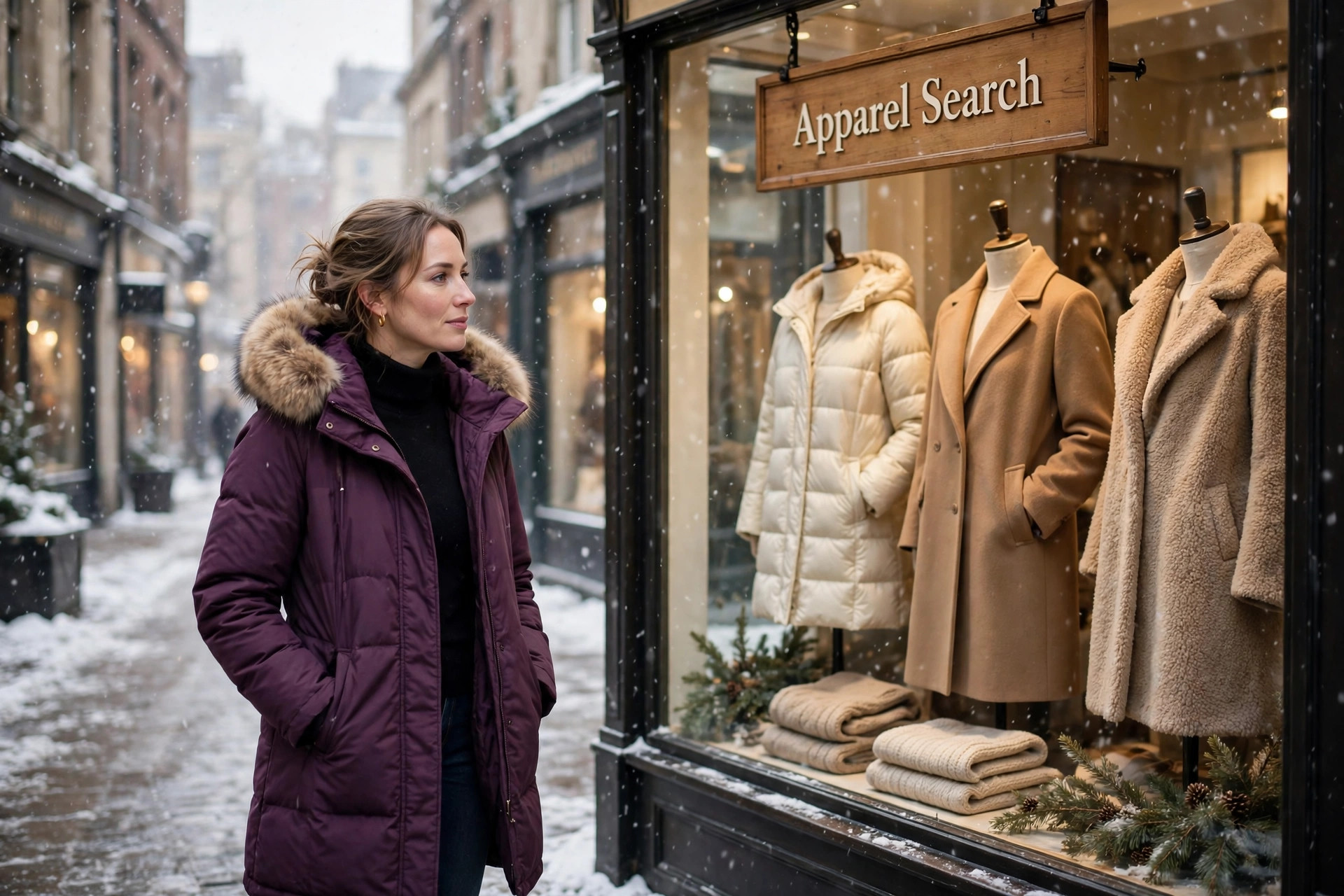
A winter coat does three jobs at once: it traps heat, it blocks wind and wet weather, and it still lets you move, drive and carry a bag. No single coat does all three equally well — so start with your climate and your calendar, then choose the coat type built for them.
For shoulder-season rain, the women’s trench coat guide covers the lighter classic, and the women’s winter clothing guide builds the full cold-weather wardrobe around it. This guide is about the coat itself: the six main families, how warm each one really is, and the details that decide whether it works in February.
The Line-Up
Coat Types: Puffer, Parka, Wool, Teddy, Down and Quilted
Puffer coats are quilted shells filled in stitched chambers, usually with synthetic fill or down. The baffles stop the fill migrating, giving maximum warmth for very little weight. Cropped puffers are a fashion piece; long puffers are serious winter equipment.
Parkas are the long, hooded, weather-sealed end of the family: weatherproof shell, generous insulation and a storm placket, cut to cover the seat or the knees. A down coat names its fill rather than its shape — down clusters trap the most heat per ounce of any common fill, in puffer and parka silhouettes alike.
Wool coats trade insulation for polish: dense woven wool blocks wind, drapes cleanly and suits formal dress as no puffer can. Teddy coats use a deep, brushed pile — wool or synthetic — that traps air in its texture; cosy mid-winter coats with a softer line. Quilted coats are the puffer family’s lighter branch: thinner fill in smaller stitched patterns, for milder winters, travel and layering.
Warmth, Compared
Warmth by Coat Type: Fill, Weight and Climate
Warmth comes from trapped air, so judge a coat by its fill and its loft rather than by its weight on the hanger. Down is graded by fill power: higher numbers loft more and warm more per ounce. Synthetic fill warms a little less per ounce but keeps working when damp, which matters in wet snow.
Match the panel to your climate honestly: a quilted coat worn through a northern January will disappoint, and a deep-cold parka in rainy, near-freezing weather will spend the season unzipped — synthetic fill and a water-resistant shell serve wet cold better than maximum loft.
Length & Fit
Lengths, and Fitting a Coat Over Layers
Length is warmth. A hip-length coat leaves your legs to the wind; a knee-length coat covers the seat and upper legs; a mid-calf or maxi coat is warmest and most formal-looking, at the price of stairs, slush hems and driving comfort.
Fit for the layers, not for the mirror alone. Try the coat over your thickest knit: you should be able to raise your arms, sit and close the zip without strain, with air still around the body — insulation needs that air to loft. Check the shoulder and upper arm first, since those cannot be altered easily; a slightly generous coat over a sweater beats a sleek coat worn tight over a blouse.
Details That Matter
Features That Earn Their Keep: Hoods, Cuffs and Zips
Hoods are the single most useful winter feature: a well-shaped, adjustable hood replaces a hat in wind and snow, and a detachable one keeps the coat formal when the weather calms. Storm cuffs — inner knitted cuffs inside the sleeve — seal the gap where gloves end and stop cold air travelling up the arm; check for them on parkas and puffers.
Two-way zips matter on any coat below the hip: they open from the bottom so you can sit, drive and climb stairs without unzipping the whole front. A storm placket blocks wind through the teeth, fleece-lined pockets warm bare hands, and an interior drawcord shapes a bulky coat without sizing down — small details that decide whether a coat gets reached for daily.
By Use, and Care
Choosing by Use — and Keeping the Coat Going
For the commute: a knee-length puffer or parka with a hood and two-way zip handles platforms, pavements and crowded trains. For formal wear: a long wool coat in a clean line, layered over knitwear on the coldest evenings. For snow-sports trips: a synthetic-filled parka — warm when damp, unbothered by falling snow — while the women’s winter boots guide covers the footwear half of the outfit, and How to Style a Puffer Jacket turns the everyday puffer into finished outfits. To browse styles and retailers, see the winter coats listing.
Care
Down needs loft: wash it rarely, dry it thoroughly — tumble drying on low with clean tennis balls restores the clusters — and store it uncompressed. Synthetic puffers wash more easily and air-dry well. Wool coats want brushing, airing and a proper hanger rather than frequent cleaning, and teddy pile revives with a soft brush. Whatever the coat, hang it somewhere airy after wet wear; a coat put away damp loses loft and freshness together.
Questions
Common Questions
What is the warmest type of women’s winter coat?
A long down parka is the warmest everyday option: high-loft down traps the most heat for its weight, and the parka’s length, hood and storm closures protect the legs and head as well. For wet snow and slush, a synthetic-filled parka is the safer warm choice, because synthetic fill keeps insulating when damp while down loses loft.
How should a winter coat fit over layers?
Try the coat on over the thickest sweater you plan to wear. You should be able to raise your arms, hug yourself and sit down without the shoulders or chest pulling, and the zip should close without strain. A coat that fits skin-tight over a thin top compresses its own insulation and leaves no room for the layers that make it work.
Can a wool coat handle real winter cold?
A heavy wool coat handles a cold, dry city winter well, especially in a longer length with a scarf and layers underneath, and it is the most polished option for formal wear. In deep cold, wind-driven snow or freezing rain it falls behind an insulated parka or puffer, so treat wool as the smart cold-weather coat rather than the storm coat.
More to Explore
Search Apparel Search