Footwear & Shoe Terms
Fashion Terms by Category — the vocabulary of shoes: types, athletic footwear, boots, collectibles and seasonal styles.
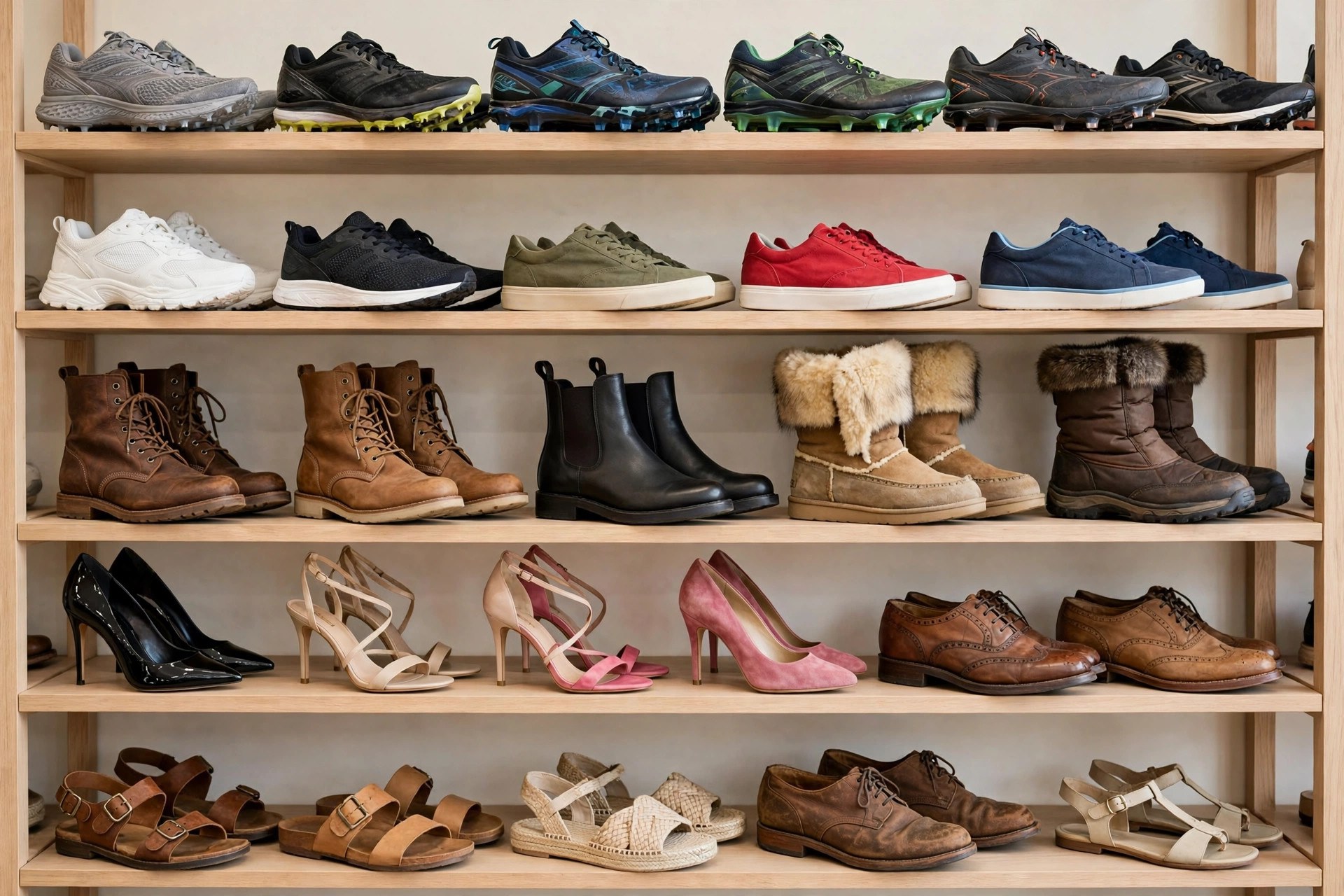
Footwear has its own branch of fashion vocabulary — part anatomy, part sport, part collecting culture. Shoe terms name the types on the wall of a shoe department, the specialized footwear built for courts, fields and skate parks, and the boots and vintage styles that collectors hunt across resale markets. Anyone who has tried to tell turf shoes from cleats in a sporting-goods store has felt the need for exactly this glossary.
This category pulls the Apparel Search footwear entries into one place: the general terminology and our two types-of-shoes surveys first, then athletic and specialty shoes, then boots, collectibles and seasonal footwear, and finally the pages devoted to women’s and men’s shoes specifically, which anchor the two big footwear departments.
Footwear Basics & Types of Shoes
Start with the overview vocabulary. Footwear terminology covers the parts and categories of shoes in general, and our two types-of-shoes pages walk through the full range of styles — the quickest way to put a correct name to an unfamiliar pair. Trendy shoes tracks the styles currently cycling through fashion, which change faster than any other part of the shoe wall. Even the basics reward precision: the same shoe can be a trainer, a sneaker or a court shoe depending on the market and the sport, and the types-of-shoes pages sort the everyday names from the technical ones.
Athletic & Specialty Shoes
Sport writes its own footwear rules. Cleats, turf shoes and indoor soccer shoes divide the playing surfaces of field sports between them; skate shoes are built to be destroyed by grip tape; MBT shoes introduced the rocker sole; 3D printed shoes point at manufacturing’s future; flatform shoe safety examines a fashion risk hiding in a platform sole; and shower slippers cover the humble locker-room essential. The divisions are functional, not fashionable: a cleat’s studs would damage a court, a court shoe’s flat sole would fail on wet grass, and indoor soccer shoes exist precisely in the gap between the two — which is why athletes own what can look to outsiders like the same shoe three times.
Boots, Collectibles & Seasonal Footwear
Boots and collectible shoes carry the culture. Boyfriend boots and the provocatively named hooker boots mark two very different ends of boot styling; collectible shoes and very rare collectible sneakers document the resale grail market; vintage footwear looks backward at the styles that became classics; and winter footwear terminology covers the insulated, lugged vocabulary of cold weather. Collectibility has changed this vocabulary fastest: terms like very rare collectible sneakers exist because resale platforms turned limited releases into an asset class, with its own grading and condition language.
Shoes by Audience
Finally, the glossary keeps dedicated pages for the two big footwear departments — women’s footwear and women’s shoes on one side, men’s shoes on the other. They make useful starting points before diving into the specific styles and specialties above. The split is more than sizing: women’s and men’s footwear differ in lasts, proportions and the style vocabulary used to sell them, and the two department pages collect the terms that assume that context.
Footwear terms also divide by construction in ways this category touches only lightly — soles, lasts and uppers have a deeper technical glossary of their own inside the individual definition pages. Start here for the names of the shoes themselves, then follow the links into the entries for the anatomy, sizing and care vocabulary that attaches to each type.
Shoes complete the outfit: see Garment & Clothing Type Terms for the clothing they are worn with and Fashion Styles & Subcultures for the looks they finish. Everything is also listed A–Z at the Fashion Terms hub.