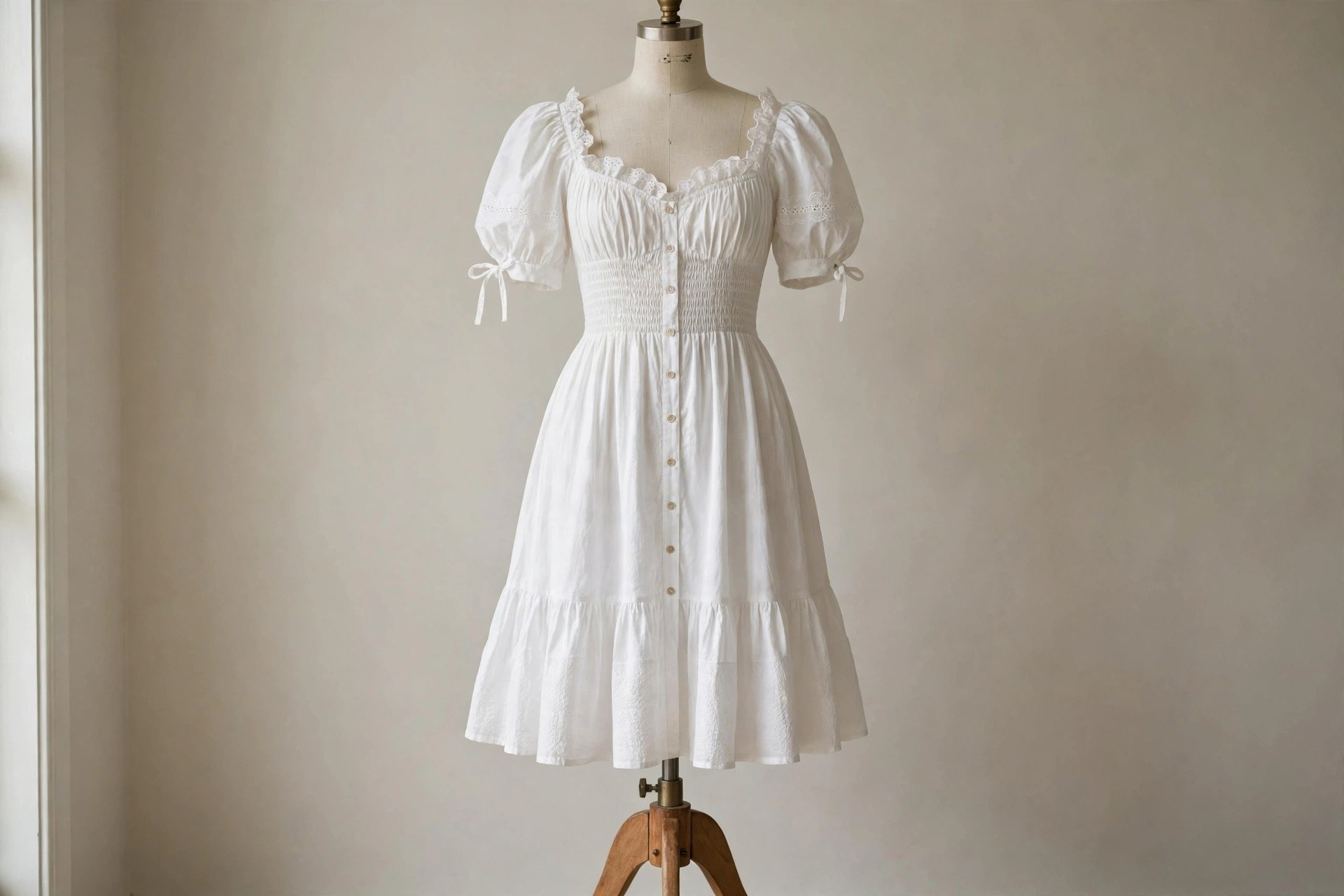
A milkmaid dress is a feminine day dress defined by a gathered or ruched bust, a square or sweetheart neckline, short puff sleeves, and a fitted bodice that releases into a flowing skirt. The name comes from the romantic image of pastoral dairy work, and the style draws on historical country dress — gathered bodices, soft cotton fabrics and practical longer skirts. In modern form it is a warm-weather staple: pretty without being formal, structured at the bodice yet easy to wear, and usually made in light natural fabrics.
The Details That Define It
The bust is the signature. Fabric is gathered or ruched across the front — often along a central drawstring or elasticated channels — which creates soft folds that shape the bodice without darts or boning. That gathering sits inside a square neckline, the most common and most historical-looking version, or a sweetheart neckline that curves over the bust.
Below the bodice, the dress changes character. The waist is fitted or softly elasticated, and the skirt falls from it in a flowing A-line, often midi or maxi length, sometimes with tiers or a slit for movement. The contrast is the whole appeal: a close, textured bodice against an easy, swishing skirt.
Fabrics and Fit
Natural, breathable fabrics suit the style best. Cotton is the standard choice — crisp enough to hold the gathers, cool to wear, and often printed with small florals or checks that reinforce the pastoral feel. Linen and linen blends give a slightly more rustic, textured version that softens with washing. Seersucker, with its puckered stripes, is a traditional summer option that needs little ironing and looks right in this shape.
Fit is more forgiving here than in most fitted-bodice dresses. The gathered bust adjusts to a range of bust sizes because the ruching stretches and settles where it is needed, and elastic in the back panel or sleeve hems adds further ease.
Styling and Care
The milkmaid dress is styled by the day around it. For casual summer days it needs very little: flat sandals, a woven or canvas bag and simple jewelry keep the pastoral mood intact, and a fine cardigan handles cooler evenings without hiding the neckline. It is a natural picnic and holiday dress — comfortable for sitting on grass, easy to pack in cotton or seersucker, and photogenic in gardens and countryside.
Care is straightforward for the usual fabrics. Cotton and seersucker versions generally machine wash on a gentle cycle in cool water; linen washes well too but creases, which most wearers accept as part of its character. Wash inside out to protect any drawstrings and ties, and tie loose ends before washing so they do not tangle.
Common Questions
- What makes a dress a milkmaid dress?
- The combination of a gathered or ruched bust, a square or sweetheart neckline, short puff sleeves and a fitted bodice flowing into a full skirt. The gathered bust is the key feature — it shapes the front of the bodice with soft folds rather than darts or structure. The style takes its name and its look from romanticised pastoral dress, which is why it is usually made in cotton, linen or seersucker and worn as a pretty daytime dress.
- Is a milkmaid dress flattering for a larger bust?
- It is one of the more accommodating styles, because the gathered or ruched bust is not cut to one fixed cup shape — the gathering stretches and settles across the bust, and many designs add elastic at the back for extra give. A square neckline also offers coverage while framing the neckline area. Check two things when buying: that the neckline does not gape when you lean forward, and that the waist seam sits at your natural waist so the support and shape fall in the right place.
- What do you wear with a milkmaid dress?
- Keep accessories natural and simple to match the dress's pastoral character: flat sandals or espadrilles, a woven, straw or canvas bag, and small, unfussy jewelry. A fine cardigan is the easiest layer for cooler weather because it leaves the gathered neckline visible. The dress suits picnics, holidays, garden events and ordinary summer days. Avoid very polished or sporty accessories, which fight the style — the charm of the dress is its soft, countryside feel.
- How do you wash a milkmaid dress?
- Most are cotton, linen or seersucker, so a gentle machine wash in cool water is usually fine, but check the label first. Turn the dress inside out, tie any drawstrings or bows so they cannot tangle or slip out of their channels, and wash with similar colors. While the dress is damp, smooth the gathered bust back into shape with your hands. Linen versions will crease in wear; that softness is part of the fabric's character and not a fault.
Romantic Fabrics & Feminine Details
Soft fabrics, gathered details and vintage-inspired shapes run through this whole series. These six guides cover the lace, tulle and structured styles that give an outfit its romantic side, with honest notes on fit, styling and care for each one.