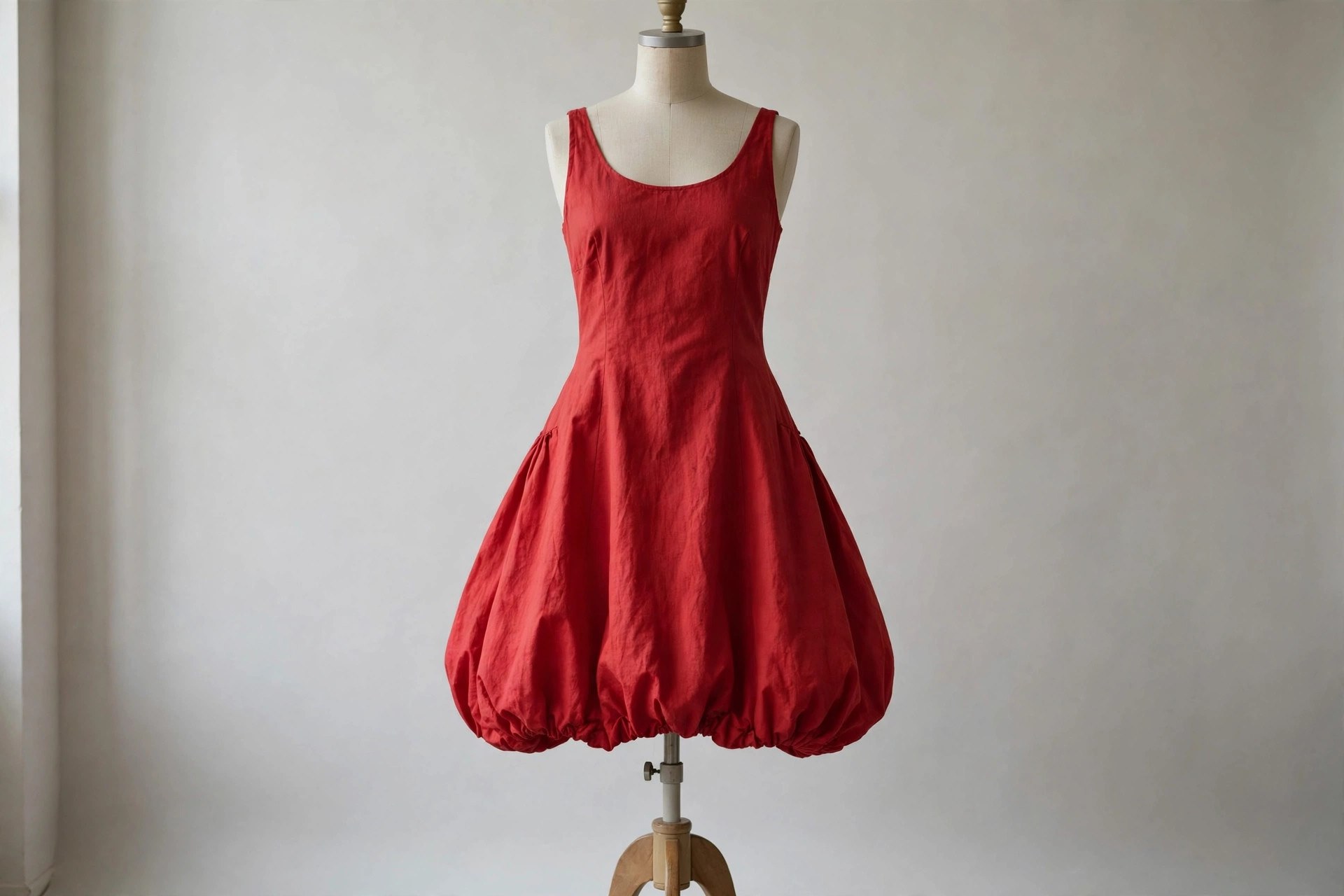
A bubble hem is a hem that is gathered or pleated into a lining shorter than the outer fabric, so the cloth poufs out and curves back under at the edge instead of hanging straight. The result is a soft, rounded volume at the bottom of a skirt or dress — sometimes a gentle puff on a short dress, sometimes a full sculptural balloon on a couture gown. Because the shape is built into the construction rather than added with padding, a bubble hem moves with the wearer and springs back into place.
Where the Bubble Hem Comes From
The bubble hem belongs to 1950s couture, when designers exploring sculptural silhouettes gathered hems under to create rounded, cocoon-like shapes that showed off technical skill as much as fabric. It has returned in waves ever since. The 1980s took it up enthusiastically in taffeta party dresses and pouf skirts, where the volume suited the decade's taste for drama.
The construction explains both the look and the limits. The outer fabric is cut longer than the lining, then drawn in and attached to it, which forces the surplus cloth to balloon outward. The amount of surplus decides how strong the bubble is: a little extra length gives a soft rounded hem, a lot gives the full pouf.
Fabrics That Hold the Shape
A bubble hem only works in a fabric with enough body to stand away from the legs. Taffeta is the classic choice — crisp, light and rustling, it holds a round shape beautifully and is the fabric of most vintage bubble-hem party dresses. Cotton poplin gives a smaller, fresher puff suited to day dresses and skirts, and it is the fabric behind most modern casual versions.
Very soft or fluid fabrics — thin jersey, chiffon, lightweight crepe — cannot hold the pouf on their own and collapse into uneven gathers, so they are rarely used unless bonded or layered. Medium-weight fabrics with some stiffness are the safe middle ground.
Styling, Pressing and Storage
Styling a bubble hem is an exercise in balance. The volume sits at the hem, so keep everything above it simple and relatively close-fitting: a plain top for a bubble skirt, simple necklines on bubble dresses, and uncomplicated shoes that do not compete with the rounded silhouette. Heels suit the dressy versions and flats suit the casual ones, but busy footwear, wide belts and statement layers all fight the shape.
Care is mostly about protecting the pouf. Steam is the right way to refresh a bubble hem — it relaxes creases while letting the shape spring back — whereas pressing it flat with an iron will crush the very curve you bought it for. If pressing is unavoidable, use a cool iron on the lining only.
Common Questions
- What is a bubble hem?
- A bubble hem is a hem finish where the outer fabric is gathered or pleated into a shorter lining, forcing the cloth to puff outward and curve back under at the edge. Instead of hanging straight, the bottom of the skirt or dress forms a rounded, balloon-like shape. The effect is created entirely by the construction — the difference in length between the fabric and its lining — so no padding or stiffening is needed to hold it.
- Are bubble hems in fashion now?
- Yes. After their 1950s couture origins and a big 1980s moment in party dresses, bubble hems returned in the 2020s in a softer, more wearable form: short dresses with a gentle pouf, bubble-hem skirts in cotton poplin, and occasional full evening versions. The modern take uses less extreme volume than the 1980s styles, which makes it easier to wear. As with most revivals, the simpler the rest of the outfit, the more current the hem looks.
- What fabrics work best for a bubble hem?
- Fabrics with body and a little stiffness hold the shape: taffeta for the classic crisp puff, cotton poplin for lighter day styles, and duchess satin for formal gowns. The fabric needs to stand away from the legs rather than drape against them. Very soft fabrics such as thin jersey, chiffon or light crepe generally fail, collapsing into uneven gathers instead of a smooth bubble, unless they are layered or given extra structure.
- How do you iron or store a bubble-hem dress?
- Avoid pressing the hem itself, because an iron flattens the curve that makes the style. Use steam instead — a garment steamer or bathroom steam relaxes creases and lets the pouf spring back — and if you must press, use a cool iron on the lining only. For storage, hang the garment with space around the hem so nothing crushes it, or store it loosely with the hem supported. Folding it tightly into a drawer will squash the volume flat.
Romantic Fabrics & Feminine Details
Soft fabrics, gathered details and vintage-inspired shapes run through this whole series. These six guides cover the lace, tulle and structured styles that give an outfit its romantic side, with honest notes on fit, styling and care for each one.