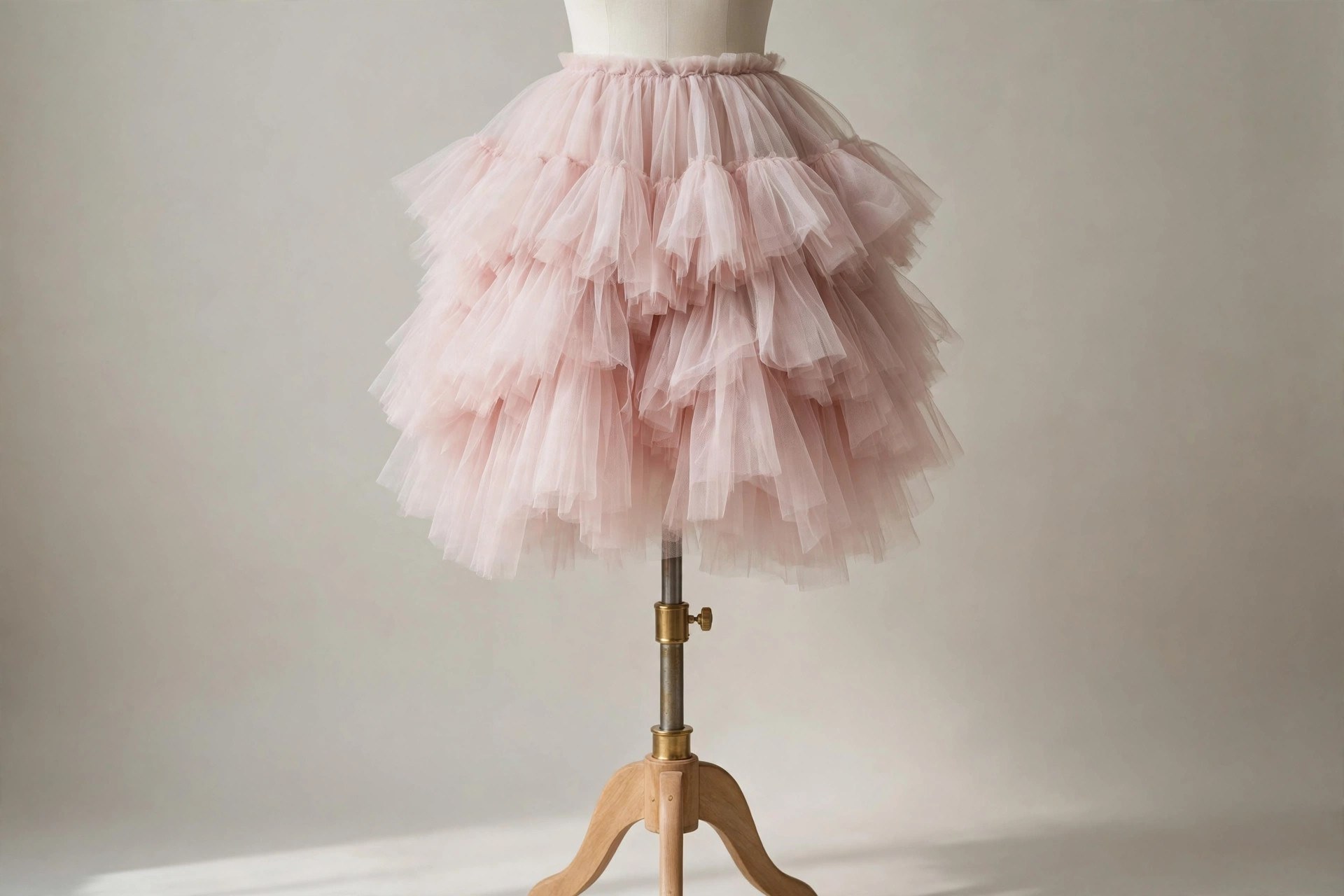
A tulle skirt is a skirt made from tulle, a very fine, lightweight net fabric with a hexagonal mesh, most often in nylon or polyester. Worn in gathered layers over a smooth lining, tulle holds airy volume without weight, so the skirt floats and swishes instead of hanging flat. It comes straight from the ballet studio, where layered tulle built the tutu, and modern versions range from a soft single-layer midi for everyday wear to full multi-layer skirts made for weddings and parties.
Layers, Volume and Length
Volume in a tulle skirt is simply a question of layers and gathering. A single layer over a lining gives a soft haze of color and a gentle A-line shape that most people can wear anywhere. Three to five layers, each gathered more tightly at the waist, build the familiar full silhouette; the mesh is so light that even a very full skirt stays comfortable to wear for hours.
Length steers the effect. A knee-length tulle skirt is the classic party shape and shows shoes off well. Midi lengths are the most versatile, reading romantic rather than costume-like, especially in muted shades such as blush, grey, sage or black. Maxi tulle skirts in many layers are bridal and evening territory, often worn by bridesmaids precisely because the fabric photographs softly and suits a whole group.
Balancing the Styling
The working rule with a tulle skirt is simple: volume below, simplicity above. A fitted top — a tucked-in fine knit, a plain bodice-style top, a slim T-shirt or a cropped jacket — keeps the waist defined and stops the outfit looking swamped. Wide or floaty tops over a full tulle skirt add bulk at every level.
Shoes set the occasion. Heels lengthen the line and push a tulle skirt toward occasion wear, which is why it works so well for weddings, proms and parties. The same skirt with clean sneakers or ankle boots and a leather or denim jacket becomes playful street style rather than fancy dress — contrast is what makes it modern.
Occasions and Care
Tulle skirts earn their keep across a wider range than their party image suggests. Brides use layered tulle for skirts and bridesmaid dresses; guests wear a midi version to weddings and christenings; and in soft colors with plain tops, a modest two-layer skirt is ordinary daytime wear in many wardrobes.
Tulle is tougher than it looks but dislikes heat and crushing. Wrinkles and creases usually fall out with steam: hang the skirt in a steamy bathroom or use a steamer at a distance, and never press it with a hot iron, which can melt the mesh. Spot clean marks where you can, and wash only if the label allows, gently and inside out.
Common Questions
- How many layers does a tulle skirt need?
- It depends on the look you want. One layer over a lining gives a soft tint of color and a gentle shape suitable for everyday wear. Two or three layers create the classic full party skirt that stands away from the legs. Five or more layers build real drama for weddings and formal events. Remember that gathering matters as much as layer count: a few tightly gathered layers of stiff tulle can look fuller than many layers of soft, draping tulle.
- Can a tulle skirt be worn casually?
- Yes, and contrast is the trick. Pair a knee or midi tulle skirt with a plain T-shirt or fine knit, clean sneakers or ankle boots, and a denim or leather jacket, and it reads as playful daytime style rather than party wear. Softer colors and fewer layers help, as does choosing matte, simple pieces everywhere else. What makes tulle look like costume is wearing it with other fancy elements — satin, sequins and elaborate hair all at once.
- How do I get wrinkles out of tulle?
- Steam is the safe answer. Hang the skirt where bathroom steam can reach it, or pass a garment steamer over it from a distance so the heat relaxes the mesh without touching it. Most creases from storage or packing fall out this way. Never use a hot iron directly on tulle, because the synthetic mesh can melt or glaze. If the label permits, a gentle cool hand wash followed by hanging to dry will also release most wrinkles.
- What top goes best with a tulle skirt?
- A fitted, simple top almost always works best: a tucked-in knit, a slim plain T-shirt, a bodice-style top or a cropped jacket that ends at the waist. The skirt supplies all the volume and texture in the outfit, so the top's job is to define the waist and stay quiet. Avoid loose, floaty tops, which add bulk over the gathering and hide your shape. A belt at the waist seam is a useful finishing touch on plain tops.
Romantic Fabrics & Feminine Details
Soft fabrics, gathered details and vintage-inspired shapes run through this whole series. These six guides cover the lace, tulle and structured styles that give an outfit its romantic side, with honest notes on fit, styling and care for each one.