Women's Boiler Suit Guide
The factory one-piece that fashion adopted whole: boiler suits and coveralls, the difference between them, and how to wear the utility icon.
Shop Women's Boiler Suits Now
Shop Women's Boiler Suits on Amazon Shop Women's Boiler Suits on eBayThe Amazon and eBay links on this page are affiliate links. If you make a purchase through them, Apparel Search may earn a commission.
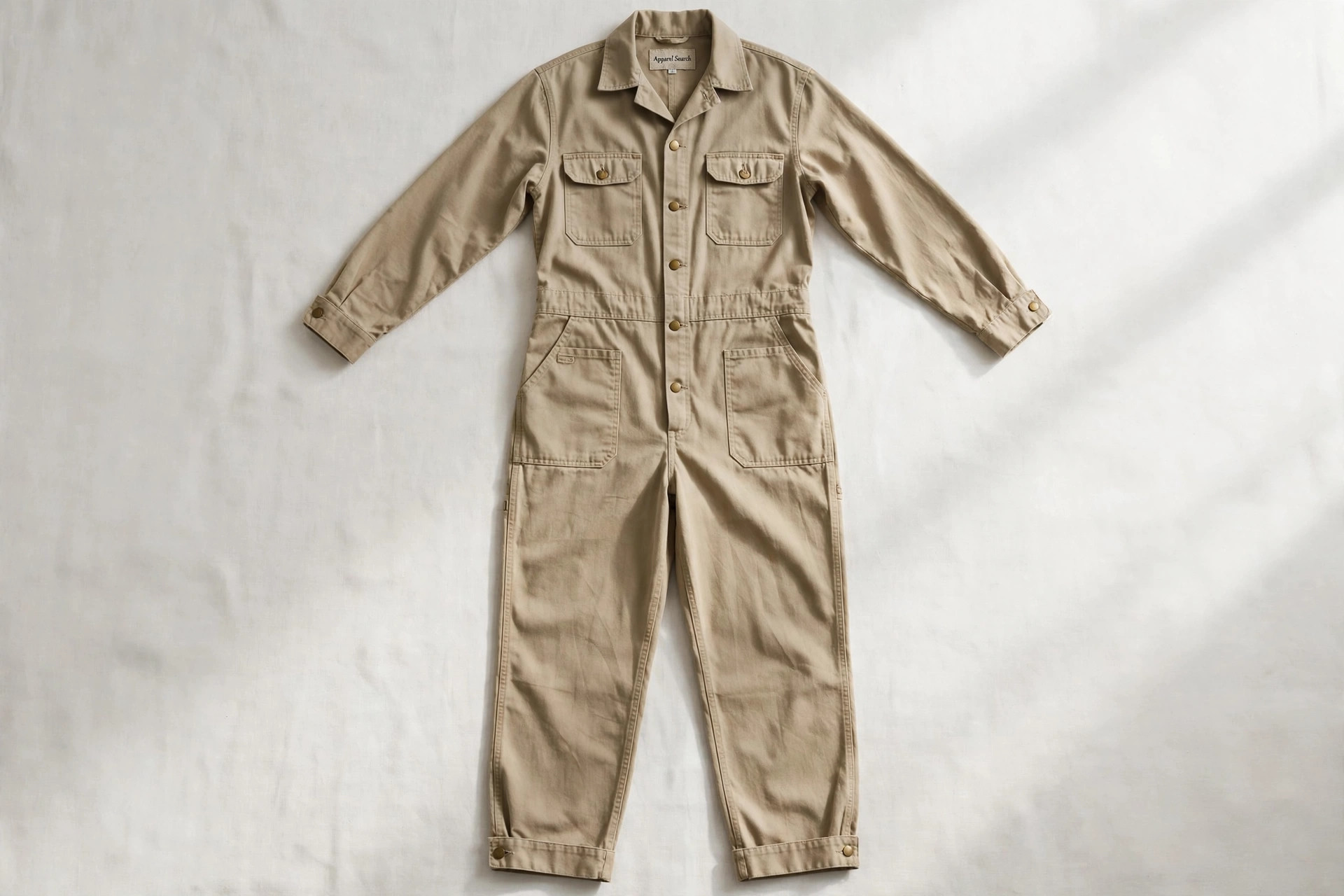
A boiler suit is a loose, one-piece, long-sleeved garment with trousers attached, closing up the front, originally worn by workers tending coal boilers — and by factory, railway and garage workers generally — to protect their clothes beneath. Its fashion life began when designers noticed that the most functional garment in the wardrobe was also a complete outfit: coveralls appeared in 1970s street style, in 1980s and 1990s casual fashion, and as a recurring modern staple in denim, khaki twill and even satin.
The boiler suit is the working ancestor of the women's jumpsuit: every jumpsuit descends, in part, from protective one-pieces like this. But the boiler suit keeps its own identity — shirt-style top, real pockets, durable cloth, a waist that is belted or elastic rather than tailored. This guide explains how it differs from coveralls and from jumpsuits, how to fit one, and how to wear it for fashion or for actual work.
Boiler Suit, Coveralls or Jumpsuit? The Distinctions
In workwear, coveralls is the broad North American term for protective one-piece garments, and a boiler suit is a coverall pattern: sleeves, full legs, front closure, made to go over other clothes. In fashion retail the words divide by styling: a boiler suit is sold as an outfit — shaped slightly at the waist, in fashion colours and fabrics, meant to be the whole look — while coveralls are sold as workwear, cut generously for layering, with certified fabrics or features where the job requires them. The pattern is the same; the intent and the sizing are not.
A fashion jumpsuit, by contrast, is designed as clothing first: sleeveless and strappy styles, draped evening fabrics, waists that are tailored rather than belted on. The boiler suit sits between the two worlds and borrows from both — which is why the same shopper may own a twill boiler suit for weekends and a crepe jumpsuit for weddings, and why confusing the labels leads to buying workwear when you wanted an outfit, or an outfit when you needed protection.
Fabrics, Fit and the Torso Check
Classic boiler suits are cotton twill or drill — hard-wearing, breathable, washable — or denim, which softens into the garment with wear. Work versions add poly-cotton blends for strength and easy care, and specialist coveralls use flame-resistant or hi-vis fabrics that fashion versions never carry. Fashion boiler suits also appear in linen for summer, corduroy for winter, and occasionally satin for evening — but twill is the cloth that keeps the silhouette honest: enough body to hold a pocket and a crease, enough softness to move in.
Fit follows one-piece rules. Because a boiler suit must let you bend, reach and climb, it is cut with wearing ease — but the fashion version should still mark a waist, with its belt, drawstring or elastic, or it reads as borrowed workwear. Do the torso test from our jumpsuit guide: sit, bend and raise your arms; the body length must allow all three. Sleeves should reach the wrist, legs the shoe, and the front closure — zip, buttons or poppers — should lie flat without straining when you sit.
Styling and Working — and Care
For fashion, the boiler suit is a one-decision outfit with boots or trainers, sleeves pushed up, collar open, and the waist belted. Roll the legs once to show the ankle boot; add a crossbody bag or a scarf and the workwear reads as styling, not uniform. In prints and softer fabrics it behaves like a shirt dress with trousers attached — the relaxed cousin of shapes like the prairie dress, with the same workwear roots. Under a coat it layers cleanly because there is no waistband bulk to arrange.
For actual work, choose true coveralls sized to layer over your clothes, in the fabric your task requires, and treat fashion boiler suits as what they are — durable casual clothing, not protective equipment. Care is the boiler suit's pleasure: it was designed to be boiled, more or less, and cotton twill versions wash hot or warm, forgive neglect, and improve with fading. Close the zip or buttons before washing, wash with similar colours (twill sheds dye early on), and hang by the waist to dry so the legs' weight does not stretch the shoulders.
Common Questions
What is the difference between a boiler suit and coveralls?
In workwear they are essentially the same pattern — a one-piece protective garment with sleeves and full legs — and 'coveralls' is the general term, especially in North America. In fashion, 'boiler suit' means the styled outfit version: slightly shaped, in fashion fabrics and colours. Work coveralls are cut larger for layering and may use certified protective fabrics.
How is a boiler suit different from a jumpsuit?
A boiler suit is a specific jumpsuit family: long sleeves, a shirt-style collar and front, utility pockets, durable twill or denim, and a belted or elastic waist. 'Jumpsuit' is the wider category, covering everything from utility one-pieces to sleeveless evening styles in crepe and satin. Every boiler suit is a jumpsuit; most jumpsuits are not boiler suits.
How should a women's boiler suit fit?
With real wearing ease but a marked waist. You should be able to sit, bend and raise your arms without shoulder or seat pulling (the torso-length test), the belt or elastic should sit at your waist, sleeves should reach your wrists and legs your shoes. If it fits like tailored clothing, size up — the ease is the design.
More Women's Jumpsuit, Suits & Sets Guides
The other guides in this cluster — one-piece jumpsuits and boiler suits, tailored pantsuits and skirt suits, and matching co-ord and tracksuit sets:
More to Explore on Apparel Search
Complete the cluster where it began: the flagship jumpsuit guide, with every style from utility to evening.
Next: Women's Jumpsuit Guide: Styles, Fit & the Torso-Length Check »Looking for Women's Clothing Stores?
This guide helps you choose a women's boiler suit that fits your torso and your plans for it. To browse where to buy, visit our womens clothing store directory, where you can find retailers that carry them.