Women's Skirt Suit Guide
The original women's suit: a tailored jacket with a matching skirt — hemlines, proportions and the modern ways to wear it without looking dated.
Shop Women's Skirt Suits Now
Shop Women's Skirt Suits on Amazon Shop Women's Skirt Suits on eBayThe Amazon and eBay links on this page are affiliate links. If you make a purchase through them, Apparel Search may earn a commission.
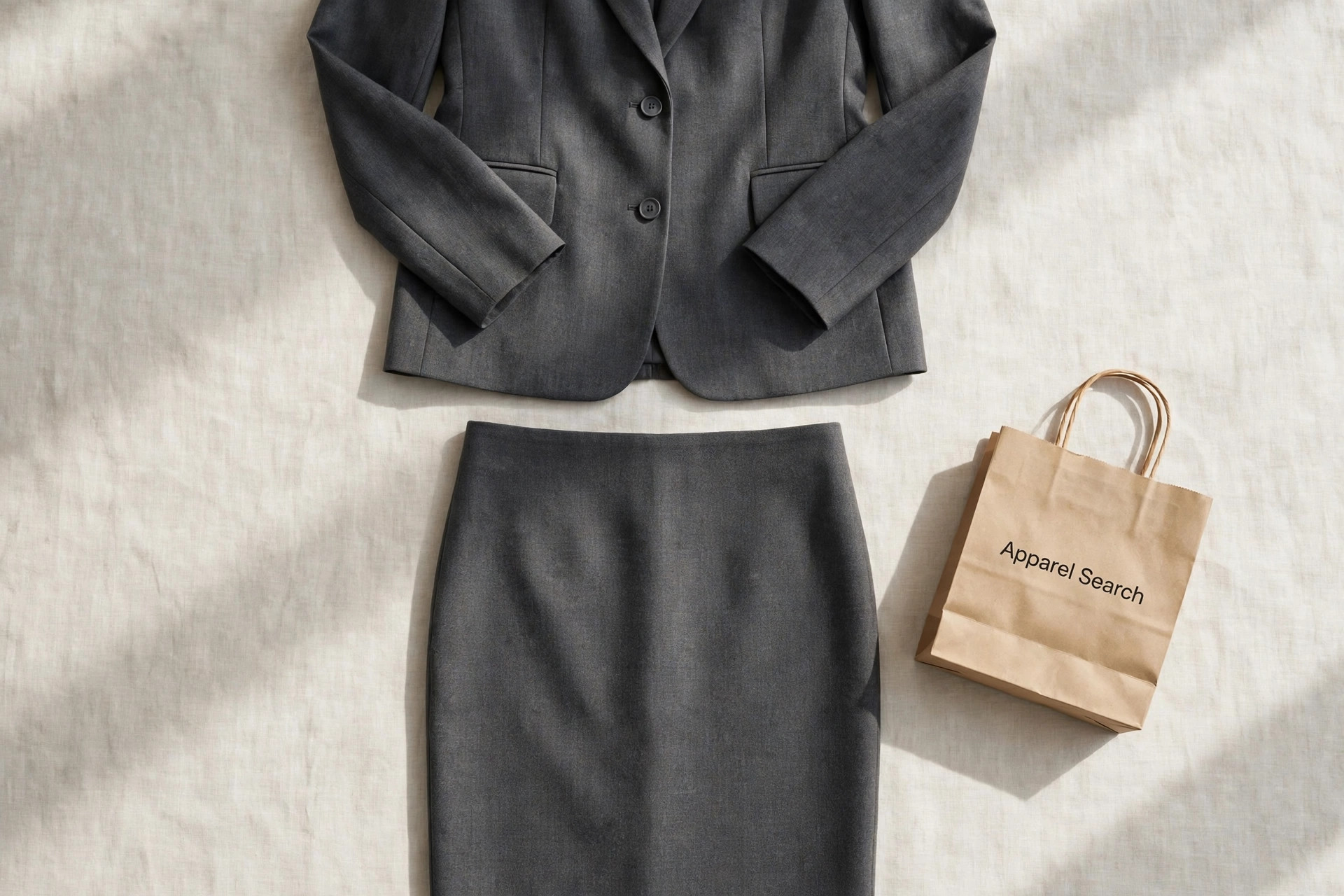
A skirt suit is a matched two-piece: a tailored jacket and a skirt cut from the same fabric, worn together. It predates its trouser sibling by decades — the women's tailored suit of the late 1800s paired a fitted jacket with a long skirt, Chanel's 1920s cardigan suits made the combination soft and famous, and the skirt suit remained the standard formal uniform for women long after the women's pantsuit arrived. It survives because nothing else combines tailoring with quite the same ceremony.
The modern skirt suit is not a costume. Designers cut it in crepe, tweed, satin and even denim; hemlines run from above the knee to midi; and the pieces split beautifully into separates. This guide covers the skirt shapes, the jacket proportions that balance them, lengths for work and occasions, and the styling choices that keep a skirt suit current.
Skirt Shapes: Pencil, A-Line, Pleated and Wrap
The pencil skirt suit — slim skirt, usually knee-length — is the sharp, formal classic, best in fabrics with a little stretch or a back vent so you can actually stride. The A-line skirt suit flares gently from the waist, the most forgiving shape and the easiest to wear all day; it echoes the movement of a circle skirt in tailored cloth. Pleated skirts add texture and swing, especially in tweed and plaid, while a wrap-front skirt adjusts at the waist and softens the suit's formality, much like a wrap skirt worn alone.
Skirt length decides the suit's register. Above the knee reads young and fashion-led, and suits shorter jackets. At or just below the knee is the boardroom and courtroom standard, and the safest for formal occasions. Midi lengths — mid-calf — are the current revival shape, elegant with a longer, softer jacket and a heeled boot or court shoe. Whichever length you choose, sit down in it before buying: a skirt that only works standing is a photograph, not a suit.
Jacket Pairing, Fabrics and Fit
Proportion is the whole skill of the skirt suit. A slim pencil skirt balances both cropped and longer jackets; a full or pleated skirt wants a shorter, defined jacket so the waist is not lost. Peplum jackets were invented for this pairing, flaring over the skirt's waistband exactly where the eye wants a line. Check that the jacket closes smoothly over the bust and that its hem does not fight the skirt's waistband — the two should read as one designed outfit, not neighbours.
Fabrics mirror pantsuit suiting — wool, crepe, tweed, linen — with one addition: texture is easier to carry in a skirt suit, because the skirt's smaller area shows bouclé, plaid and herringbone without overwhelming the outfit. Fit checks: the skirt waistband should sit at your waist without a belt doing structural work, the lining (if any) should be smooth, and the vent or pleats should hang closed when standing. Buy your larger half's size and tailor the other piece down; waistbands and jacket waists are routine alterations.
Styling for Work and Occasions — and Care
For work, the skirt suit takes a fine knit, a silk blouse or a plain camisole, with court shoes or loafers. For occasions — weddings, christenings, race days, formal lunches — a crepe or tweed skirt suit with a considered hat or jewellery has been the correct answer for a century; our mother of the bride guide covers how mothers of the couple wear it, and the wedding guest attire hub places it among guest dress codes. Split the suit on other days: the jacket over a tulip skirt or trousers, the skirt with knitwear.
Care both pieces together, as with any suit, so fabric and colour age evenly. Skirts hang best from waistband clips; jackets on wide hangers. Watch the skirt's seat for shine on smooth wools — a pressing cloth and steam, not a hot iron directly on the cloth, keep it matte. Rotate skirt suits with trouser suits if you wear tailoring daily; the skirt's lining and vent are its wear points.
Common Questions
What skirt length is right for a women's skirt suit?
At or just below the knee is the most formal and versatile length, appropriate for offices, courts and ceremonies. Above the knee reads younger and more fashion-led; midi (mid-calf) lengths are a current, elegant option best paired with a longer, softer jacket and a heeled shoe. Always sit in the skirt before buying.
Is a skirt suit out of date?
No — the skirt suit is a permanent formal category that cycles in prominence rather than disappearing. Modern versions use softer jackets, midi or above-knee hemlines, textured fabrics like tweed and bouclé, and are styled with loafers, boots or trainers-adjacent polish rather than a single prescribed uniform look.
Can I wear the jacket and skirt of a skirt suit separately?
Yes, and you should — it doubles the suit's value. The jacket works over dresses, trousers and jeans; the skirt works with knitwear and blouses. Just clean both pieces together when the suit is washed or dry-cleaned as a set, so the fabric ages and fades at the same rate.
More Women's Jumpsuit, Suits & Sets Guides
The other guides in this cluster — one-piece jumpsuits and boiler suits, tailored pantsuits and skirt suits, and matching co-ord and tracksuit sets:
More to Explore on Apparel Search
Love a matched look without the tailoring? Continue to the co-ord set and matching set guide.
Next: Women's Co-ord Set & Matching Set Guide: Two Pieces, One Outfit »Looking for Women's Clothing Stores?
This guide helps you choose a women's skirt suit with the right skirt shape, length and jacket proportion. To browse where to buy, visit our womens clothing store directory, where you can find retailers that carry them.