Women's Tulip Skirt Guide
Full through the hip and thigh, then tapering to a narrow hem like a closed tulip bud — the tulip skirt manufactures curve where it is worn.
Shop Women's Tulip Skirts Now
Shop Women's Tulip Skirts on Amazon Shop Women's Tulip Skirts on eBayThe Amazon and eBay links on this page are affiliate links. If you make a purchase through them, Apparel Search may earn a commission.
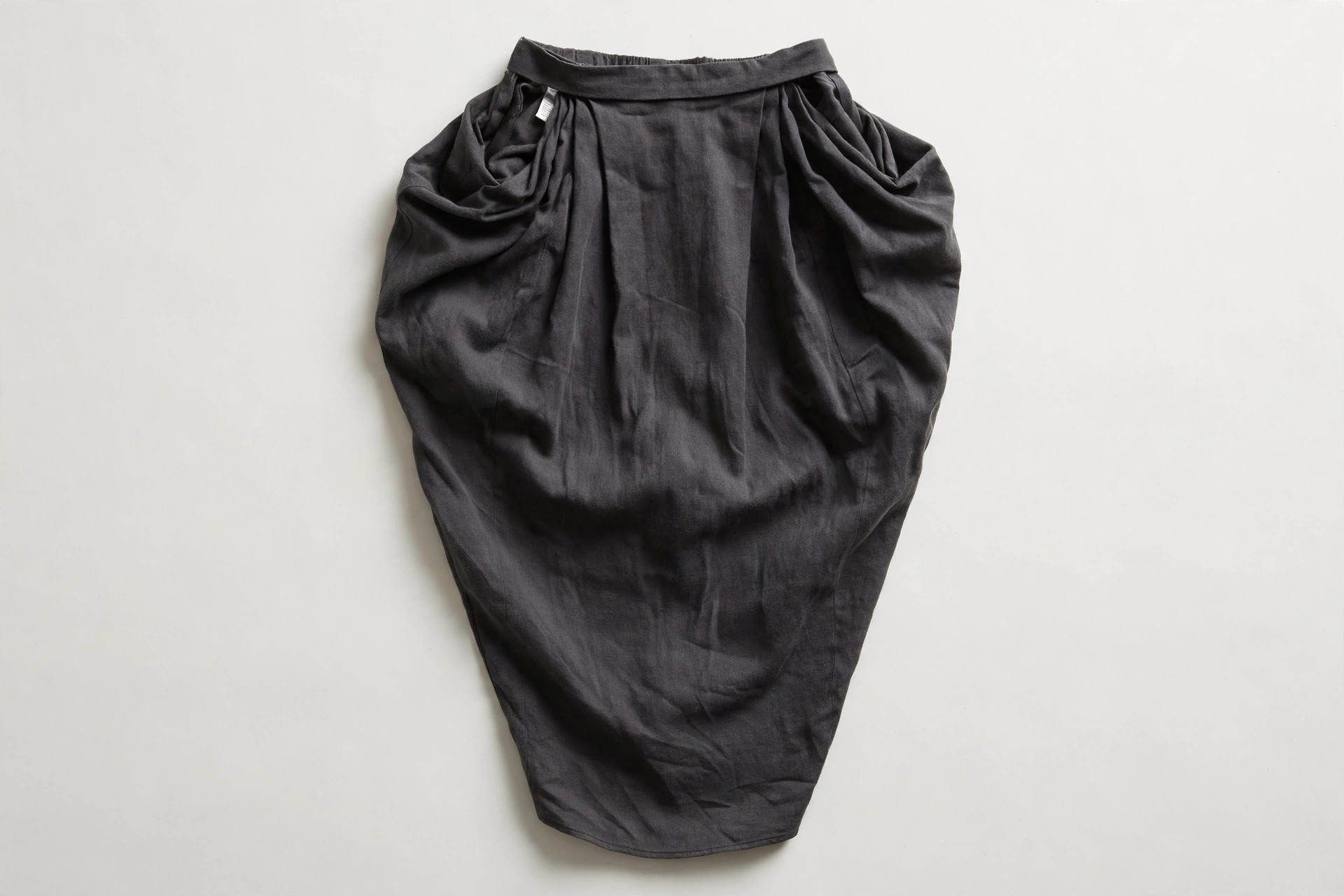
A tulip skirt is shaped like its flower: wide and rounded through the hip and upper thigh — the open petals — then narrowing steadily to a close hem at or above the knee, the closed base of the bud. The fullness is real construction, built with pleats, gathers or draped panels at the waist and hip, and the taper is equally real: the hem is the narrowest part of the skirt. No other skirt in this cluster puts its volume in exactly this place, which is what makes the tulip both distinctive and decisive.
The silhouette belongs to the family of sculpted 1980s and couture shapes — the decade of the power shoulder also loved a carved hip — and it recurs whenever fashion turns architectural. It is the instructive opposite of the circle skirt: a circle skirt frees the hip and flares at the hem; a tulip emphasises the hip and closes at the hem. Same waist, opposite argument about what a skirt should do below it.
How the Shape Is Built
Tulip fullness comes from controlled surplus at the top of the skirt. Inverted pleats released from the waistband, soft gathers eased into a yoke, or draped panels wrapped from the side all add cloth over the hip; the skirt is then pegged — taken in progressively — toward the hem. The best versions engineer the curve so the fullness sits at the hip bone and the taper begins below it, giving a smooth petal curve. Versions that gather and taper in the same few inches bunch at the thigh and read as a mistake rather than a silhouette.
That pegged hem brings the skirt's one functional limit: stride. A narrow woven hem restricts the step exactly as a tight pencil skirt does, so walking slits, back vents or stretch fabric are practical necessities, not luxuries, in longer tulips. Mini tulips escape the problem because the narrow hem sits above the knee where legs move freely. Check the stride in the fitting room — walk at full pace, do not just pose — before falling for the shape.
Who It Flatters — Read This One Honestly
The tulip adds curve at the hip, so it gives most to bodies that lack it. On a rectangle body shape it manufactures the hip curve the frame does not supply, and paired with its own nipped waistband creates a genuine hourglass suggestion. On an inverted triangle shape the hip volume balances broad shoulders from below — the same balancing job the bubble dress does, in tailored form. Our body-shape guide files the tulip under 'added volume, placed precisely'.
The honest counterpoint: a pear shape already carries its volume where the tulip adds more, and most pear wearers find the silhouette argues with their proportions rather than dressing them — the wrap and circle skirts in this cluster serve them better. Tulips also spotlight the hip in a way that should be a choice, not a surprise: if you do not want the hip to be the outfit's subject, this is not your skirt, and the column's calm line is waiting in the same cluster.
Fabrics and Styling
The shape needs fabric with enough body to hold the petal curve and enough give to survive the narrow hem: cotton sateen with stretch, ponte, crepe with elastane, and lightweight scuba are the reliable choices. Flimsy fabric collapses the hip fullness into wrinkles; board-stiff fabric makes the taper stand away from the legs like a lampshade. Drape tests apply — pinch the hip area in the shop: the cloth should spring back smooth, since any crease at the hip is displayed at the skirt's widest, most-watched point.
Styling keeps the top half quiet and tucked: a slim knit, a fitted shirt or a bodysuit, so the skirt's carved outline is uninterrupted. Heels extend the taper's line; flats can make the pegged hem read abrupt, unless the skirt is a mini. Jackets should end at the waist or fall open past the hip — a jacket hem landing exactly at the skirt's widest point underlines it twice. Keep the tulip for settings where its tailoring shows: it is a desk-to-dinner skirt, not a market-day one.
Common Questions
What is a tulip skirt?
A skirt cut full and rounded through the hip and thigh, then tapering to a narrow hem, like a closed tulip bud. The hip fullness is built with pleats, gathers or draped panels; the narrow hem is pegged in and usually needs a vent, slit or stretch fabric for a comfortable stride. It is most often knee length or shorter.
Who should wear a tulip skirt?
Bodies that welcome added curve at the hip: rectangle shapes gain an hourglass suggestion, and inverted triangle shapes gain balance against broad shoulders. Pear shapes, which already carry volume at the hip, usually prefer skirts that skim or flare instead — the tulip adds emphasis exactly where they need it least.
What is the difference between a tulip skirt and a bubble skirt?
Where the fabric closes. A bubble skirt pouches out and gathers back under to a band at the hem — the volume is loose and rounded all the way down. A tulip skirt is shaped tailoring: fullness is engineered at the hip with pleats or drapes, then the skirt tapers smoothly to a close, straight hem. The bubble is playful; the tulip is sculpted.
Dress & Skirt Silhouette Guides
Every dress and skirt silhouette guide in this cluster — the new guides plus the classic silhouettes already on Apparel Search — in alphabetical order:
- Women's Asymmetric Skirt
- Women's Bubble Dress
- Women's Circle Skirt
- Women's Cold Shoulder Dress
- Women's Column Dress
- Women's Empire Dress
- Women's Fit and Flare Dress
- Women's Prairie Dress
- Women's Prairie Skirt
- Women's Sheath Dress
- Women's Shift Dress
- Women's Skater Dress
- Women's Slip Dress
- Women's Surplice Dress
- Women's Swing Dress
- Women's Tea Length Dress
- Women's Tent Dress
- Women's Tiered Dress
- Women's Tiered Skirt
- Women's Wrap Dress
- Women's Wrap Skirt
More to Explore on Apparel Search
Looking for Women's Clothing Stores?
This guide helps you choose women's tulip skirts. To browse where to buy, visit our womens clothing store directory, where you can find retailers that carry them.