Women's Tiered Dress Guide
Horizontal bands of gathering, each fuller than the last — the tiered dress builds its whole silhouette from stacked seams and surplus cloth.
Shop Women's Tiered Dresses Now
Shop Women's Tiered Dresses on Amazon Shop Women's Tiered Dresses on eBayThe Amazon and eBay links on this page are affiliate links. If you make a purchase through them, Apparel Search may earn a commission.
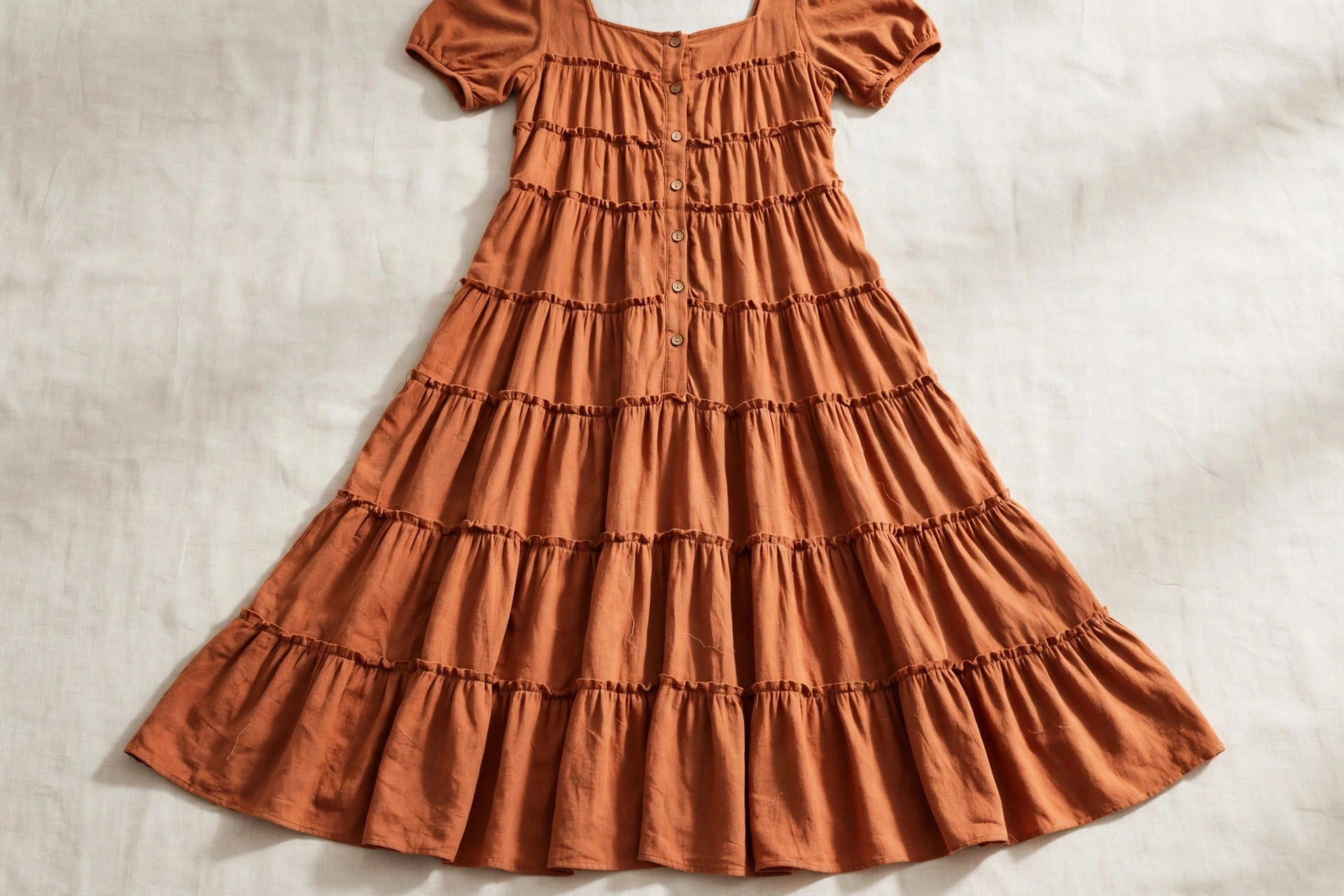
A tiered dress is built from horizontal bands of fabric — tiers — each gathered into the seam of the one above and fuller than it, so the dress widens in steps from top to hem. The construction is ancient and global, but its modern fashion life began with 1970s bohemian and peasant dresses and returned in force with the loose, swishy summer dresses of the 2020s. Unlike every fitted silhouette in this cluster, a tiered dress may have no waist, no darts and no shaping at all: the tiers are the shape.
Tiers appear at every scale. A tiered skirt section under a fitted bodice keeps the waist defined and puts the volume low. A fully tiered dress stacks three to five bands from bust to hem in a free A-line. Mini versions stack two or three wide tiers into a babydoll-adjacent shape; maxi versions stack five and sweep the floor. Reading a tiered dress means reading its seams: count them, and you know where the volume will sit and how the dress will move.
How Tiers Work — and What They Do to Proportion
Each tier is a rectangle or gentle trapezoid of cloth, gathered along its top edge to fit the bottom edge of the tier above, typically at one-and-a-half to two times the width. That ratio is the dress's personality: gentle ratios drape softly, aggressive ratios stand out in ruffled steps. Seams may be exposed with a ruffle edge (each tier overlapping the next) or enclosed for a cleaner step. Either way, every tier adds a horizontal line — and horizontal lines are where the eye stops, which is the key to styling the dress.
That is why tier placement matters more than tier count. Tiers that stack from the bust add volume through the whole body, kind to an apple shape that wants no waistband and flattering movement. A fitted bodice with tiers starting at the waist or hip concentrates volume low, balancing an inverted triangle shape. On a rectangle shape, gathered tiers at the hip manufacture curve where none is supplied. The body-shape guide explains the eye-line logic these placements exploit.
Tiered, Ruffled, Smocked: Close Relatives
A ruffle is a small gathered flounce applied as trim; a tier is a full structural band of the dress. Tiered dresses often finish each tier with a tiny ruffle edge, which is where the confusion starts — judge by structure, not trim. Smocking is elastic shirring that gathers fabric decoratively, often used across the bodice of a tiered dress to give the top some hold while the tiers hang free; the combination — smocked bodice, tiered skirt — is the dominant modern summer version. Our prairie dress guide shows tiers in their most traditional setting, under a yoke and over a hem ruffle.
Length and tier count together decide formality. Two or three tiers in a mini read playful; long stacks in fluid fabric read romantic and occasion-ready; the same construction in crisp cotton reads sundress. Tiered dresses are rarely truly formal — the gathered seams keep a handmade, relaxed character — but in silk or chiffon with fine, enclosed seams they carry weddings and garden parties comfortably.
Fabrics, Care and Fit Checks
Tiers multiply fabric, so cloth weight matters twice over. Light cotton voile, rayon, gauze and soft linen keep a five-tier maxi wearable; the same pattern in midweight denim or canvas becomes a heavy, stiff garment. Chiffon and georgette versions are usually lined, and the lining should be a plain A-line — a tiered lining defeats itself. Check the total weight in hand before buying: a good tiered dress feels abundant, never burdensome.
Fit checks are about the seams. Gathers should be distributed evenly around each tier, not bunched at the side seams. Sit down: tiers should stack and pool, not ride up in a bunch. Pressing is the honest maintenance cost — tiers need a steamer or a careful iron along each band, and they reward it, because a crisp tier line is the difference between the dress looking designed and looking slept in. Wash gently; gathered seams are the first place cheap construction fails.
Common Questions
What is a tiered dress?
A dress constructed from horizontal bands of fabric, each gathered into the seam above and fuller than the last, so the silhouette widens in steps. Tiers may start at the bust for a free, waistless dress or below a fitted bodice for volume concentrated in the skirt. The gathered tier seams are both the structure and the decoration.
Are tiered dresses flattering?
They can be, when the tiers are placed for your shape: tiers from the bust skim an apple midsection, tiers from the waist add balancing volume below broad shoulders, and hip tiers create curve on a rectangle frame. The risk is unplaced volume — tiers everywhere in stiff fabric can overwhelm a petite frame, so lighter cloth and fewer tiers are the petite-friendly version.
How do you iron a tiered dress?
Steam is easiest: hang the dress and steam each tier band downward, letting gravity hold the gathers. With an iron, work tier by tier from the top, pressing along each seam and smoothing the band flat, never crushing the gathers themselves. Most tiered dresses in cotton or rayon also relax well from a bathroom-steaming while you shower.
Dress & Skirt Silhouette Guides
Every dress and skirt silhouette guide in this cluster — the new guides plus the classic silhouettes already on Apparel Search — in alphabetical order:
- Women's Asymmetric Skirt
- Women's Bubble Dress
- Women's Circle Skirt
- Women's Cold Shoulder Dress
- Women's Column Dress
- Women's Empire Dress
- Women's Fit and Flare Dress
- Women's Prairie Dress
- Women's Prairie Skirt
- Women's Sheath Dress
- Women's Shift Dress
- Women's Skater Dress
- Women's Slip Dress
- Women's Surplice Dress
- Women's Swing Dress
- Women's Tea Length Dress
- Women's Tent Dress
- Women's Tiered Skirt
- Women's Tulip Skirt
- Women's Wrap Dress
- Women's Wrap Skirt
More to Explore on Apparel Search
Looking for Women's Clothing Stores?
This guide helps you choose women's tiered dresses. To browse where to buy, visit our womens clothing store directory, where you can find retailers that carry them.